[Asia Economy Reporter Kim Bo-kyung] When the Group of Seven (G7) announced a global infrastructure development and investment project as a measure to expand infrastructure in developing countries and mentioned China's Belt and Road Initiative (一帶一路), China expressed discomfort.
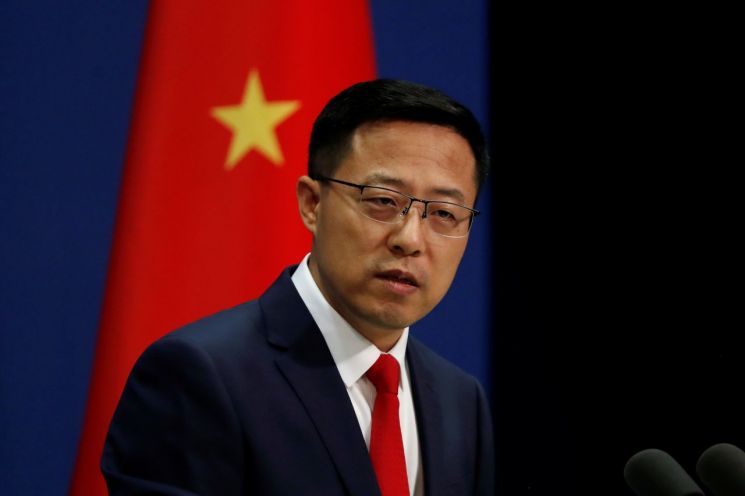
Zhao Lijian, spokesperson for the Chinese Ministry of Foreign Affairs (photo), responded at a regular briefing on the 27th when asked about the global infrastructure development and investment project, saying, "The claim that China's Belt and Road Initiative creates debt traps is a complete lie."
Spokesperson Zhao stated, "The Belt and Road Initiative has adhered to the principles of joint construction and shared benefits over the past nine years, providing tangible benefits to the people of the related countries," and added, "There is no country that acknowledges the Belt and Road Initiative as creating debt traps."
He then targeted the United States, saying, "The United States is the true creator of debt traps," and criticized, "The U.S.'s expansionary monetary policies have deepened the debt burden of developing countries."
The Belt and Road Initiative is a key project of Chinese President Xi Jinping. China is seeking to expand its influence by investing in infrastructure projects such as roads, railways, and ports in developing countries in Asia, Africa, and Europe.
In response, Western countries have criticized that developing countries have fallen into debt traps due to excessive debt.
Spokesperson Zhao expressed a principled agreement with the global infrastructure development and investment project proposed by the G7.
Earlier, on the 26th (local time), G7 leaders held a summit at Elmau Castle in Bavaria, southern Germany, and announced plans to invest $600 billion (approximately 777 trillion won) by 2027 in infrastructure projects in developing countries.
The plan aims to support development by providing funds to low-income or developing countries that share democratic values, supporting infrastructure investment, healthcare, gender equality, and other areas.
© The Asia Business Daily(www.asiae.co.kr). All rights reserved.

















