[Seoul District News] Jungnang-gu Selected 4 Areas Including Myeonmok, Junghwa, and Mangu-dong in Seoul Moa Town District Contest
· Addition of New Project Areas Like Muk-dong Small-scale Reconstruction Increases Local Development Candidates to 15... Dobong-gu Seoul Dobong Solution Anchor Holds ‘Global Sock Order Meeting’ and ‘Marketing Training’... Seocho-gu Partners with KAIST to Discover Future Environmental Leaders... Dongjak-gu Shares ‘Love Packages’ for Needy Neighbors... Mapo-gu Provides Free Installation of Reflectors on Small-scale Buildings
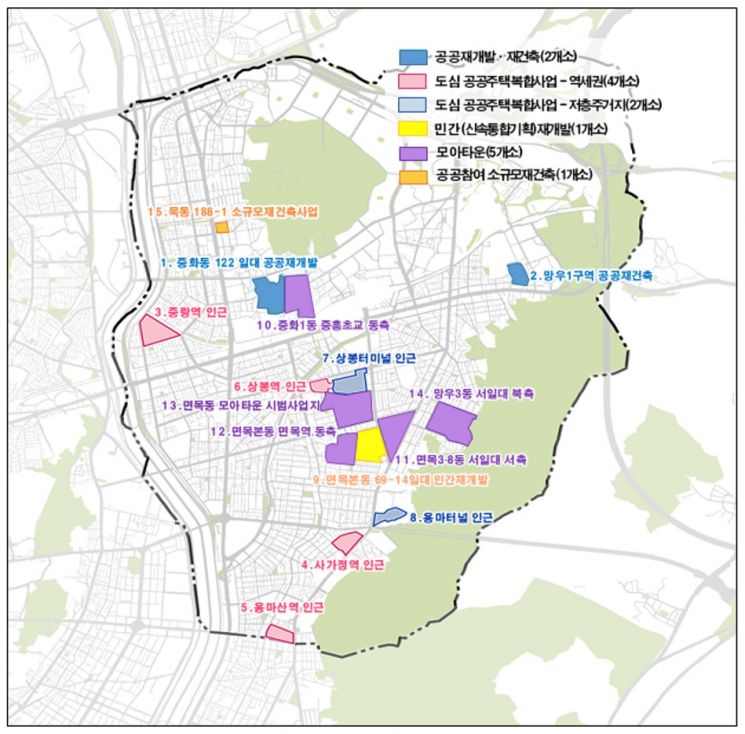
[Asia Economy Reporter Park Jong-il] Jungnang-gu (Mayor Ryu Gyeong-gi) is accelerating its low-rise residential area housing development projects. The district announced that the number of development candidate sites has increased from the existing 13 to a total of 15 with the addition of 2 new project areas.
They are committed to focusing all efforts on improving the residential environment through the prompt promotion of housing development projects.
Among the previously selected 13 candidate sites, one new Moa Town site and one small-scale reconstruction project at Mug-dong Rose Apartments have been added, bringing the total number of development candidate sites in the area to 15.
In the Moa Town district competition announced by Seoul City this month, the district was selected for four sites: ▲297-28 Myeonmokbon-dong ▲44-6 Myeonmok 3·8-dong ▲4-30 Junghwa 1-dong ▲427-5 Mangu 3-dong. Except for Mangu-dong, the other three sites were initially leading projects that have now been converted into Moa Town projects. Including the pilot project site at 86-3 Myeonmokbon-dong selected in January, Moa Town projects are being promoted at five locations in the district.
Moa Town is a small-scale housing maintenance management area designated by Seoul City that develops old low-rise residential areas within 100,000 square meters, where large-scale redevelopment is difficult, into large apartment complexes. The district plans to start establishing management plans within the second half of the year and swiftly proceed with the designation of Moa Town as a legally effective small-scale housing maintenance management area by the first half of next year, following Seoul City's public inspection and integrated review procedures.
Additionally, the newly added development candidate site is the Rose Apartments at 188-1 Mug-dong. Selected last year in the public participation small-scale reconstruction project competition, the district and LH are jointly promoting the maintenance project. LH is currently conducting a feasibility analysis, and will hold resident briefings afterward to communicate with residents and actively support overcoming difficulties in project promotion.
Ryu Gyeong-gi, Mayor of Jungnang-gu, said, “In addition to the selection of Moa Town, we are promoting various housing development projects to improve the environment of low-rise residential areas and are making efforts to discover additional sites. We will continue to communicate with residents to supply quality housing suited to local conditions.”
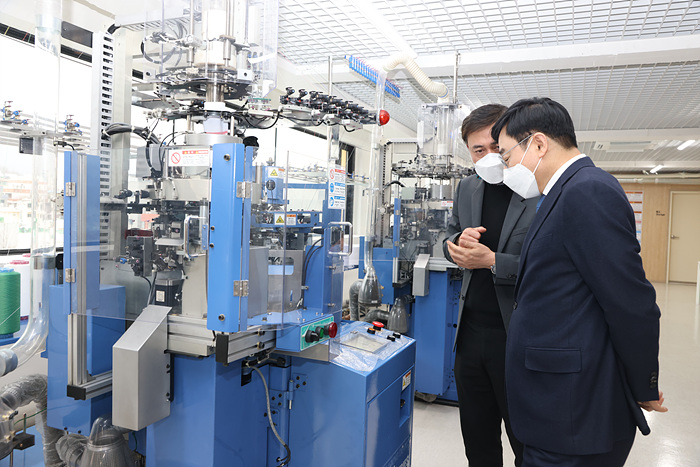
Dobong-gu (Mayor Lee Dong-jin) will hold a ‘Global Socks Order Meeting’ to revitalize Dobong’s sock manufacturing companies, hosted by ‘Seoul Dobong Solution Anchor.’
Seoul Dobong Solution Anchor is established in Chang-dong, Dobong-gu (468 Dobong-ro, Exit 2 of Ssangmun Station), where many sock manufacturers are concentrated, covering an area of 100 pyeong. It supports the expansion of technology and online distribution businesses to create jobs and increase profits for Dobong-gu’s sock manufacturing companies.
The sock order meeting will be held offline from June 29 to July 1 and online from July 4 to July 8. It is a great opportunity to see sock fashion designs including fashion designer socks, golf sports socks, and daily socks all in one place.
During the 8 days, sock orders secured through a network of over 180 domestic and international buyers will be matched with Dobong sock manufacturers for production.
Additionally, in July, an online marketing practical training titled ‘Sales Marketing Practical Training by Online Channel for Online Sock Sellers or Prospective Entrepreneurs’ will be conducted.
The training will cover topics such as ‘Online Distribution Multi-Channel Marketing Strategy’ and ‘Promotion Technique Execution Strategy for Sales’ over two sessions on July 7 and July 13. Applications can be submitted through the Seoul Dobong Solution Anchor website by June 30.
Lee Dong-jin, Mayor of Dobong-gu, stated, “We hope many people will show interest in this event that supports the growth of Dobong-gu as a hub for the sock industry and helps create jobs for sock manufacturers.”
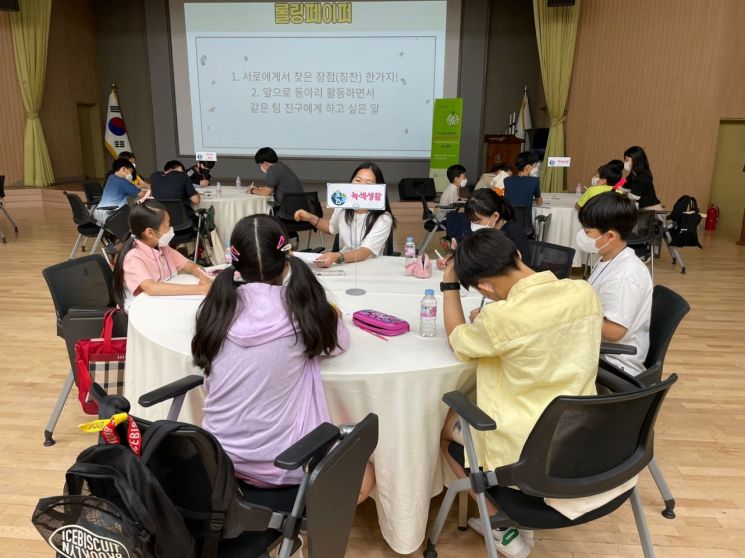
Seocho-gu announced that it will operate the ‘Climate Change Talent Development Research Club’ in collaboration with KAIST until October to raise elementary school students’ interest in the environment and nurture them as environmental leaders responding to climate change in the 2050 carbon-neutral era.
The ‘Climate Change Talent Development Research Club,’ launched for the first time this year by the district, is a research group that provides education to elementary students to cultivate environmental sensitivity and develop capabilities to respond to environmental issues.
The distinctive feature of this talent development research club is that, unlike temporary campaigns or gatherings held by other local governments, it is a systematic educational program conducted with professional institutions to nurture future environmental leaders and have elementary students research ways to respond to the climate crisis and practice environmental protection in daily life.
To this end, the district signed an MOU last May with the educational institution ‘KAIST’ and the social agenda dissemination organization ‘Our Future Association’ to jointly conduct the program.
The district selected 25 elementary students from grades 4 to 6 who are interested in climate change and environmental issues last month. At that time, 126 elementary students applied, showing a competition rate of about 5:1, reflecting strong interest from many students.
The research club is divided into five subtopics under the theme of ‘Climate Change’: ▲Climate Crisis ▲Energy Transition ▲Resource Circulation ▲International Environment ▲Green Living. It is conducted twice a month online, with one graduate student mentor from KAIST assigned to a team of five students, each team responsible for one subtopic.
To foster bonds between mentors and participating students, the district held a ‘Climate Change Talent Development Research Club’ communication camp at the district office auditorium on the 25th.
The education method is divided into ‘common education’ and ‘club-specific education.’ First, in ‘common education,’ graduate student mentors use educational materials they created to teach students the basics of climate and environmental issues on their assigned subtopic.
‘Club-specific education’ is an advanced course based on common education, where students set and practice eco-friendly lifestyle missions, introduce climate change articles and columns, watch films related to the topic, and share thoughts or hold discussions.
Afterward, elementary students decide the direction of their research with mentors and prepare research plans and final reports. KAIST supervising professors provide feedback and advice for each of the five groups during the research process.
The district plans to hold a performance presentation in October to select outstanding projects and incorporate expert opinions into next year’s environmental policies.
Meanwhile, last year, the district operated the ‘Seocho Eco Friends Festa,’ where 244 elementary students set goals for the Earth and environment, practiced them, and spread awareness, striving to nurture future ‘Greta Thunbergs.’
Cheon Jeong-wook, Acting Mayor of Seocho-gu, said, “As important as implementing various environmental policies to overcome the climate crisis is educating elementary students, the future dream trees. We will continue environmental education to raise residents’ interest and strive to practice carbon neutrality.”
Dongjak-gu (Mayor Lee Chang-woo) announced on the 27th that it has started providing love packages to vulnerable families and low-income households in the area facing difficulties in daily life.
Before the support, the Dongjak Welfare Foundation produced gift packages consisting of sesame oil, ramen, ham, roasted seaweed, anchovies, and masks purchased from Seongdae Traditional Market and Namseong Four Seasons Market through sponsorship from local companies.
On the 24th, the packages were distributed to each community service center at the entrance of the first floor of Dongjak Cultural Welfare Center and are being sequentially delivered to 465 low-income households.
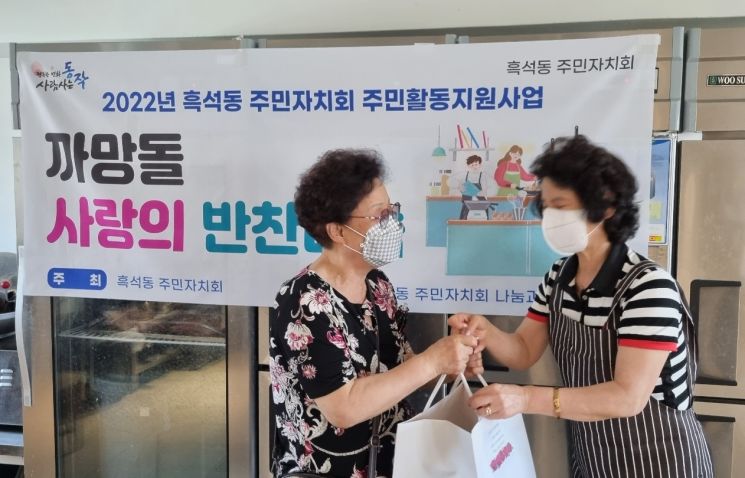
Additionally, the Sharing and Giving Division of the Residents’ Autonomy Committee at Heukseok-dong Community Service Center (Head Jo Jin-hee) promoted a love side dish sharing project.
In the hot summer, to wish for health recovery, division members carefully prepared samgyetang (ginseng chicken soup) and homemade young radish kimchi, which were delivered to 20 underprivileged households in the district. Two more side dish sharing events are planned.
The Heukseok-dong Residents’ Autonomy Committee has been consistently conducting sharing and volunteer activities for residents every year, such as taking longevity photos for local seniors last year and delivering healing boxes containing handmade eco-friendly soap and bright flowers.
Furthermore, Daebang-dong Community Service Center (Head Jeong Hae-young) announced that Hope Housing Co., Ltd. donated 30 circulators and 30 handheld vacuum cleaners (worth about 2.2 million KRW) to support vulnerable households in the area for the summer.
To help low-income families have a healthy summer, each community service center plans to provide nourishing foods such as galbitang (beef rib soup) and samgyetang. The Dongjak-gu sharing relay continues without interruption.
A Dongjak-gu official said, “We will always pay continuous attention to neighbors in need and spare no practical, customized support for low-income vulnerable groups.”
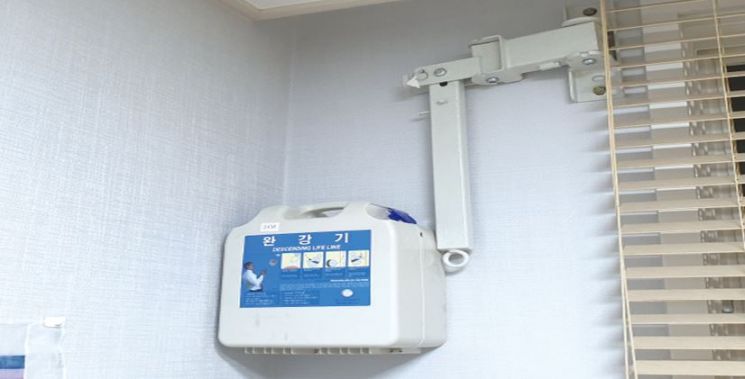
Mapo-gu (Mayor Yoo Dong-gyun) announced on the 27th that it will promote the ‘Emergency Escape Device Installation Support Project,’ which installs emergency escape devices essential during disasters such as fires.
An emergency escape device is an emergency evacuation tool that allows people to slowly descend from high floors to evacuation floors through windows by wearing a belt in case of emergencies like fires.
According to the Act on Fire Prevention, Installation and Maintenance of Fire-Fighting Facilities and Safety Management, it is mandatory to install these devices in apartments of five floors or more and non-residential buildings of a certain scale or larger.
However, small-scale houses are excluded from the mandatory installation regulations, so in case of emergencies like fires, if evacuation routes are not secured, residents can only rely on firefighters for rescue.
In response, the district started the emergency escape device installation support project for general households in 2019, the first among local governments nationwide, and continues the project this year.
The support targets small-scale buildings of three floors or more above ground with exclusive area of 85㎡ or less, including ▲detached houses ▲multi-family houses ▲multi-unit houses ▲row houses.
Building owners wishing to apply can fill out the application form on the Mapo-gu website under ‘Notices’ and submit it to the Urban Safety Division of Mapo-gu Office or send it via email to the person in charge.
The ‘Seoul Mapo-gu Emergency Escape Device Support Review Committee,’ composed of firefighters and fire experts, will decide on support eligibility for the applied houses, and installation costs will be fully covered by Mapo-gu.
© The Asia Business Daily(www.asiae.co.kr). All rights reserved.



















