India and Others Increase Coal Power Amid 'Large-Scale Blackout' Concerns
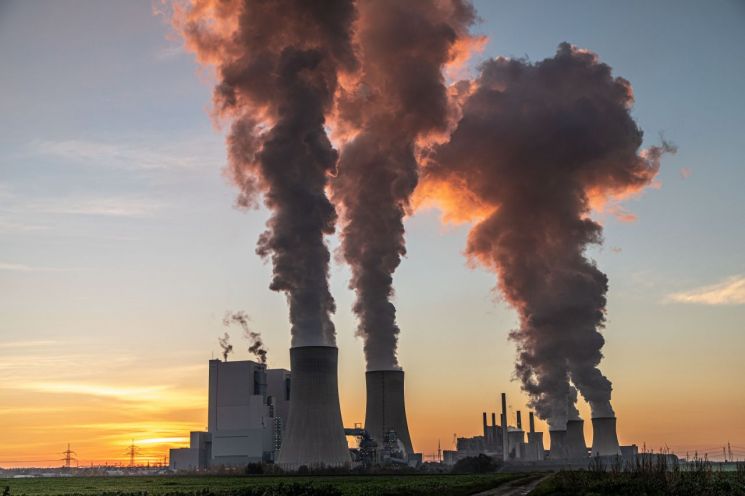 Coal power plant. The photo is not related to any specific expression in the article. [Image source=Pixabay]
[Asia Economy Reporter Yoon Seul-gi] Reports have emerged that the energy crisis faced by some Asian countries, including India, could lead to global climate change. This is due to Asian countries, concerned about the reality of 'blackouts' (large-scale power outages) caused by soaring energy prices, showing movements to increase the use of coal, which is a cheap but 'dirtiest fuel.'
On the 26th (local time), the US CNN reported that as Asian countries facing energy shortages try to increase the use of coal, a cheap energy source, carbon emissions are rising, increasing the likelihood of worsening the climate crisis.
Samantha Gross, senior fellow for energy security and climate at the Brookings Institution, explained, "Energy demand rebounded quickly after the COVID-19 pandemic, faster than supply conditions," adding, "Energy prices were already high before Russia's invasion, but (after the invasion) there was a significant shock to energy supply." Even relatively wealthy countries like Australia saw wholesale electricity prices rise by 141% in the first quarter of this year compared to last year, making energy shortages a reality.
Asian countries are expected to be the most affected by such soaring energy prices. This is because many areas in Asia are still developing and have a high dependence on energy imports.
In India and other countries, record-breaking heatwaves have caused power outages across the nation. The media expressed concern that governments and politicians in Asian countries facing economic crises due to soaring energy prices might put climate change issues aside and revert to 'cheaper and dirtier' energy sources like coal.
Movements to increase dependence on coal-fired power have already been observed in China. Recently, as abnormal high temperatures continued in China and summer electricity usage reached an all-time high, coal production has been expanded to prevent large-scale blackouts. According to The Guardian on the 26th, Chinese Premier Li Keqiang stated, "We secured power supply during the summer peak season and prevented blackouts by utilizing high-grade coal capacity."
India's state-owned coal company also announced coal import plans on the 28th of last month to resolve the energy shortage, marking the first such plan since 2015. CNN pointed out, "India's decision to increase coal imports is likely to have even greater environmental impacts," adding, "To limit the worst effects of global warming, coal mining must be dramatically reduced, but as long as India imports coal, achieving this will be difficult."
Experts warn that while countries may have decided to increase coal imports to overcome the immediate energy crisis, if they do not reduce coal dependence, it will be difficult to achieve the Paris Agreement's goal of limiting the global average temperature rise to below 1.5℃ or 2℃. Sandeep Pai, senior fellow of the energy program at the Center for Strategic and International Studies, said, "Whether it is India, Germany, or the United States, if fossil fuels are pushed further, it will consume the carbon emission allowances," adding, "That will become a global problem."
© The Asia Business Daily(www.asiae.co.kr). All rights reserved.

















