 Recently, domestic information technology (IT) platform companies have been expanding the adoption of the 'workation' system, which combines work and leisure. The photo is not related to any specific expression in this article. [Image source=Pixabay]
[Asia Economy Reporter Hwang Sumi] Recently, the working environments of domestic information technology (IT) platform companies appear to be changing. Since the COVID-19 pandemic, companies have been expanding remote work and increasingly adopting the 'workation' method, which combines work and vacation. This is analyzed as a means to secure talent and enhance corporate competitiveness by guaranteeing work-life balance.
Workation means combining work and vacation. Employees stay at domestic or international vacation spots such as mountains and beaches, working during work hours and enjoying rest after work and on weekends. It first started in the United States and Europe in 2015, and since then, with the development of technologies like video conferencing and collaboration tools, the foundation for remote work has been established, leading to more companies adopting it.
Recently, the introduction of workation systems has been increasing domestically as well. According to Yonhap News on the 26th, Naver, a leading domestic IT company, will implement workation for some employees starting next month. Among applicants, 10 employees will be selected weekly by lottery to work and relax for up to 4 nights and 5 days at the company’s buildings in Chuncheon, Gangwon Province, and Tokyo, Japan.
Naver affiliate Line Plus will introduce the 'Hybrid Work 2.0' system from the 1st of next month, allowing employees to work from overseas locations within a 4-hour time difference from Korea. This is because employees adapted smoothly to the previously introduced 'Line Hybrid Work 1.0.' Line Plus has been implementing this system for a year since July last year, enabling employees to work remotely from their preferred locations within Korea.
Accommodation platform company Yanolja started workation in Pyeongchang, Gangwon Province, in October last year. Since then, it has expanded the system by extending the areas to Donghae, Gangwon Province, and Yeosu, Jeollanam-do, in May this year.
In addition, startups have early adopted this system to support employees in working at their preferred places and times in the most comfortable way. The industry explains that providing a free yet focused environment for developers can improve work efficiency.
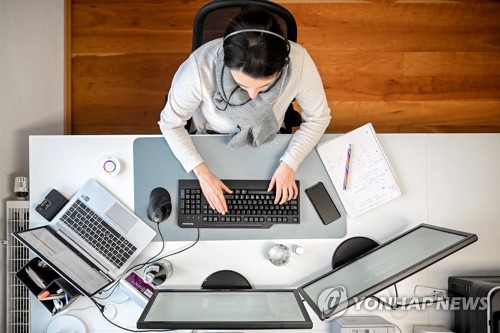
The expansion of workation adoption by these companies is analyzed as an effect of the labor shortage. Along with the accelerated remote work after COVID-19, securing talent who value work-life balance has become an important factor, and companies are using this system as a welfare benefit and a device to attract talent, thereby enhancing competitiveness.
In fact, according to a report by the Korea Tourism Organization analyzing big data from Google, Naver, and others from 2020 to 2021, mentions of workation on social networking services (SNS) increased by 200% in 2020 compared to the previous year. Also, a leisure platform company, Yogi Otte, conducted a survey in April this year with 350 users of its app regarding workation, and 90.9% of all respondents said they wanted to experience it.
Experts predict that workation will expand as a common working style in the future, and an era will come when talent chooses workplaces based on whether such working styles are offered. They also see this system as a good strategy for ESG (Environmental, Social, and Governance) management, which pursues sustainable development by applying environmental, social, and governance improvement methods and collaborating with local communities. If companies conduct workation in rural areas experiencing population decline, it can attract new tourists even on weekdays and during off-seasons, and the long-term residence of workation participants can form infrastructure, leading to regional revitalization effects.
However, some concerns have been raised that if workation is introduced without sufficient preparation from both companies and workers, it could rather harm work efficiency. There are concerns that companies may face difficulties managing employee attendance and absences, or that reduced face-to-face communication among employees could delay responses in crisis situations. Therefore, voices call for gradual adaptation of companies and employees through systematic systems and rules.
© The Asia Business Daily(www.asiae.co.kr). All rights reserved.


















