Lease and Aviation Fuel Purchases Paid in Dollars Hit Aviation Industry Hard
SMEs Dependent on Raw Material Imports Face Realized Poor Performance
Shipping Industry Receiving Dollar Freight Rates Faces Fuel Cost Blow Rather Than Benefits
Samsung Electronics: "Cannot Say It's Unconditionally Positive"
Need to Revise Second Half Strategy... Endless Crisis
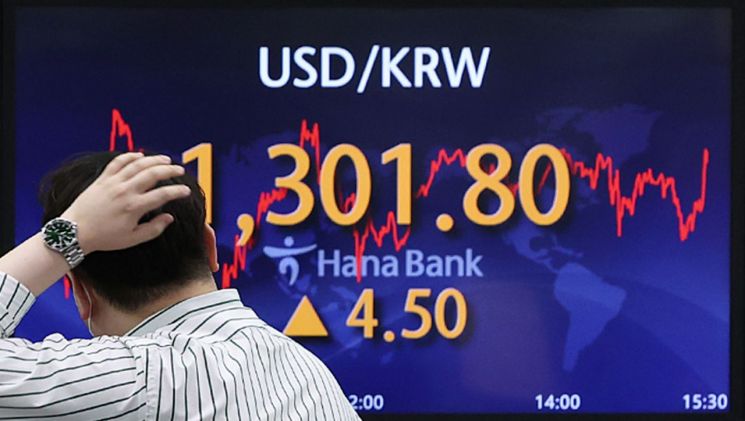
[Asia Economy Reporters Oh Hyung-gil, Kim Jong-hwa, Kim Yuri, Lee Kwan-joo, Park Sun-mi, Jung Dong-hoon, Yoo Hyun-seok] A paint company in Busan has recently sounded the alarm as the won-dollar exchange rate soars. Most of its raw materials are imported and must be paid for in dollars. Although the company has been stockpiling supplies such as resin, pigments, and solvents since the end of last year in anticipation of rising exchange rates, the inventory is expected to run out soon.
A company official said, "We still have some raw material inventory secured, but if this situation prolongs, we will be hit hard," adding, "We raised product prices twice last year and once this year, so it is difficult to reflect the recent sharp rise in exchange rates."
The soaring exchange rate is causing fear across the industrial sector. Companies that have been struggling with supply chain instability and skyrocketing raw material prices since the beginning of this year were shocked when the won-dollar exchange rate surpassed 1,300 won for the first time in 13 years.
In particular, small and medium-sized enterprises (SMEs) that import raw materials from overseas to manufacture parts domestically, and the aviation industry that pays aircraft leasing fees and fuel costs in dollars, are in a state of emergency. The crisis has grown to the extent that they need to revise their management plans for the second half of the year, but the problem is the uncertainty about how long this situation will last, which is increasing anxiety.
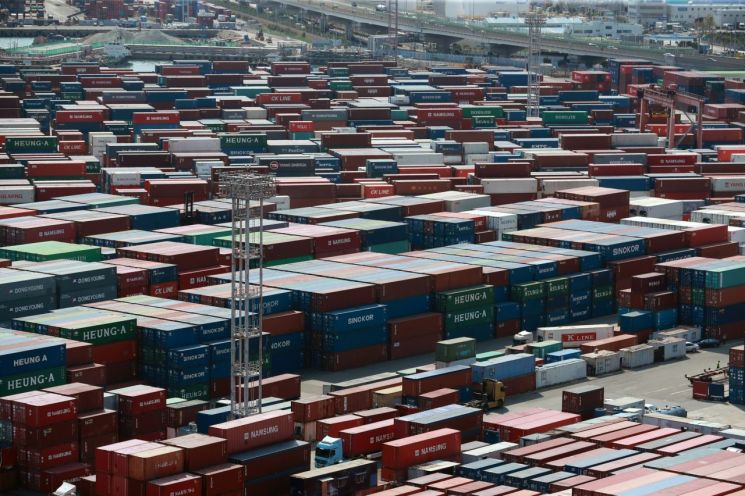
◆High Interest Rates, Inflation, and Exchange Rates Breaking Ceilings... Companies Cry Out= The aviation industry is a representative sector hit hard when exchange rates rise. Both long-term aircraft lease costs and jet fuel purchase costs are paid in dollars, so when the exchange rate rises, the impact is direct. Korean Air and Asiana Airlines incur foreign exchange losses of 41 billion won and 28.4 billion won respectively for every 10 won increase in the exchange rate.
Especially amid high oil prices, the burden of costs is skyrocketing due to the high exchange rate. Airlines have already spent a significant amount on fuel. The fuel expenses of five airlines in the first quarter alone exceeded 1 trillion won.
Professor Hwang Yong-sik of Sejong University explained, "(Dollar payment costs) are reflected in prices, so airfares inevitably rise," adding, "Low-cost carriers (LCCs), which often operate aircraft through leasing, will face a significant burden."
The poor performance of small and medium-sized enterprises and mid-sized companies that rely heavily on imported raw materials is becoming a reality. The cement industry, struggling with soaring thermal coal prices, finds it difficult to expect any benefit from the exchange rate. Inland cement companies that do not export and rely solely on domestic demand are in the worst condition.
A cement company official said, "When the won depreciates, companies with coastal factories can partially offset losses through exports, but inland companies suffer severe damage," adding, "They are facing a double burden of soaring thermal coal prices and exchange rates, but there is no clear countermeasure."
The duty-free industry, which handles duty-free goods sold in dollars, is also deeply concerned. The industry shares a common view that the exchange rate issue is a significant burden amid the gap between endemic expectations and actual performance recovery.
There are concerns that the high exchange rate could be a factor in rising product prices. In the food industry, the cost of imported raw and subsidiary materials has surged, causing distress. The increase in prices of subsidiary materials such as packaging, as well as rising shipping and labor costs, have increased the industry's cost burden, raising the possibility that these costs will be offset by product price increases.
The pharmaceutical industry, which imports, produces, and distributes raw pharmaceutical ingredients or finished drugs to a considerable extent, may also see exchange rate increases directly leading to higher costs. The over-the-counter (OTC) drug market, where medicines can be purchased at pharmacies without a doctor's prescription, is also at risk. Currently, retail prices of OTC drugs are autonomously set by each pharmacy, so if supply prices rise, pharmacies will have no choice but to raise selling prices, likely resulting in an actual increase in drug prices.
Professor Kim Jung-sik of Yonsei University warned, "Currently, we are in a complex crisis phase where financial distress and real economic recession can occur simultaneously," adding, "As interest rates rise, household debt may become non-performing, and if the real estate bubble bursts, consumption and investment in the real economy could shrink."
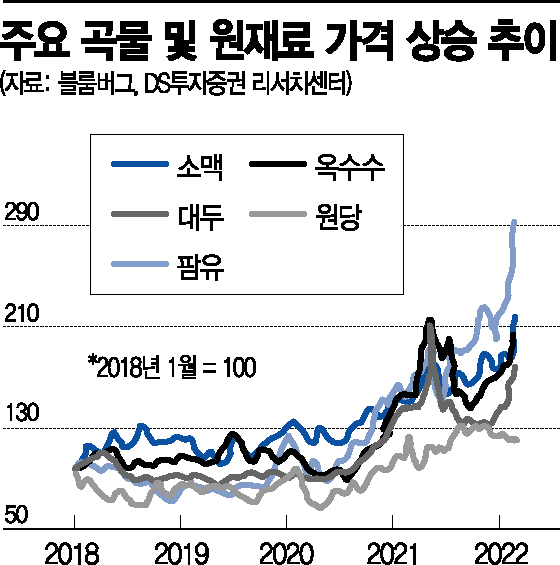
◆‘High Exchange Rate Benefits for Exporters’ Are a Thing of the Past= Generally, when the exchange rate rises, domestic companies focused on exports enjoy a ‘foreign exchange windfall’ with increased sales. However, the recent global economic instability and soaring raw material prices are offsetting these benefits, according to general assessments.
Most domestically produced semiconductors are exported, so the semiconductor industry is considered a beneficiary of the exchange rate. However, the situation varies by company. For Samsung Electronics, considering not only semiconductors but also home appliances and smartphones, the rise in exchange rates cannot be seen as an unconditionally positive factor for performance. The set business divisions (MX, CE) are negatively affected by exchange rate increases, unlike semiconductors.
The shipbuilding industry, which receives payment in dollars for shipbuilding contracts, does not entirely welcome the high exchange rate. Exchange rate fluctuations during the contract period are directly reflected in won-denominated sales, so sales increase proportionally with exchange rate fluctuations. However, the shipbuilding industry stated, "Concerns about a global economic downturn are growing, so it is difficult to talk about benefits based solely on the exchange rate as an economic indicator."
Professor Lee Jung-hee of Chung-Ang University diagnosed, "Since many industries process raw materials, export prices inevitably rise, which can weaken the price competitiveness of our industries," adding, "The problem is that the conventional notion that exchange rate increases are positive for exporters may be broken." He further predicted, "With raw material prices already very high, exchange rate increases are likely to act as an additional burden."
© The Asia Business Daily(www.asiae.co.kr). All rights reserved.



















