Airlines Face Increased Burden from Leasing and Fuel Costs
Shipping Companies Expect Improved Operating Performance Effects
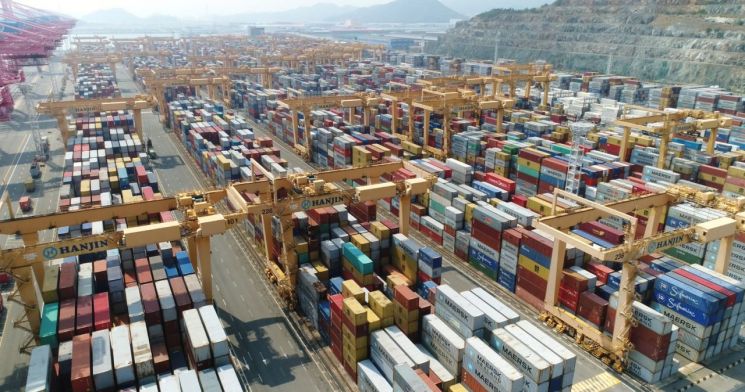
[Asia Economy Reporter Yoo Hyun-seok] The exchange rate has surpassed 1,300 won, marking a high exchange rate, causing mixed reactions in the aviation and shipping industries. While the aviation sector faces increased cost burdens as aircraft lease payments are made in dollars, the shipping industry is expected to see improved performance as it receives payments in dollars.
On the 23rd, the won-dollar exchange rate surpassed 1,300 won during trading in the Seoul foreign exchange market. It is the first time in 13 years that the exchange rate has exceeded 1,300 won.
◆ Shipping industry mostly settles in dollars, benefiting from exchange rate rise = The shipping industry is considered a representative beneficiary of the rising exchange rate. According to Korea Credit Rating, the net export exposure of the shipping industry is 23.4%. Net export exposure refers to sensitivity to exchange rate fluctuations, with a positive value indicating a favorable effect. Shipping companies receive freight charges in dollars, so an increase in the exchange rate significantly improves operating performance.
However, some opinions suggest it is not an unconditional benefit. Other costs are also increasing. Like airlines, fuel costs account for about 20% of expenses in shipping companies. In particular, fuel prices have soared. On June 21 last year, the prices of Singapore benchmark high sulfur fuel oil (HSFO) and low sulfur fuel oil (LSFO) were $411 and $527 per ton, respectively, but as of the 21st this year, they recorded $595 and $1,090, respectively. The price of low sulfur fuel oil rose by 106.83% compared to a year ago.
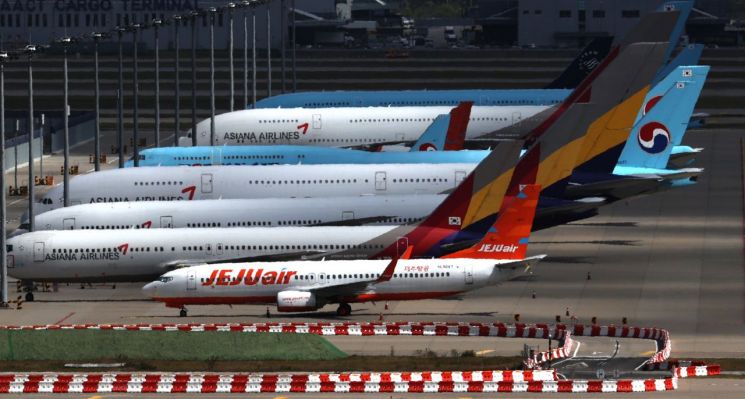
◆ Aviation industry, just recovering from COVID-19, now faces high exchange rates = The rise in exchange rates is considered a negative factor for the aviation industry. For Korean Air and Asiana Airlines, every 10 won increase in the exchange rate results in foreign exchange translation losses of 41 billion won and 28.4 billion won, respectively. Airlines purchase aircraft mainly through long-term leases, and these payments are made in dollars. Jet fuel costs are also paid in dollars. In other words, as the exchange rate rises, the amount to be paid increases. Especially with high exchange rates combined with high oil prices, cost consumption is increasing further.
In the first quarter, airlines already spent a significant amount on fuel costs. Korean Air spent 660 billion won on fuel in the first quarter, a 103.1% increase compared to 352 billion won in the first quarter of last year. Asiana Airlines spent 292 billion won, up 83.42% from 159.2 billion won in the same period. Fuel costs nearly doubled. The situation is similar for low-cost carriers (LCCs). Jeju Air's fuel costs increased from 11.3 billion won in the first quarter last year to 23.5 billion won this year, nearly doubling, and Jin Air's costs rose from 13.8 billion won to 23.5 billion won. During the same period, T'way Air's fuel costs increased from 10.1 billion won to 19.9 billion won. The total fuel costs of these five airlines amount to 1.0189 trillion won.
Professor Hwang Yong-sik of Sejong University said, "Especially in cases where lease operations and fuel costs are paid in dollars, these costs are reflected in prices, so airfares inevitably rise." He added, "For low-cost carriers (LCCs) that operate aircraft through leases rather than ownership, this will be a significant burden."
© The Asia Business Daily(www.asiae.co.kr). All rights reserved.


















