Decision Made Considering Disease Severity, Unpredictability, and Transmission
WHO May Recommend Travel Restrictions Upon Declaration
Likely Impact on Treatment and Vaccine Development and Supply
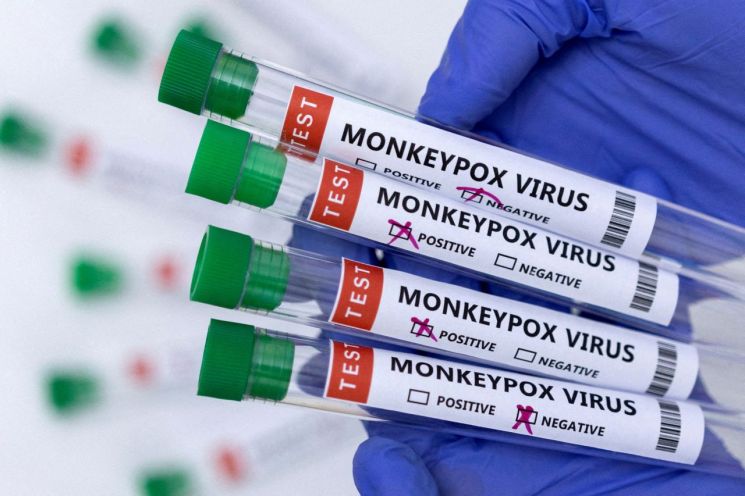
[Asia Economy Reporter Kim Young-won] The decision on whether to declare monkeypox as an 'International Public Health Emergency (PHEIC)' is expected around the 24th.
The World Health Organization (WHO) will hold an International Health Regulations (IHR) emergency meeting on the 23rd (local time) to review the declaration of PHEIC for monkeypox. The results of the meeting will be announced through a statement from the emergency committee on the 24th.
On the 14th, Ibrahima Fall, WHO Africa Emergency Director, said, "If there is advice from the IHR committee, we will be in a better position to control the situation, but that does not mean that PHEIC will be declared immediately," adding, "I think the reason the Director-General is actively convening the committee is because he does not want to wait until the situation becomes uncontrollable before calling a meeting."
According to WHO, PHEIC is defined in the International Health Regulations (IHR) as "an event that constitutes a public health risk to other countries through the international spread of disease and potentially requires a coordinated international response." The criteria include ▲ being serious and unexpected ▲ affecting public health beyond borders ▲ requiring immediate international action.
Once PHEIC is declared, under the IHR, the international community is obligated to strengthen public health measures to prevent the spread of infectious diseases. For example, WHO can recommend travel restrictions to and from countries where the disease occurs. Also, WHO member states must notify WHO within 24 hours upon confirmation of an epidemic situation.
Development and supply of treatments and vaccines may also be facilitated. In the case of COVID-19, Pfizer agreed to allow the manufacture of COVID-19 generic drugs until the end of the PHEIC. Vaccine manufacturers such as AstraZeneca (AZ) also agreed to keep their vaccine prices low during the COVID-19 pandemic.
Currently, diseases under PHEIC are COVID-19 and poliomyelitis (polio). Polio was declared under PHEIC in 2014, and COVID-19 in January 2020, and both remain so to this day. Other diseases that have been declared PHEIC include the 2009 H1N1 influenza, the 2016 Zika virus, and the Ebola virus in 2014 and 2019.
The declaration and lifting of PHEIC are decided through IHR emergency committee meetings and the WHO Director-General. The committee discusses whether the disease qualifies as PHEIC, temporary recommendations to prevent disease spread, and the termination of PHEIC. The Director-General then makes the final decision on PHEIC and temporary recommendations based on the committee's opinions, scientific information, and risk assessment of disease spread.
Temporary recommendations under PHEIC automatically expire after three months. Therefore, the committee reviews the epidemiological situation every three months to consider whether to maintain PHEIC and whether to change temporary recommendations. In March, the termination of PHEIC for COVID-19 was considered. However, at the April meeting, Director-General Tedros Adhanom Ghebreyesus decided to maintain the PHEIC for COVID-19, stating, "Now is not the time to let our guard down."
© The Asia Business Daily(www.asiae.co.kr). All rights reserved.

















