Health Authorities Raise Infectious Disease Alert Level from 'Interest' to 'Caution'
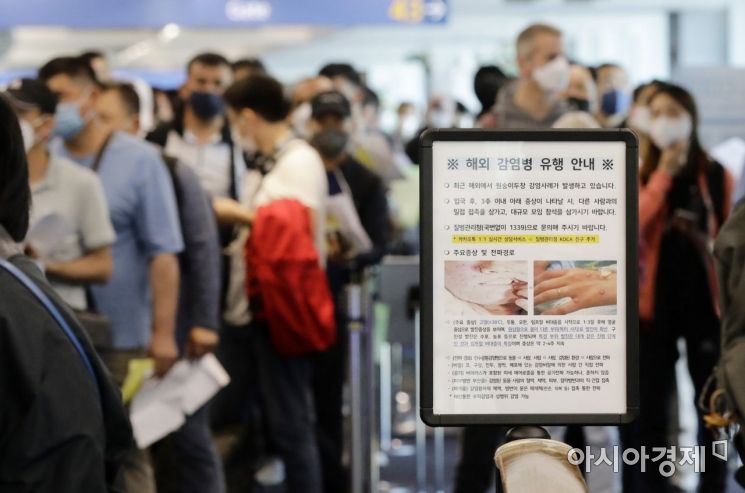
The first confirmed case of Monkeypox in Korea was identified as a Korean national who entered the country from Germany.
On the afternoon of the 22nd, Baek Kyung-ran, Commissioner of the Korea Disease Control and Prevention Agency (KDCA), stated in a briefing, "On the 21st, a Korean national, Mr. A, who returned through Incheon Airport and showed suspicious symptoms, was confirmed positive after undergoing polymerase chain reaction (PCR) testing and genetic sequencing analysis."
Mr. A arrived at Incheon Airport from Germany around 4 p.m. on the 21st. Starting the day before arrival, he experienced headaches, and upon entry showed mild fever (37.0℃), sore throat, weakness, fatigue, and skin lesions. During the entry process, he voluntarily reported his suspected infection to the KDCA, and was classified as a suspected patient by airport quarantine officials and central epidemiological investigators. Mr. A was transferred to Incheon Medical Center around 9 p.m. on the 21st and is currently receiving treatment in an isolation ward.
Following confirmation of the case, the quarantine authorities held a crisis assessment meeting on the 22nd to analyze and evaluate the situation, upgrading the infectious disease crisis level from "interest" to "caution." The response team was elevated to the Central Disease Control Headquarters (headed by the KDCA Commissioner), and all cities, provinces, and districts nationwide will establish and operate local quarantine response teams, activating an emergency quarantine system.
The authorities also plan to designate quarantine management areas in the second half of the year for Monkeypox and strengthen overseas import monitoring, especially for countries where Monkeypox is prevalent, by tightening fever screening criteria.
Monkeypox vaccination will be made available to those who wish to receive it, considering the risk level of contacts to prevent onset and severe symptoms after exposure. The introduction of third-generation vaccines is also being expedited.
Currently, 100 doses of available treatments in Korea (Cidofovir and Vaccinia Immune Globulin) will be distributed to medical institutions as needed. Additionally, 500 doses of the oral antiviral drug Tecovirimat for Monkeypox treatment are scheduled to be imported next month.
Diagnostic testing for suspected cases will be conducted by the KDCA for the time being, but depending on the domestic Monkeypox situation and concerns about spread, testing will be expanded to local governments in the future.
The KDCA has distributed guidance documents to medical personnel and plans to conduct training and distribute videos for frontline medical institutions on the diagnosis and management of suspected and confirmed Monkeypox cases.
Meanwhile, in accordance with the WHO International Health Regulations (IHR), the quarantine authorities have notified the WHO Western Pacific Regional Office and Germany, the country of departure of the confirmed patient, about the occurrence and measures taken regarding the Monkeypox case.
Commissioner Baek emphasized, "Cooperation from the public and medical community is crucial for early detection and prevention of community spread of Monkeypox." He urged, "Citizens visiting or traveling to countries with Monkeypox outbreaks should adhere to personal hygiene measures such as handwashing and mask-wearing, and consult the KDCA call center (1339) if symptoms develop within 21 days after returning."
© The Asia Business Daily(www.asiae.co.kr). All rights reserved.
![Clutching a Stolen Dior Bag, Saying "I Hate Being Poor but Real"... The Grotesque Con of a "Human Knockoff" [Slate]](https://cwcontent.asiae.co.kr/asiaresize/183/2026021902243444107_1771435474.jpg)











