Beijing May Industrial Production Growth Rate -39.6%
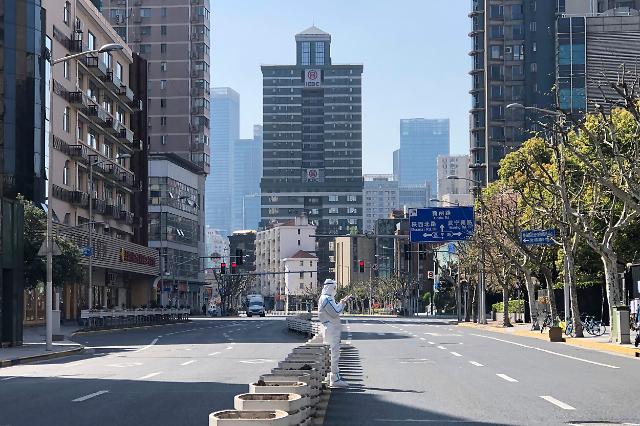
[Asia Economy Reporter Na Ye-eun] Western companies are showing signs of moving away from China amid declining economic indicators due to the prolonged 'Zero (0) COVID' policy in China.
According to Bloomberg on the 20th (local time), a survey conducted at the end of April, when the Shanghai lockdown was in place, showed that 23% of European companies responded that they are "considering moving current or planned investments from China to other locations." This is more than double the 11% response rate in the February survey and the highest in the past decade.
Bettina Schoen-Behanzin, Vice President of the EU Chamber of Commerce in China, stated, "Due to China's current policy of insisting on the zero-COVID policy, European companies have no choice but to look elsewhere," adding, "The world does not wait for China."
European companies cited Southeast Asia (16%), Asia-Pacific region (18%), Europe (19%), North America (12%), and South Asia (11%) as alternative regions.
Nicola Schaufler, EU Ambassador to China, said, "European companies are delaying decisions on new investment locations while waiting for China's zero-COVID exit strategy."
Earlier this month, a survey by the American Chamber of Commerce in China also revealed that only 31% of American companies based in Shanghai reported being "fully operational," indicating the difficulties faced by businesses.
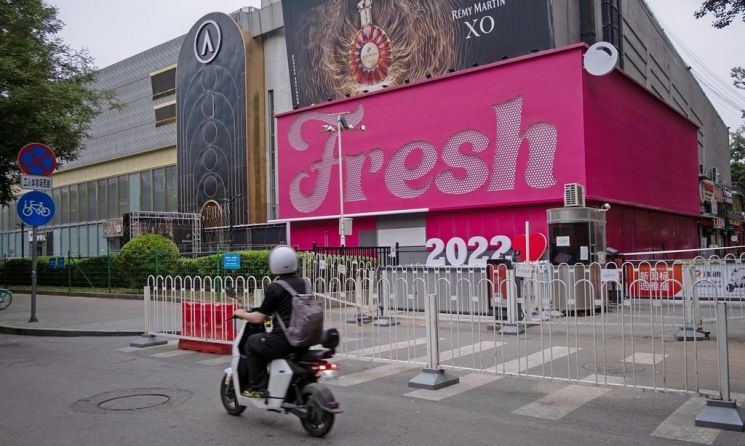
Beijing, which was partially locked down, also suffered significant economic damage. According to the Beijing Statistics Bureau on the 21st, Beijing's industrial production growth rate in May was -39.6% year-on-year. Industrial production represents the total value added created by companies and shows a trend similar to Gross Domestic Product (GDP).
Beijing's May industrial production growth rate worsened compared to April's -31.1%. Shanghai, which resumed production activities in May after a full lockdown in March and April, showed slight improvement from -61.6% in April to -28.3% in May.
Beijing's retail sales decreased by 25.7% in May. Retail sales, which reflect Beijing's domestic economy, have been worsening with -3.0% in March and -16.1% in April. Although restaurants in Beijing resumed operations from the 6th, economic activities contracted again due to the spread of COVID-19 infections originating from clubs.
Shanghai's retail sales growth rate deteriorated from -0.1% in February, -18.9% in March, and -48.3% in April, but slightly improved to -36.5% in May. However, the decline in retail sales in these major Chinese cities indicates a worsening consumer sentiment across China.
Bloomberg explained, "These indicators in Beijing show that the zero-COVID lockdown measures have significantly suppressed consumer spending as well as other economic activities," adding, "Considering that Beijing and Shanghai accounted for 3.5% and 3.8% of China's GDP in 2021 respectively, this trend could severely impact China's 5.5% growth target for this year."
Meanwhile, the contraction of consumer sentiment among Chinese consumers is also cited as a cause of the economic difficulties in China. Although consumer sentiment revived after the 2020 pandemic, enabling economic 'smooth sailing,' the continuation of the ultra-strict zero-COVID policy with lockdowns in major regions has kept consumer sentiment frozen.
After more than two months of lockdown, Shanghai's lockdown was lifted on the 1st, and Chinese authorities have also taken steps to revive the economy, such as boosting the real estate market, but the effects do not seem significant.
In major cities across China, regular PCR testing is required to prevent COVID-19 infections, and a 'negative' PCR test result is needed to use the subway or enter stores.
© The Asia Business Daily(www.asiae.co.kr). All rights reserved.
![Clutching a Stolen Dior Bag, Saying "I Hate Being Poor but Real"... The Grotesque Con of a "Human Knockoff" [Slate]](https://cwcontent.asiae.co.kr/asiaresize/183/2026021902243444107_1771435474.jpg)

















