Analysis of 525 Water Quality Automatic Measurement Values, 8 Waterworks Office Complaints, and Construction Information to Identify Causes of Water Quality Issues
Areas with Frequent Water Quality Issues and Complaints Selected as 'Priority Management Targets'
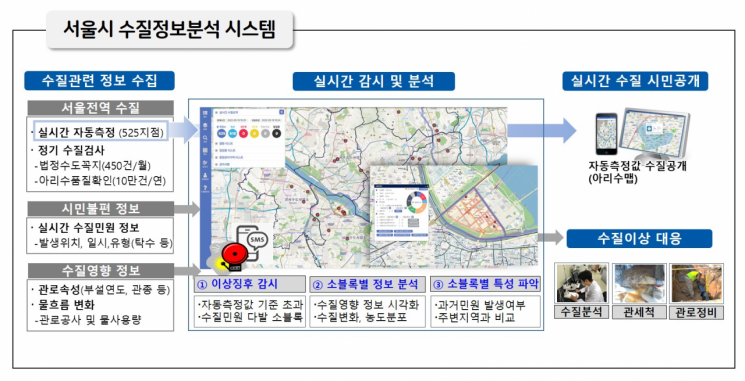
[Asia Economy Reporter Lim Cheol-young] On the 20th, Seoul City announced that it will establish and begin full-scale operation of a ‘Water Quality Information Analysis System’ to detect water quality incidents early through signs of abnormal water quality and proactively manage vulnerable water quality areas.
The ‘Water Quality Information Analysis System’ built by Seoul City significantly enhances not only the monitoring but also the analysis functions of the existing ‘Automatic Water Quality Monitoring System,’ which only provided real-time water quality abnormality alarms. This shift from ‘simple monitoring’ to ‘proactive management’ is expected to improve the response capability to water quality crises.
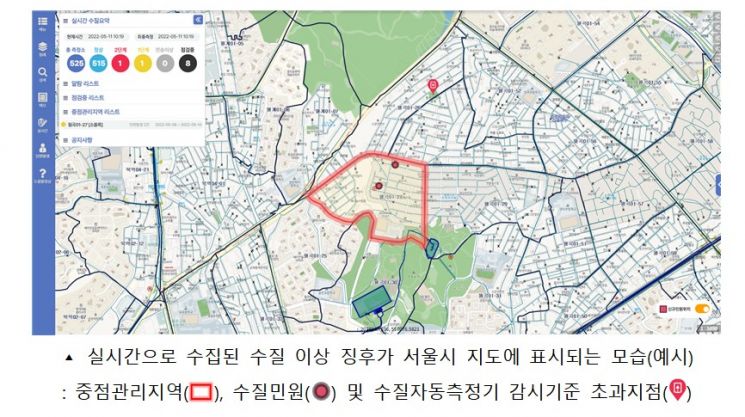
The water quality analysis system, which automatically detects areas requiring management by comprehensively analyzing water quality values measured every minute through 525 automatic water quality measuring devices installed in all administrative neighborhoods of Seoul, along with various civil complaints, pipeline, and construction information, is the first of its kind nationwide. Through this system, areas where automatic water quality measurements show abnormalities or where water quality complaints exceed certain criteria?such as two or more complaints per week or four or more per month by water supply zone?are designated as ‘priority management targets’ and receive focused management. This strengthens the ‘water quality monitoring’ function. In such cases, proactive measures such as pipe flushing and water pipe replacement are taken as needed to prevent water quality incidents.
The ‘analysis function’ for identifying causes of water quality abnormalities has also been significantly enhanced. Various water quality-related information, previously managed separately across six dispersed systems, is now consolidated and shared in real time to facilitate abnormality cause analysis.
By utilizing ‘water quality values across Seoul’ collected every minute from 525 automatic water quality measuring devices, ‘citizen water quality inconvenience reports’ received through eight waterworks offices, and ‘water quality impact information’ indicating pipeline attributes and water flow changes, the system aims to accurately identify causes of water quality discomfort and enable prompt action, thereby improving responsiveness to water quality complaints.
Seoul’s Waterworks Headquarters, eight waterworks offices, and six water purification centers include 34 water quality management and pipeline construction departments. This system allows simultaneous real-time access to diverse water quality-related information, facilitating smooth interdepartmental collaboration and enabling rapid cause investigation and response. In fact, the investigation and on-site response to a water quality complaint in Junghwa-dong, Jungnang-gu, Seoul, last April took less than an hour.
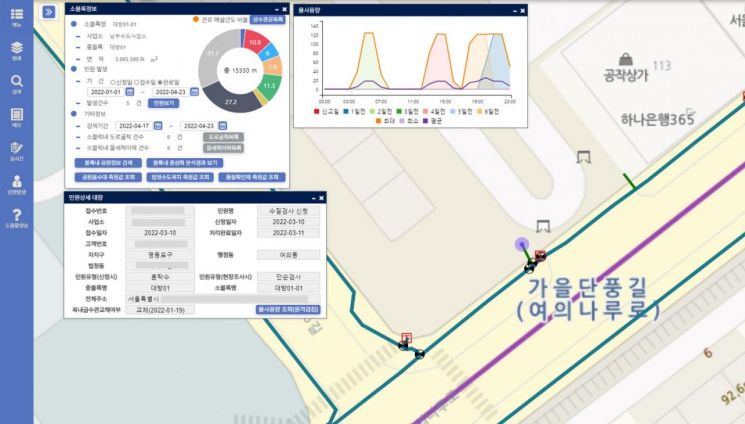
Another feature is that various water quality impact factors accumulated based on location can be immediately viewed on the system’s map, allowing more intuitive and comprehensive review of multiple potential causes of water quality abnormalities. Dokgo-seok, Director of the Sudotmul Citizen Network, stated, “Seoul’s water quality management capability, which monitors water quality in real time and manages it proactively, is managed at a world-class level based on domestic IT technology, and this will provide Seoul citizens with safer tap water.”
Seoul City plans to expand analysis not only to areas where water quality complaints occur but also to various causal factors that may affect water quality by tracing the supply route of tap water from purification plants to faucets. Gua-mi, Head of Seoul City Waterworks Headquarters, said, “We will complete the paradigm shift in water quality management to ‘proactive preventive management’ by actively utilizing 4th industrial revolution technologies such as big data analysis for predicting incident areas, along with traditional management methods like pipeline flushing and maintenance.”
© The Asia Business Daily(www.asiae.co.kr). All rights reserved.
![Clutching a Stolen Dior Bag, Saying "I Hate Being Poor but Real"... The Grotesque Con of a "Human Knockoff" [Slate]](https://cwcontent.asiae.co.kr/asiaresize/183/2026021902243444107_1771435474.jpg)


















