Switzerland, Once a Quantitative Easing Proponent, Also Tightens...Global Stock Markets Plunge
45 Countries Worldwide Raised Interest Rates This Year...Recession Concerns Spread
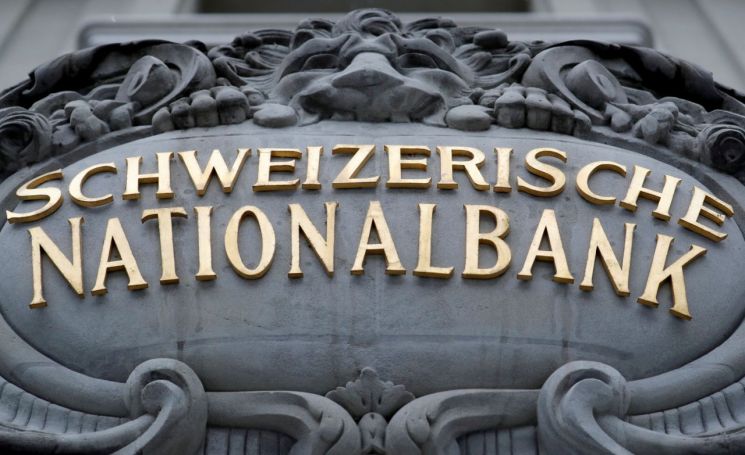
[Asia Economy Reporter Hyunwoo Lee] The Swiss National Bank (SNB), which had maintained a quantitative easing policy despite interest rate hikes by major countries, has suddenly raised its benchmark interest rate for the first time in 15 years, sending shockwaves through global stock markets and international finance. With 45 major countries, led by the United States and the European Central Bank (ECB), having simultaneously raised interest rates this year, the impact of the shift to tightening policies is expected to strongly affect the markets for some time.
On the 16th (local time), the SNB announced that it would raise its benchmark interest rate by 0.50 percentage points from -0.75% to -0.25%. This is the first time the SNB has raised its benchmark rate since 2007. In a statement, the SNB emphasized that "the tightening monetary policy is a measure to prevent rapid inflation from spreading more broadly to Swiss goods and services."
This rate hike was announced unexpectedly without prior notice. According to CNBC, Switzerland's inflation rate last month rose 2.9% year-on-year, the highest in 14 years, raising the possibility of a rate hike. However, CNBC reported that both inside and outside Switzerland, it was expected that the hike would be implemented starting in September when energy prices began to surge.
Following interest rate hikes announced by the U.S. Federal Reserve (Fed) and the ECB, concerns over the depreciation of the Swiss franc and a sharp rise in import prices increased, leading to the surprise rate hike. Thomas Jordan, SNB Governor, said in an interview with Bloomberg News on the day, "We cannot underestimate the risk of high inflation, and we do not rule out further rate hikes."
The global stock market has been greatly shocked by Switzerland's shift to tightening, which had been called "Ultra dovish" for maintaining quantitative easing despite rate hikes in neighboring countries. The U.S. Dow Jones Industrial Average plunged 2.42%, the S&P 500 dropped 3.25%, and the Nasdaq fell 4.08%. Germany's DAX index also fell 3.31%, the UK's FTSE 100 dropped 3.14%, and France's CAC 40 index plunged 2.39%.
In particular, Switzerland is a major player in global stock and asset markets, and there are concerns about large-scale capital outflows due to the SNB's shift to tightening. According to AFP, the SNB is investing more than $1 trillion (approximately 1,293 trillion won), which exceeds 140% of Switzerland's annual GDP, in the global financial sector, with over $177 billion invested solely in U.S. stocks.
Alongside Switzerland, the Bank of England (BOE) also raised its benchmark interest rate by 0.25 percentage points on the same day, and the Hungarian central bank raised its one-week deposit rate by 0.50 percentage points, raising concerns that the tightening moves of central banks worldwide will accelerate.
According to the New York Times (NYT), data compiled by financial research firm FactSet shows that 45 countries worldwide have raised interest rates over the past six months this year. The NYT pointed out that as global tightening policies intensify, concerns about economic recession are also growing.
David Malpass, President of the World Bank (WB), stated in a report on the 7th, "The war in Ukraine, China's COVID-19 lockdowns, supply chain disruptions, and the risk of stagflation threaten global economic growth," adding, "In many countries, recession is likely unavoidable."
© The Asia Business Daily(www.asiae.co.kr). All rights reserved.
![Clutching a Stolen Dior Bag, Saying "I Hate Being Poor but Real"... The Grotesque Con of a "Human Knockoff" [Slate]](https://cwcontent.asiae.co.kr/asiaresize/183/2026021902243444107_1771435474.jpg)
















