Gwangju City Affiliated Agencies Also Urged to Establish Measures for Strengthening Public Service Discipline
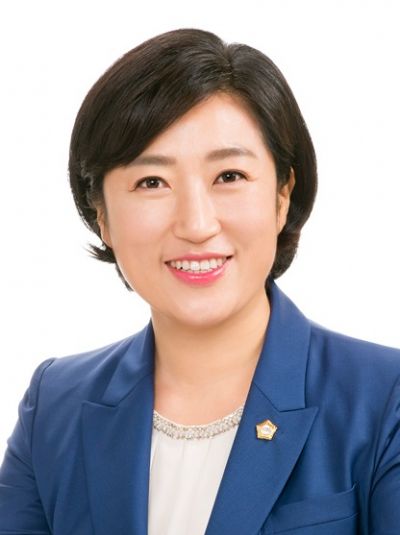
[Asia Economy Honam Reporting Headquarters Reporter Yoon Jamin] Gwangju Metropolitan City Council member Shin Sujeong requested Gwangju City to hold public discussions or hearings to allow various social groups to express their opinions and to collect them regarding the Gwangju Medical Center, which she is preparing to establish, conducting medical services through Korean traditional medicine.
She also urged clarification on whether adding Korean traditional medicine to the medical center would make it difficult to pass the government's preliminary feasibility study.
On the 15th, Council member Shin made a 5-minute free speech proposing the expansion of medical welfare services and the establishment of public service discipline in affiliated organizations.
Shin proposed the “Partial Amendment Ordinance on the Establishment and Operation of Gwangju Metropolitan City Medical Center” to provide grounds for promoting medical services through Korean traditional medicine at the Gwangju Medical Center, which is being prepared to strengthen the functions of public medical institutions and expand practical medical welfare services for medically vulnerable groups by improving awareness and accessibility of Korean traditional medicine during this temporary session.
After proposing the ordinance, the Gwangju Medical Association issued a statement opposing the amendment, arguing that medical treatment through Korean traditional medicine does not align with the purpose of establishing the tertiary hospital Gwangju Metropolitan City Medical Center and that the ordinance represents a specific professional group, namely Korean medicine.
He stated, “The Gwangju Medical Center is not established solely to respond to infectious diseases, disasters, or emergency situations,” and added, “Rather, its main purpose is to expand public medical welfare services for medically vulnerable groups through various medical departments, thereby promoting citizens’ health and enhancing medical accessibility.”
He also explained, “Public medical institutions nationwide are being reorganized to focus on health promotion and preventive health projects, and the government is distributing guidelines for establishing Korean traditional medicine departments in public medical institutions and promoting Korean medicine public health projects. Since 1991, the National Medical Center has operated Korean traditional medicine clinics, and hospitals such as Seoul Medical Center, Uijeongbu Hospital of Gyeonggi Medical Center, Cheongju Medical Center of Chungbuk Medical Center, Gongju Medical Center of Chungnam Medical Center, Military Medical Center of Jeonbuk Medical Center, and Jeju Medical Center already operate Korean medicine departments (including Korean traditional medicine and acupuncture departments).”
Furthermore, he said, “Of course, the fact that dentists and Korean medicine doctors were not included in the establishment promotion committee or review committee during the Gwangju Medical Center establishment process is a point that needs improvement,” and added, “However, installing a Korean medicine department in the medical center is no different from installing an internal medicine department, and the medical center for citizens should include what citizens need.”
Along with this, Council member Shin also urged the establishment of strong measures to prevent recurrence by disciplining those responsible for the public service discipline of Gwangju City’s affiliated organizations.
He strongly opposed, saying, “Regarding the handling of the ordinance amendment for establishing the Korean traditional medicine department, I received a text message from the external cooperation officer of the Gwangju Welfare Research Institute demanding the rejection of the ordinance. This is a serious infringement on the legislative authority of the city council and an act of disregarding the council, which is the representative body of citizens, by an executive of an affiliated organization.”
He also emphasized, “An executive of Gwangju City’s affiliated organization, which is under the Environment and Welfare Committee, acted as a spokesperson for the Gwangju Medical Association by saying, ‘We will not hesitate to respond strongly at the medical association level’ and ‘We will conduct a campaign against election,’” and added, “This is an act of forgetting the duties and roles of the executive of Gwangju City’s affiliated organization and a result of lax public service discipline in Gwangju City’s affiliated organizations.”
© The Asia Business Daily(www.asiae.co.kr). All rights reserved.

















