178 Silver Zones in Seoul, Only One-Tenth of School Zones
Traditional Markets Visited by Elderly Excluded from Designation
Some University Areas with Low Necessity Also Designated
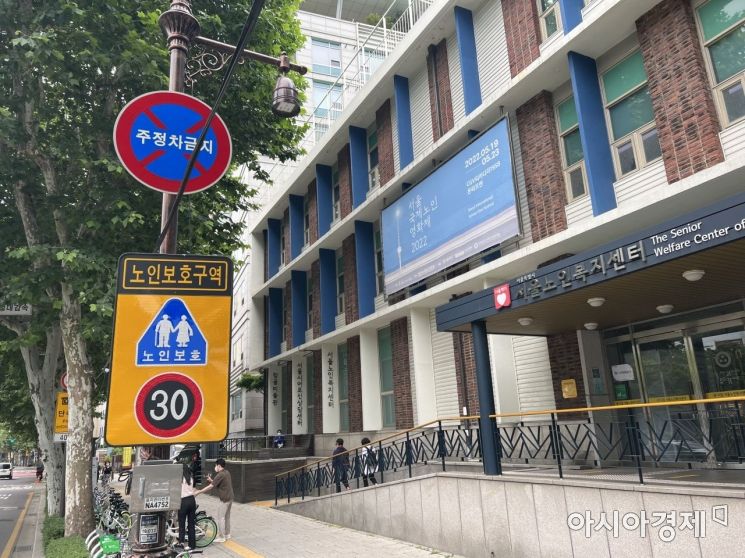 The area around Samil-daero in Jongno-gu, Seoul, is designated as both a senior protection zone and a child protection zone.
 Photo by Kim Gunchan, intern reporter kgc6008@asiae.co.kr
[Asia Economy Intern Reporter Kim Gun-chan] The area along Samil-daero in Jongno-gu, connecting Anguk Station intersection on Seoul Subway Line 3 and Nakwon Arcade, is designated as both a Senior Protection Zone (Silver Zone) and a Child Protection Zone (School Zone). The Silver Zone is one of the traffic vulnerable protection zones created to protect the elderly from traffic accident risks. This area has the Seoul Senior Welfare Center on one side of the road, and Seoul Gyeongun School and Gyodong Elementary School across the street, resulting in overlapping designations of Silver Zone and School Zone. In particular, this area is adjacent to Tapgol Park and Jongno 3-ga, and since many elderly people visit the Seoul Senior Welfare Center, which offers job programs or affordable meals, there is an unusually high flow of elderly pedestrians.
However, it is difficult to even find signs indicating that this area is a Silver Zone. Along the approximately 300-meter road, there are six signs indicating the School Zone on both sides, but only one Silver Zone sign is installed in front of the Seoul Senior Welfare Center.
Mr. Park (89), who has been visiting the Seoul Senior Welfare Center for 15 years, said, "I didn't even know there was a Senior Protection Zone," adding, "Many elderly people jaywalk, so the police sometimes stand on the road." Mr. Kim Seok-soon (69), who volunteers at the Seoul Senior Welfare Center, also said, "I didn't really know it was a Senior Protection Zone."
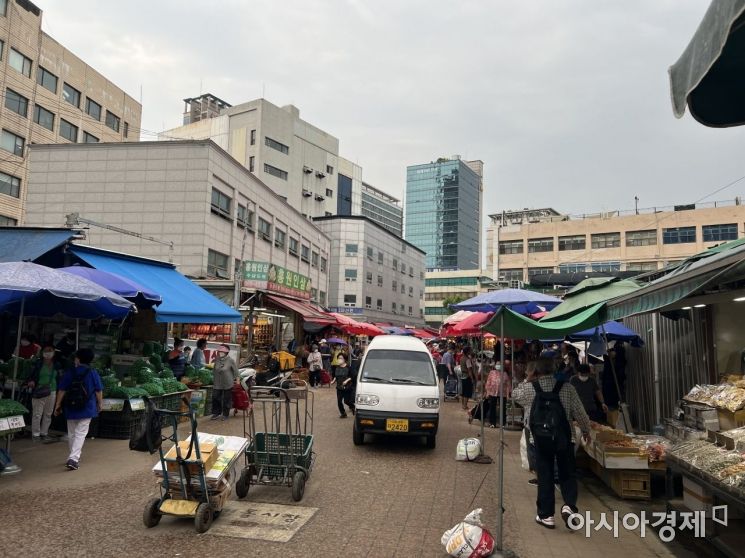 The alleys of Gyeongdong Market are filled with delivery vehicles, motorcycles, elderly walkers, and people.
 Photo by Intern Reporter Kim Gun-chan kgc6008@asiae.co.kr
Although the proportion of elderly people is increasing due to population aging, the designation of Silver Zones is minimal compared to School Zones. According to Seoul City's 'Smart Seoul Map,' there are currently 178 Silver Zones in Seoul. This is about one-tenth of the approximately 1,800 School Zones. According to the results of the government's '2021 Traffic Accident Death Reduction Measures' survey released by the National Human Rights Commission on the 26th of last month, among the 1,093 people who died in traffic accidents while crossing the street in 2020, 628 were elderly aged 65 or older, accounting for 57.5%, more than half. Also, the number of traffic accident deaths per 100,000 people aged 65 or older was 22.8, which is three times the OECD member countries' average of 7.9.
The Human Rights Commission emphasized, "As of June last year, there are 16,896 designated Child Protection Zones nationwide, but only 2,459 Senior Protection Zones, which is not sufficient," adding, "Institutional improvements are necessary to protect the human rights of the elderly from traffic accident risks."
There is also criticism that traditional market areas, where elderly people frequently visit, are excluded from Silver Zone designation. Silver Zones are designated in areas with high elderly pedestrian traffic such as nursing homes, senior centers, and elderly welfare facilities. However, traditional markets are not included in the Silver Zone designation targets. This is because, unlike nursing homes and senior centers, the applicant entity for designation is unclear.
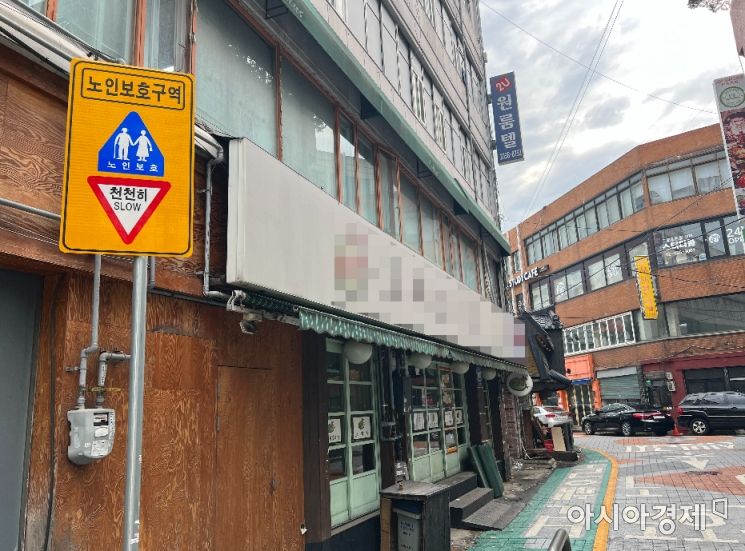 In Anam-dong, Seongbuk-gu, within the main commercial area of Korea University known as "Chamsari-gil," there is a Silver Zone operated by the Seongbuk Branch of the Korea Senior Citizens Association.
 Photo by Kim Gun-chan, Intern Reporter kgc6008@asiae.co.kr
Seoul City amended the ordinance on Senior Protection Zones in April last year to allow the mayor to designate Senior Protection Zones ex officio, and promoted plans to designate four traditional market areas as Silver Zones: Jangwi Market in Seongbuk-gu, Cheongnyangni Wholesale Market in Dongdaemun-gu, Dokkaebi Market in Dobong-gu, and Seongdae Market in Dongjak-gu. However, the expansion of Silver Zones to traditional markets was ultimately abandoned. A Seoul City official explained about the expansion of Silver Zones to traditional markets, "It takes time to collect opinions from merchants and residents."
There are also claims that some areas with low necessity have been designated as Silver Zones. The area around the 'Korea Senior Citizens Association Seongbuk Branch' in Anam-dong, Seongbuk-gu, is a representative example. Located on 'Chamsal-gil,' a major commercial street near Korea University, this area is mostly frequented by students rather than elderly people.
University student Kim (24) said, "I didn't even know it existed," and added, "I don't really understand why a university commercial area was designated as a Senior Protection Zone." Mr. A, who runs a small business in this area, also said, "It was designated two years ago, but I don't really know what it means."
© The Asia Business Daily(www.asiae.co.kr). All rights reserved.



















