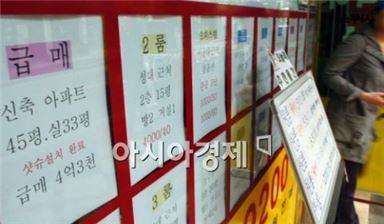
As monthly rent transactions have reached an all-time high this year, signaling the full-fledged onset of the "monthly rent era," concerns over instability in the jeonse (lump-sum deposit lease) and monthly rent markets are growing ahead of the two-year mark of the Lease Protection Act (Imdaecha 3-beop) in August. Since the primary cause is the shortage of housing supply, there are calls to increase housing supply not only from the public sector but also from the private sector.
According to the Seoul Real Estate Information Plaza on the 12th, the number of apartment lease transactions involving monthly rent in Seoul from January to May this year totaled 34,540 cases based on reports filed up to that day. This is the highest number recorded for the January-May period since related statistics began in 2011, and it is the first time the figure has exceeded 30,000. The increase in monthly rent is the result of a combination of factors, including the rise in interest rates making the interest burden on jeonse loans higher than monthly rent, and landlords preferring monthly rent to pass on property tax burdens. Additionally, after the implementation of the Lease Protection Act in late July 2020, the surge in jeonse prices caused many tenants who could not afford increased deposits to move into the monthly rent market, further fueling the monthly rent era.
With even speculation about a jeonse crisis in August, the government plans to announce measures for the jeonse and monthly rent markets within this month as a preemptive response. Likely measures include relaxing the residency requirements for apartments subject to the price ceiling system and easing move-in conditions for mortgage loans. The aim is to incentivize the release of jeonse and monthly rent units in new apartments.
Additionally, plans to expand corporate rental housing, such as the former "New Stay" program, and private rental housing supply are expected to be included in the measures. Previously, the Presidential Transition Committee also announced plans to expand corporate rental housing to increase lease supply. New Stay was a system introduced during the Park Geun-hye administration in 2015, where private developers acquired public land to build corporate rental apartments and provided stable housing to tenants for eight years. Construction companies received public support such as land acquisition and low-interest loans and could profit from sales conversions after the rental period ended. However, this business structure was criticized as preferential treatment, and the New Stay program was effectively discontinued under the Moon Jae-in administration.
Experts suggest that to revitalize the New Stay policy, the government should expand its positive functions while improving its negative aspects. Heo Yoon-kyung, head of the Economic and Financial Research Office at the Korea Institute of Construction Industry, said, "It is true that New Stay faced public criticism due to the lack of initial rent regulation and excessive benefits to the private sector despite various public supports. It is necessary to find a balance between market activation and social demands by regulating rent and easing residency qualification restrictions to revitalize corporate rental housing projects." Kim Sun-mi, a researcher at Shinhan Financial Investment, analyzed, "The shift from jeonse to monthly rent increases the feasibility of private rental housing projects. Since construction companies are pursuing business diversification based on abundant liquidity, if New Stay is revived, active participation from construction companies is expected."
© The Asia Business Daily(www.asiae.co.kr). All rights reserved.
![Clutching a Stolen Dior Bag, Saying "I Hate Being Poor but Real"... The Grotesque Con of a "Human Knockoff" [Slate]](https://cwcontent.asiae.co.kr/asiaresize/183/2026021902243444107_1771435474.jpg)















