"Possession by the Settlor in Contract Nominee Trust is Non-Owner Intent Possession by a Third Party"
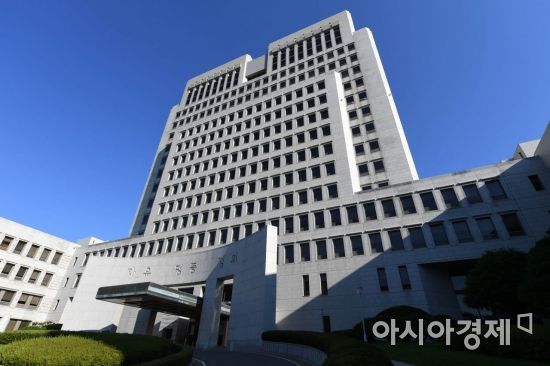
[Asia Economy Reporter Choi Seok-jin, Legal Affairs Specialist] The Supreme Court has ruled that a person who acquires real estate using someone else's name cannot acquire ownership of the real estate through adverse possession even after occupying it for 20 years.
This ruling states that in cases where a contract name trust is established by purchasing real estate according to an agreement between the parties and transferring registration under the name of the nominal trustee, the possession of the real estate by the nominal trustee cannot be recognized as autonomous possession (自主占有) necessary for adverse possession, since the nominal trustee is aware from the outset that they cannot be the legal owner of the real estate.
The Supreme Court's First Division (Presiding Justice No Tae-ak) announced on the 8th that it overturned the lower court's ruling, which had favored the plaintiff, in the appeal trial of a lawsuit filed by the heirs of the deceased Mr. A against Mr. B and others for the cancellation of ownership transfer registration, and remanded the case to the Gwangju High Court.
The court stated, "The lower court's ruling contained errors in the application of the law regarding contract name trusts and adverse possession of real estate, which affected the judgment."
Mr. A inherited land from his father, who died in 1978, thereby acquiring ownership. Without completing the ownership transfer registration based on inheritance, Mr. A sold the land to the Korea Rural Community Corporation (hereinafter referred to as the Corporation) on February 24, 1997, and transferred the registration.
Around the same time, Mr. A entered into a name trust agreement with Mr. B. In reality, Mr. A purchased the land from the Corporation, but Mr. B acted as the contracting party (buyer), and the ownership transfer registration was also made under Mr. B's name, a so-called 'contract name trust' agreement.
Article 4, Paragraph 1 of the Real Estate Real Name Act stipulates that "name trust agreements are null and void," invalidating all forms of name trust agreements.
Furthermore, the main text of Paragraph 2 of the same article states, "Any change in real rights concerning real estate made by registration pursuant to a name trust agreement shall be null and void," denying the validity not only of the name trust agreement between the parties but also of the registration made accordingly.
However, the proviso of Paragraph 2 of Article 4 states, "Provided, however, that this shall not apply where the nominal trustee is one of the parties to the contract for acquiring real rights in real estate, and the other party is unaware of the existence of the name trust agreement." This creates an exception where, as in this case, if the nominal trustee (Mr. B) is one party to the real estate sales contract and the other party (the Corporation) is unaware of the name trust agreement, the change in real rights by registration (ownership transfer) is considered valid. In other words, if the counterparty selling the real estate to the nominal trustee in a contract name trust is in good faith and unaware of the name trust agreement, the registration under the nominal trustee's name is recognized as valid.
In this case, although Mr. A actually purchased the land but concealed himself by having Mr. B enter into the sales contract with the Corporation and transferred the registration under Mr. B's name, since the Corporation was unaware of the name trust agreement between Mr. A and Mr. B, the ownership transfer registration under Mr. B's name is recognized as valid.
Meanwhile, when Mr. A entered into the name trust agreement with Mr. B, they also agreed that Mr. B would establish a mortgage on the land registered under his name, obtain a loan from the Corporation in his name, pay the land purchase price with that money, and then transfer the ownership registration to Mr. A once Mr. A repaid the loan in full.
According to this agreement, Mr. B took out a loan from the Corporation on March 4, 1997, to purchase the land and completed the ownership transfer registration on April 18 of the same year. On the same day, a mortgage registration was also made in the Corporation's name to secure the loan debt, with a maximum claim amount of approximately 95 million won.
Subsequently, at Mr. A's request, Mr. B completed the ownership transfer registration to the C Association on February 6, 2009, based on a sale dated January 15, 2009.
Meanwhile, from December 4, 1999, to November 26, 2001, Mr. A paid Mr. B approximately 75 million won to repay the principal and interest of the loan, and on April 18, 2011, Mr. A directly remitted the remaining loan balance of about 19 million won to the Corporation under Mr. B's name, fully repaying the loan. The mortgage registration by the Corporation on the land under Mr. B's name was canceled on March 12, 2012.
However, the C Association decided to place the land under a name trust with Mr. D and completed ownership transfer registrations for 44/183 and 139/183 shares of the land on May 15, 2015, and June 29, 2017, respectively.
Although Mr. A was the actual purchaser of the land from the Corporation and bore the purchase price, the registered owners sequentially changed from Mr. A's father to the Corporation, Mr. B, the C Association, and Mr. D, and under the Real Estate Real Name Act, the registration under Mr. B's name was validly recognized.
Mr. A filed a criminal complaint in April 2017 against Mr. B for breach of trust and fraud for disposing of the real estate in violation of their agreement, and against Mr. D, the final registered owner, as an accomplice to Mr. B's breach of trust. However, the Gwangju District Prosecutors' Office, which investigated the case, dismissed the charges against both due to insufficient evidence.
Mr. A filed a lawsuit seeking, primarily, the cancellation of the ownership transfer registration against Mr. D, the final registered owner, and the transfer of ownership registration against the C Association on the grounds of unjust enrichment for receiving registration under the name trust. Alternatively, he claimed unjust enrichment against Mr. B and the C Association, demanding the return of the land purchase price he bore.
Mr. A passed away on February 8, 2018, during the litigation, and his wife and four children, who inherited from him, continued the lawsuit.
The first trial court dismissed Mr. A's primary claims, i.e., the cancellation of ownership transfer registration against Mr. D and the ownership transfer registration claim against the C Association.
Mr. A and others argued that the registration under Mr. B's name, made pursuant to the name trust agreement, was invalid. However, the court held that for the registration under Mr. B's name to be invalid, a three-party name trust involving Mr. A, Mr. B, and the Corporation must exist. Since this case involved a contract name trust, the registration under Mr. B's name was deemed valid.
A three-party name trust occurs when the nominal owner Mr. A directly contracts with the seller (the Corporation) and agrees to transfer the registration to the nominal trustee Mr. B. Since all three parties are aware of the name trust, both the name trust agreement between Mr. A and Mr. B and the registration transfer from the Corporation to Mr. B are invalid under the Real Estate Real Name Act.
Since the initial registration transfer under Mr. B's name was valid, Mr. A had no right to claim cancellation or transfer of ownership registration.
However, the court partially accepted Mr. A's alternative claim for unjust enrichment against the nominal trustee Mr. B.
Since Mr. A acquired valid ownership of the land, Mr. B must return approximately 53 million won received from Mr. A as the land purchase price along with statutory interest.
However, the ruling was overturned in the second trial.
In the second trial, Mr. A and others changed their primary claim to ownership transfer registration and cancellation based on the completion of adverse possession, which the court accepted.
Article 245, Paragraph 1 of the Civil Act states, "A person who peacefully and openly possesses real estate with the intention of ownership for 20 years shall acquire ownership by registration."
There was no dispute that Mr. A, who acquired ownership from his father, continuously occupied and cultivated the land from April 18, 1997, when the ownership transfer registration was made under Mr. B's name, until February 8, 2018. It was presumed that Mr. A possessed the land with the intention of ownership (autonomous possession), so the court held that adverse possession was completed on April 18, 2017.
Therefore, the court ruled that Mr. A and others had the right to claim ownership transfer registration from Mr. B, the owner at the time adverse possession was completed, and ordered the cancellation of ownership transfer registrations of subsequent registered owners (the C Association and Mr. D), and that Mr. B transfer ownership registration to Mr. A's heirs according to their respective shares.
However, the Supreme Court found that the second trial court erred in its judgment regarding autonomous possession, a requirement for the completion of adverse possession.
The court cited previous Supreme Court rulings, stating, "Although possession is presumed to be with the intention of ownership, if it is proven that the possessor occupied another's real estate without legal grounds for ownership acquisition and was well aware of this fact at the start of possession, the possessor should be regarded as possessing without the intention to exclude the owner's rights (non-autonomous possession), unless special circumstances exist."
Furthermore, the court pointed out, "In a contract name trust, the nominal owner cannot acquire ownership regardless of whether the real owner knows the name trust agreement, and since the nominal owner is not a party to the sales contract, they cannot claim ownership transfer registration against the owner. It is reasonable to assume that the nominal owner is well aware of this."
The court added, "If the nominal owner occupies the real estate according to the name trust agreement, unless there are special circumstances such as possession under another right, the nominal owner occupies the real estate without legal grounds for ownership acquisition and with full knowledge of this fact. Therefore, the presumption that the nominal owner possesses with the intention of ownership is rebutted."
Since Mr. A initially had Mr. B enter into the sales contract with the Corporation under a contract name trust, and the Corporation was unaware of the name trust agreement between Mr. A and Mr. B, the registration under Mr. B's name was valid under the Real Estate Real Name Act. Therefore, Mr. A must be regarded as knowing that he could not legally acquire ownership of the land, and thus cannot be recognized as possessing the land with the intention of ownership.
The court stated, "The deceased Mr. A, the plaintiff's predecessor, entered into a contract name trust agreement with Mr. B regarding the land in question. Mr. B, unaware of the name trust agreement, purchased the land from the Korea Rural Community Corporation and completed the ownership transfer registration in his own name on April 18, 1997. Mr. A continuously occupied and cultivated the land from April 18, 1997, to February 8, 2018." It further stated, "Given these facts, Mr. A, as the nominal owner under the contract name trust, occupied the land in question around April 18, 1997, without legal grounds for ownership acquisition and with full knowledge of such circumstances, as the owner was Mr. B."
In conclusion, the court held, "Thus, the presumption that Mr. A possessed the land with the intention of ownership is rebutted. Unless Mr. A can prove possession under another right, his possession must be regarded as non-autonomous possession."
The court continued, "Nevertheless, the lower court held that the name trust agreement acknowledges the nominal owner as the owner between the parties, so the nominal owner is presumed to possess with the intention of ownership, and thus the presumption of Mr. A's autonomous possession was not rebutted. It recognized Mr. B's obligation to transfer ownership registration to the plaintiffs on the grounds that adverse possession was completed. This ruling contains errors in the application of the law regarding contract name trusts and adverse possession, which affected the judgment."
A Supreme Court official stated, "This ruling explicitly declares that possession by a nominal owner occupying real estate under a contract name trust is with full knowledge that they cannot acquire ownership, and therefore cannot be considered autonomous possession, meaning they cannot claim completion of adverse possession."
© The Asia Business Daily(www.asiae.co.kr). All rights reserved.
![Clutching a Stolen Dior Bag, Saying "I Hate Being Poor but Real"... The Grotesque Con of a "Human Knockoff" [Slate]](https://cwcontent.asiae.co.kr/asiaresize/183/2026021902243444107_1771435474.jpg)
















