Yongsan-gu Launches Integrated Big Data Platform
Collecting, Connecting, Storing, Analyzing, and Utilizing 286 Types of Region-Specific Data
Seongdong-gu Introduces ‘Baedal Teukgeup’
A Public Delivery App with No Advertising Fees for Merchants
Recruiting Participating Businesses
Yeongdeungpo-gu Installs AI-Based Unmanned Recycling Collection Machine
Geumcheon-gu Operates Digital Literacy Programs
Kiosk, Smartphone, and KakaoTalk Training Sessions Through November
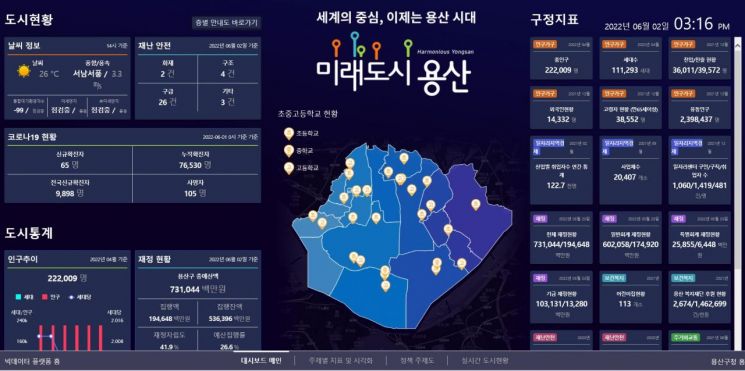
[Asia Economy, Park Jongil] Yongsan-gu (District Mayor Sung Janghyun) launched the ‘Yongsan-gu Big Data Platform’ service at midnight on June 7.
The district’s Big Data Platform is an integrated system that collects, connects, stores, analyzes, and utilizes region-specific data scattered across different sectors and institutions.
The data collected by the district consists of 228 types of public data, 21 types of internal data, and 37 types of private sector data. The Big Data Platform is offered in two versions: one for internal use and one for external use.
The internal platform is available to Yongsan-gu public officials. It provides six features: ▲Policy Thematic Maps ▲Analytical Indicators ▲Analytical Projects ▲Integrated Maps ▲Unstructured Analysis Data ▲Dashboards.
Policy Thematic Maps visualize social, economic, cultural phenomena, and district administration status on a map, using different analytical methods depending on the topic. The list of analytical indicators includes household living, local consumption, regional economy, medical welfare, education, population support, urban infrastructure, safety, and childcare indicators.
The analytical projects section contains reports that serve as models for big data-based scientific administration. The three main analytical topics are population movement and characteristics in Yongsan-gu, revitalization of local commercial districts, and the status of urban park usage. The Integrated Maps tool enables officials to upload their own data and have it mapped, which is expected to be highly useful for policy development.
In the unstructured analysis section, users can view word clouds, keyword trends, and search results based on search conditions. The dashboard provides an at-a-glance view of city status, urban statistics, and district administration indicators, offering comprehensive statistical information about the district.
The external platform is a big data platform for the public. By accessing the site from the main page of the district’s website, users are greeted with a dashboard and can select and view topic-specific indicators and visualizations, policy thematic maps, and real-time city status.
Additionally, the dashboard, which serves as a digital comprehensive status board for Yongsan-gu, is available via touchscreen kiosks installed in the lobby of the civil service office on B2 of the Yongsan-gu Integrated Administration Town and in the lobby on the first floor of the Yongsan-gu Dream Tree Integrated Town.
Since July of last year, the district has invested 730 million KRW of its own budget to build the Yongsan-gu Big Data Platform. This month, the district will conduct staff training to promote the operation of the platform. Furthermore, the district plans to enhance the platform through annual maintenance and gradually expand the types of data provided to citizens.
Sung Janghyun, Mayor of Yongsan-gu, stated, “Based on the data we have collected, we will be able to address residents’ needs more rationally,” adding, “I am confident that Yongsan will become the leading district for scientific administration through the Big Data Platform.”

Seongdong-gu (District Mayor Jeong Wonoh) is introducing ‘Baedal Teukgeup’, a Seongdong-style public delivery app with no advertising fees for merchants, and is currently recruiting participating merchants.
‘Baedal Teukgeup’ not only eliminates advertising fees for merchants but also offers free membership and charges only a 1% intermediary fee. In comparison, A Platform, a private delivery app with a 59% market share as of April 2021 and focused on advertising, requires merchants to pay at least 88,000 KRW per month in intermediary fees, which averages 6.8% per delivery-making ‘Baedal Teukgeup’ a remarkably cost-effective option.
External payment fees (such as card fees), which vary depending on sales volume, are also lower than those of other delivery apps, ranging from 0.92% to 1.92%. As a result, merchants only need to pay a total fee of 1.92% to 2.92% per order.
In the future, consumers will be able to pay using local currency (Seongdong Sarang Gift Certificates) and participate in various in-app promotions such as discounts provided by the local government and merchants.
In February, through a service bidding process, ‘Korea Gyeonggi Province Corporation’ was selected as the final operator of ‘Baedal Teukgeup’. The district plans to provide sustainable and stable service by combining the expertise of the private sector and the public interest elements of the public sector through a public-private partnership model.
According to the Korea Consumer Agency (Consumer Issues Survey on Delivery Service Platforms), the delivery app market has continued to expand, growing from 334.7 billion KRW in 2013 to 736.5 billion KRW in 2019.
Furthermore, due to various factors such as the spread of COVID-19 and the increase in single-person households, demand for contactless delivery has also risen. As the private delivery app market has become more monopolized, related costs have surged, increasing the financial burden on small business owners and consumers.
In response, the district decided to introduce a public delivery app to support merchants facing difficulties such as high intermediary fees and to increase consumer benefits.
The district focused on providing a delivery app with low fees and the ability to pay with local currency (Seongdong Sarang Gift Certificates). The app allows ordering and delivery for a variety of businesses, including general restaurants, cafes, and convenience stores, and will be expanded to include shopping and delivery from traditional markets. There are no additional burdens for merchants, such as advertising or membership fees.
In preparation for the official launch of ‘Baedal Teukgeup’ in July, the district is currently recruiting participating merchants. Merchants can apply through the Baedal Teukgeup website or customer center, and merchant registration and management will be handled by the operator, ‘Korea Gyeonggi Province Corporation’.
Jeong Wonoh, Mayor of Seongdong-gu, stated, “We have introduced a public delivery app to reduce the fee burden on small business owners and to revitalize local commercial districts and the regional economy.” He added, “We will focus all efforts on recruiting merchants and users to ensure the successful establishment of the public delivery app, and will do our best to operate a competitive digital platform that benefits both small business owners and consumers.”
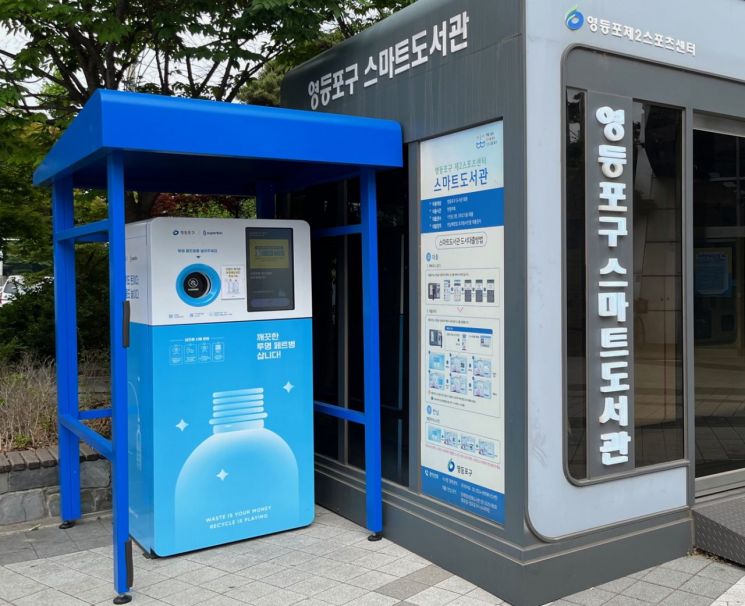
Yeongdeungpo-gu (District Mayor Chae Hyunil) announced that it has installed an AI-based unmanned recycling collection machine and began a pilot operation on June 2 to directly reward residents for high-quality recyclables and to promote proper waste separation practices.
The unmanned recycling collection machine, known as ‘Nephron’, is a resource circulation collection robot in the form of a vending machine that utilizes artificial intelligence (AI) and Internet of Things (IoT) technologies. The district introduced this system in response to residents’ suggestions, which were proposed and selected as part of the 2021 resident participatory budgeting project.
The pilot machine is located next to the smart library at Yeongdeungpo Second Sports Center (615 Gukhoe-daero). The district identified installation needs for local community centers and public institutions and selected locations with high educational impact for resource circulation and good accessibility for residents.
The usage method is simple. Residents enter their mobile phone number on the machine’s screen, and when the slot opens, they insert clean, label-free transparent PET bottles.
Each person can deposit up to 30 bottles per day, and 10 points are awarded for each collected PET bottle. When the accumulated points reach 2,000 or more, users can verify their identity and register as members on the SuperBin website or mobile app, then apply to redeem points for cash.
The collected PET bottles are crushed, washed, and transformed into new resources such as clothing or nonwoven fabric, contributing to resource circulation and waste reduction.
Chae Hyunil, Mayor of Yeongdeungpo-gu, stated, “The pilot operation of the unmanned recycling collection machine will help residents properly recognize the value of recyclable resources and the importance of waste separation,” adding, “We will continue to develop and operate effective projects to meet residents’ interest in resource circulation and lead the establishment of a resident-driven virtuous cycle of resources.”
In addition to installing unmanned recycling collection machines, the district is actively promoting various resource circulation projects for residents and employees, including ▲Yeongdeungpo Sseuda Store (Waste Diet Store) ▲Yeongjae Support Group (Yeongdeungpo Recycling Practice Support Group) ▲Operation of private recycling collection agencies ▲Ice pack reuse project ▲Public institution reusable cup sharing project.
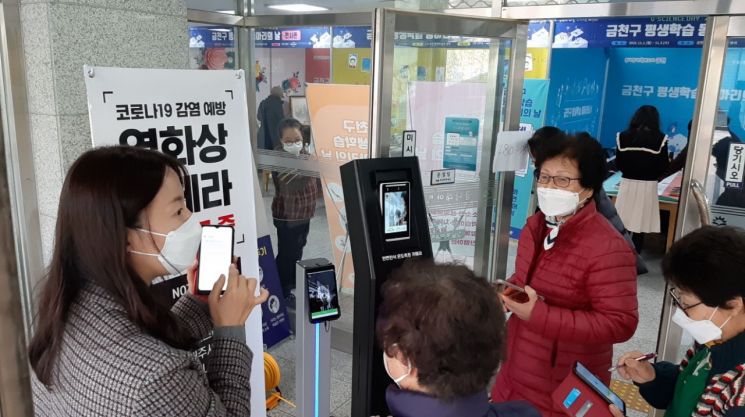
Geumcheon-gu (District Mayor Yoo Sunghoon) is operating a ‘Digital Literacy Learning Center’ program for digitally vulnerable groups.
The ‘Digital Literacy Learning Center’ is a project that has been promoted in cooperation with the Seoul Lifelong Education Promotion Agency since last year. It aims to help seniors who are struggling with the rapidly expanding digital culture to improve their ability to use information needed for daily life, so they can enjoy a more convenient life.
The training covers practical topics such as ▲using kiosks ▲using smartphones ▲using KakaoTalk. A total of 50 sessions will be held from June to November at the Geumcheon-gu Lifelong Learning Center.
For each program, two instructors will guide six learners, allowing for intensive education in small groups.
Yoo Sunghoon, Mayor of Geumcheon-gu, stated, “As automated devices become more widespread, it is increasingly necessary to address the digital divide among seniors,” adding, “We will provide a variety of useful learning opportunities so that seniors who feel left out of the digital culture can conveniently use kiosks and other devices in their daily lives.”
For more information about participating in the training, contact the Education Support Division of the Geumcheon-gu Office.
© The Asia Business Daily(www.asiae.co.kr). All rights reserved.
![Clutching a Stolen Dior Bag, Saying "I Hate Being Poor but Real"... The Grotesque Con of a "Human Knockoff" [Slate]](https://cwcontent.asiae.co.kr/asiaresize/183/2026021902243444107_1771435474.jpg)


















