"Rising Temperatures Extend Plant Growth Periods, Resulting from Increased Rainfall"
Snow-Covered Areas Decrease by About 10% Over the Past 30 Years
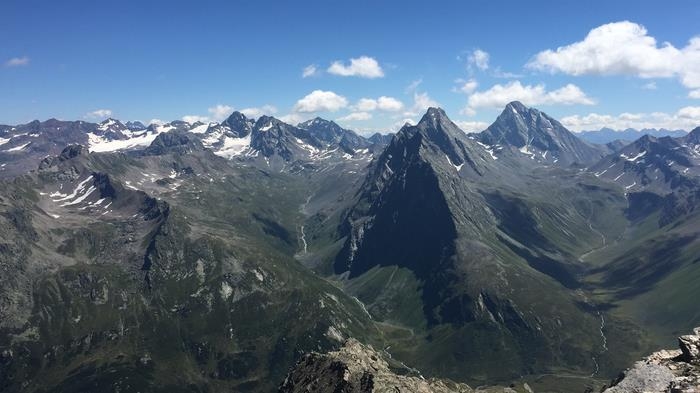 An analysis has revealed that the natural landscape of the Alps is changing due to global warming. [Image source=Yonhap News]
[Asia Economy Reporter Yoon Seul-gi] The natural landscape of the Alps, symbolized by "white snow," is turning green. Due to global warming, snow is melting and snowfall patterns are changing, resulting in greening.
According to recent reports from the University of Basel in Switzerland and foreign media, an international research team led by Dr. Sabine Rompf, an assistant professor in the Department of Environmental Sciences at the university, analyzed high-resolution satellite data taken from 1984 to 2021 and published the results in the scientific journal Science.
The study found that during this period, 77% of areas above the tree line in the Alps saw new plant growth and increased plant biomass. The research team explained that rising temperatures have extended the growing season for plants, and more rainfall than snow has contributed to this greening.
While greening phenomena due to global warming have already been confirmed in polar regions, this is the first time such extensive analysis has verified greening in mountainous areas like the Alps.
The research team excluded areas below 1700 meters in elevation, forests, and glaciers, focusing only on the remaining regions. Their analysis showed that snow-covered areas have decreased by nearly 10% over the past 30 years.
Previous satellite data analyses did not detect this trend, possibly due to shorter study periods or lower satellite image resolution. The team noted, "Ground measurements over recent years have shown a reduction in snow thickness at lower elevations," and confirmed through satellite data that in some areas, snow has completely disappeared.
The research team predicted that as global warming continues, the Alps will increasingly shift from white to green, leading to a vicious cycle. Professor Rompf explained, "Greening mountains reflect less sunlight, raising temperatures further, which in turn reduces snow-covered areas and decreases sunlight reflection." She added that warming in the Alps could cause landslides and avalanches, and disrupt water supply, tourism, and leisure industries.
Meanwhile, less than 1% of the Alps showed browning, where bare ground is exposed due to neither snow cover nor plant growth. Browning occurs when heavy rain follows drought or when water available to plants decreases, but it was found to be much less prevalent than in the Arctic or Central Asian mountain regions.
© The Asia Business Daily(www.asiae.co.kr). All rights reserved.
![Clutching a Stolen Dior Bag, Saying "I Hate Being Poor but Real"... The Grotesque Con of a "Human Knockoff" [Slate]](https://cwcontent.asiae.co.kr/asiaresize/183/2026021902243444107_1771435474.jpg)
















