[DTx Era ④] Dementia
Interview with Han Seung-hyun, CEO of Rowan
The Most Important Requirement to Prove DTx Treatment and Efficacy: 'Adherence'
96% Results Achieved in Clinical Trials
New Regulations Established in Previously Unregulated Field, Requiring New Certifications
Exploring Overseas Expansion to the UK, US, and More

[Asia Economy Reporter Chunhee Lee] Han Seung-hyun, CEO of Rowan, first became interested in digital therapeutics (DTx) for dementia because of his family. He said, "There was a dementia patient in my family," and added, "Not only the patient but also the people around them suffered greatly, yet nothing was resolved." He decided to create a DTx to overcome this.
The most important requirement to prove the efficacy of DTx treatment is ‘adherence.’ It is a measure of how timely the medication or treatment is received. Unless the patient is hospitalized and closely monitored, it is generally difficult to take medicine on time or receive treatment promptly. For patients suffering from brain diseases such as dementia, adherence is even lower.
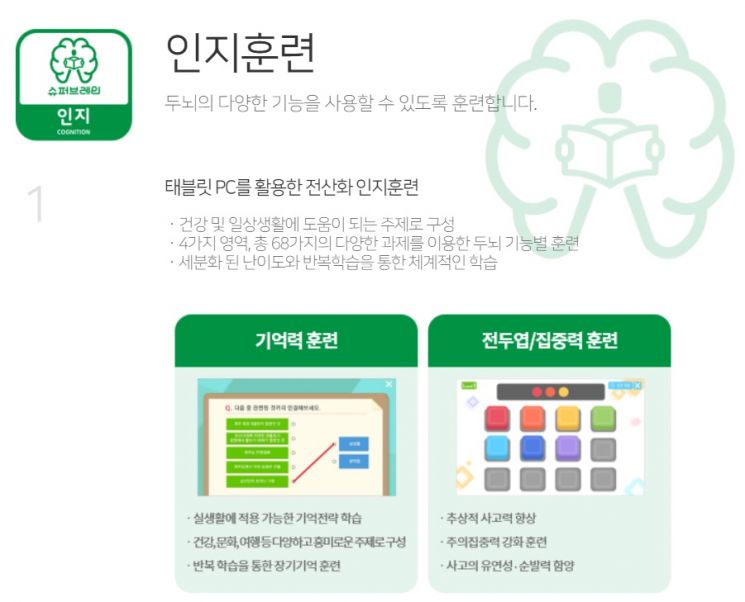
Superbrain produced unexpected results in clinical trials. In the clinical trial that started with a target adherence rate of 75%, the home-based model, where subjects performed the treatment themselves at home, showed a higher adherence rate of 96% compared to the institution-based model (88%), where patients visited institutions for treatment. CEO Han explained, "The institution-based model naturally has high adherence because nurses are right beside the patients, but the home-based model depends solely on the patient’s active participation," adding, "The effort to make it fun along with the fear of dementia seems to have been effective."
The high trust in medical staff in Korea also contributed. He said, "Overseas, it is rare to address medical staff as ‘teacher’ or ‘sir,’" and added, "The national character of listening well to medical staff seems to have played a role." This is also why Superbrain emphasizes the role of medical professionals. CEO Han said, "People don’t fail to diet or quit smoking because they don’t know how," and continued, "Especially for degenerative brain diseases, medical staff intervention is necessary, and maximizing the role of medical professionals is important in DTx as much as patients use it."
Rowan developed DTx even before it was well known in Korea and achieved commercialization through the introduction of Superbrain’s indemnity insurance system. However, two years ago, when the Ministry of Food and Drug Safety announced the ‘Digital Therapeutic Device Approval and Review Guidelines’ and rules for DTx were established domestically, an unexpected certification controversy arose.
The guidelines define DTx (here referred to as ‘digital therapeutic devices’) as ‘software as a medical device (SaMD) that provides evidence-based therapeutic interventions to patients to prevent, manage, or treat medical disabilities or diseases.’ At that time, Superbrain met all the SaMD requirements in terms of form and other aspects but had not yet received certification from the Ministry of Food and Drug Safety. CEO Han explained, "Since there were no regulations before, now that guidelines exist, we have to obtain new certification."
They are also actively seeking overseas expansion. He said, "Preparatory work for exploratory clinical trials is underway in the UK, and from the second half of this year, we plan to seriously explore entry into the US market." The UK clinical trial will be conducted with support from the UK Department of Health and Social Care by Professor Gill Livingston of UCL, who is recognized as a global expert on dementia.
He also expressed a strong intention to develop DTx for more advanced stages of dementia. CEO Han said, "At the current stage, it is possible to apply it up to the early stages of dementia based on a doctor’s judgment," and added, "We are also considering development for application to patients with severe conditions."
© The Asia Business Daily(www.asiae.co.kr). All rights reserved.
![Clutching a Stolen Dior Bag, Saying "I Hate Being Poor but Real"... The Grotesque Con of a "Human Knockoff" [Slate]](https://cwcontent.asiae.co.kr/asiaresize/183/2026021902243444107_1771435474.jpg)













