Abnormal Weather and COVID-19 Cause Logistics Crisis
Vegetable Prices Soar Due to Poor Harvest
Meat Prices Rise Amid Feed Cost Increase
US Potato Production Plummets
Subway and Others Halt French Fry Sales
[Asia Economy Reporters Moon Hyewon and Koo Eunmo] "Everything except salaries has gone up." Due to global abnormal climate phenomena, prolonged COVID-19, and logistics crises caused by the Russia-Ukraine war, prices of food items such as vegetables, meat, cooking oil, and flour are soaring to unprecedented levels.
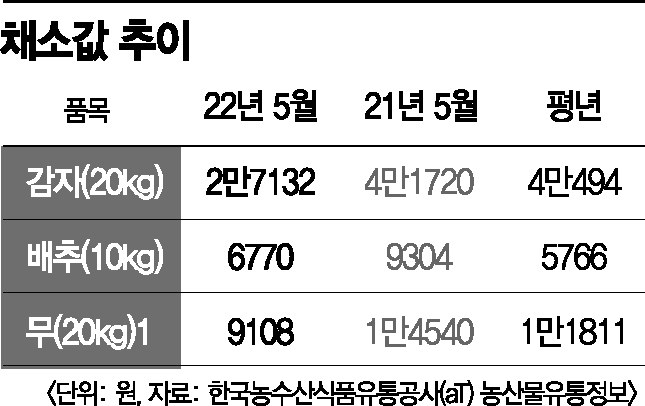
According to the Korea Agro-Fisheries & Food Trade Corporation on the 30th, as of the 27th of this month, the price of potatoes (20kg) was 41,720 KRW, up 53.77% compared to a year ago. During the same period, napa cabbage (10kg) rose 37.43% to 9,304 KRW, and radish (20kg) increased 59.64% to 14,540 KRW. The early May heatwave and crop damage caused by rainfall amounts only half of the average led to the rise in vegetable prices.
Over the past two months, the nationwide average rainfall was 92mm, only 49% of the average rainfall (186mm). Major grain-exporting countries are facing difficulties in crop production and have taken protectionist trade measures, making grain price increases inevitable. Indonesia has halted palm oil exports, and India has abruptly stopped wheat exports. As of the 20th of this month, the price of Gom Pyo flour (1kg) was 1,610 KRW, up 18.64% from a year ago, and the average retail price of domestic Company A’s soybean oil (900ml) rose 34% to 4,916 KRW compared to a year ago. With the international grain prices used for feed soaring, meat prices such as beef and pork have also skyrocketed. Samgyeopsal, once known as an affordable meal, has become "golden pork." On the 23rd, the retail price of pork (1kg) was 28,500 KRW, a 30.1% increase compared to the same period in previous years. Worried self-employed business owners began hoarding cooking oil, and warehouse discount stores and online shopping malls imposed purchase limits.
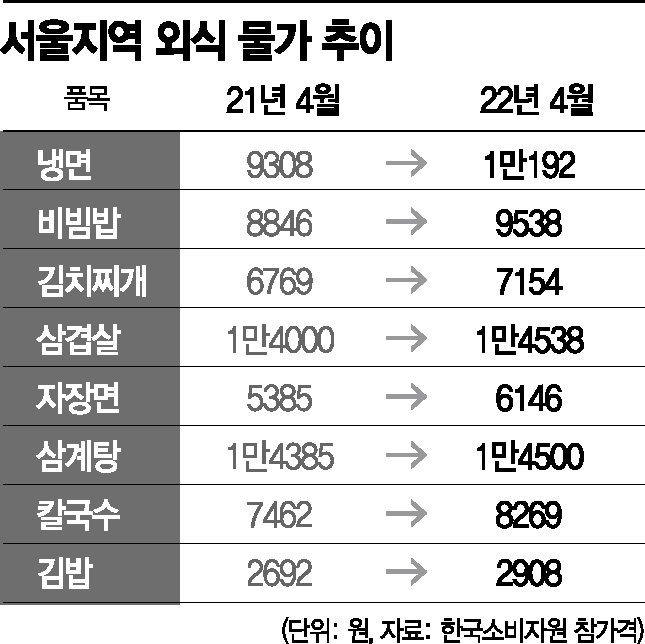
Consequently, dining-out prices have also surged. As of April, the price for one serving of samgyeopsal in Seoul was 14,538 KRW, up 4.4% from 13,923 KRW two years ago in the same month. The price of naengmyeon rose 9.5% to 10,192 KRW over the past year, and jajangmyeon prices increased 14.1%, surpassing 6,000 KRW. Kalguksu prices also rose 10.8%, exceeding 8,000 KRW.
To make matters worse, the production of U.S.-imported potatoes, which are mainly imported into Korea, has sharply declined due to climate changes in the U.S., causing a "French fry crisis" for fast-food franchises such as Subway and Burger King. Subway temporarily suspended sales of wedge potatoes and potato chips from early this month and has yet to resume sales as of now, while Burger King temporarily halted French fry sales on the 23rd and 24th of this month but resumed on the 25th. Although the companies that stopped sales dismiss this French fry crisis as a temporary phenomenon, the industry atmosphere remains unsettled. Domestic fast-food franchises heavily depend on U.S.-imported potatoes, and with the sharp decline in U.S. potato production and ongoing international logistics difficulties due to COVID-19, supply is facing challenges.
According to U.S. agricultural data company Gro Intelligence, U.S. potato production last year decreased by 7% compared to the average of the past five years. An industry official said, "Supply shortages caused by abnormal climate phenomena, the aftermath of COVID-19, and prolonged logistics crises due to the Russia-Ukraine war are expected to continue, leading to further price increases in the second half of this year. Each industry is preparing countermeasures such as diversifying supply chains."
© The Asia Business Daily(www.asiae.co.kr). All rights reserved.


















