Korea Hydro & Nuclear Power Develops Nuclear Power Plant 3D Printing Technology... Commercialization Not Yet Considered
Advanced Countries Already Reforming Regulations... US Nuclear Regulatory Commission as Representative
Competition for 'Next-Generation Nuclear Power' SMR Intensifies... Government Drastically Cuts Budget
Government Roadmap Reduction Inevitable... President Yoon's 'Nuclear Power Superpower' Vision Also Setback
Nuclear Industry Disappointed... "SMR's Golden Time Is Until 2030"
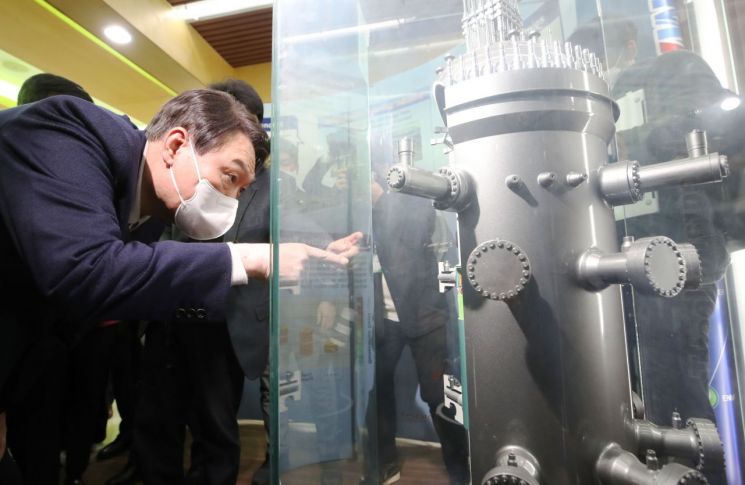 President Yoon Suk-yeol visited the Korea Atomic Energy Research Institute in Daejeon last November during his presidential campaign to inspect facilities related to Small Modular Reactors (SMR). [Image source=Yonhap News]
[Asia Economy Sejong=Reporter Lee Jun-hyung] Korea Hydro & Nuclear Power has developed technology to manufacture nuclear power plant components using 3D printing, but it is expected to take considerable time before commercialization. This is because there are no technical standards or regulations for nuclear power plant components made with 3D printing. Due to the conservative domestic nuclear regulatory environment toward new technologies, the commercialization of 3D printing technology requires legislative amendments and other complex processes. This is why Korea Hydro & Nuclear Power, despite completing technology development, has not even been able to consider commercialization. Concerns are rising that Korea may fall behind in the advanced technology competition.
On the other hand, advanced countries have already commercialized nuclear power plant 3D printing technology and are undertaking bold regulatory reforms. The United States, which has early secured future nuclear technologies such as Small Modular Reactors (SMR), is a representative example. The U.S. Nuclear Regulatory Commission (NRC) announced an 'Implementation Plan for Advanced Manufacturing Technologies,' including 3D printing, in 2019 and revised related regulations the following year. This enabled U.S. nuclear company Westinghouse to commercialize reactor core components made by 3D printing for the first time in the world in 2020. Turbine manufacturers such as General Electric (GE) in the U.S. are also utilizing 3D printing technology to produce key secondary system components.
‘Game Changer’ SMR... Government Budget Severely Cut
Advanced nuclear technologies that advanced countries are rushing to research and develop are not limited to 3D printing. SMR, the next-generation nuclear reactor, is a field that many countries have identified as a future growth engine. It is considered a ‘game changer’ in the energy market due to its higher safety compared to existing nuclear plants and its ability to be constructed in island and mountainous regions. This is why Ahn Cheol-soo, the People Power Party presidential candidate, pledged last month during his time as chairman of the Presidential Transition Committee to develop SMR as a core industry.
Domestic companies are also accelerating investment in SMR. Doosan Group announced on the 25th that it will invest 5 trillion won over five years in next-generation energy businesses including SMR. Doosan Enerbility (formerly Doosan Heavy Industries & Construction) has already invested 104 million dollars (about 130 billion won) in U.S. NuScale Power, a global SMR market leader. NuScale Power is the company in which Samsung C&T recently invested 70 million dollars (about 88.6 billion won) to enter the SMR market. Additionally, SK Group signed a memorandum of understanding earlier this month for business cooperation with TerraPower, an SMR company founded by Bill Gates.
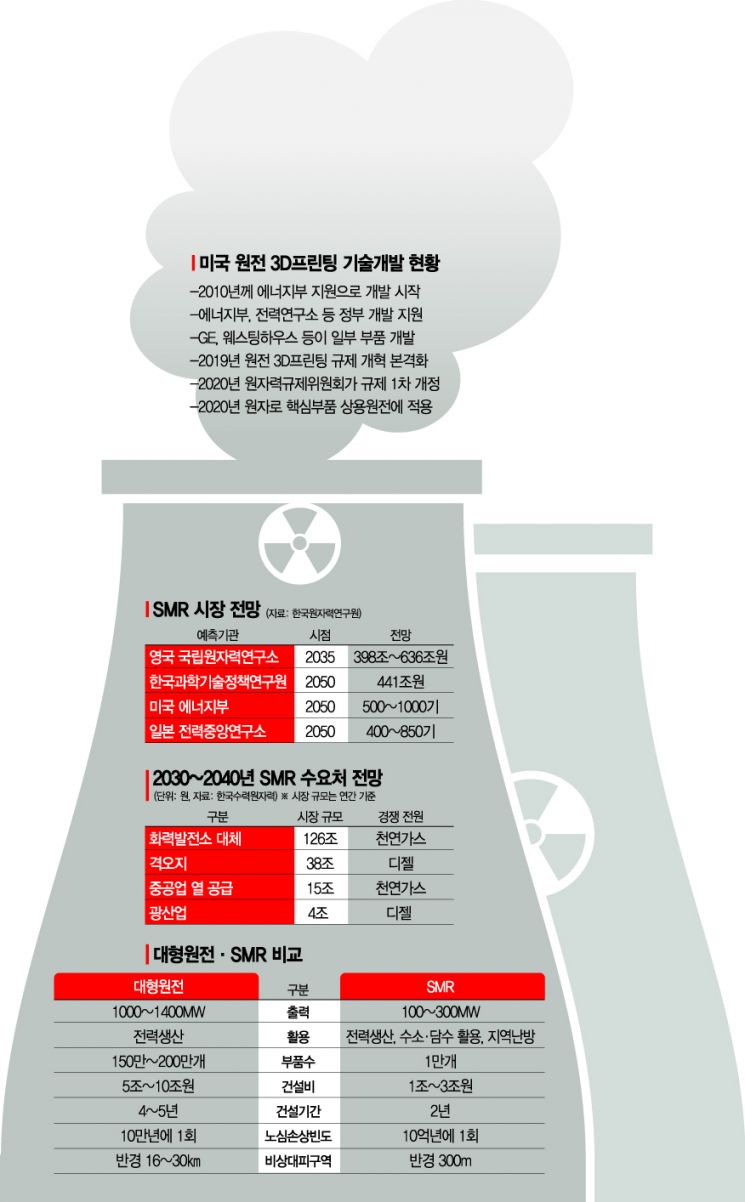
However, the government’s plan to secure SMR standard design approval by 2028 is stumbling from the start. This is because the government’s ‘SMR Technology Development Project’ budget was effectively cut significantly during the preliminary feasibility study. Previously, the Ministry of Trade, Industry and Energy and the Ministry of Science and ICT applied for a preliminary feasibility study for the SMR project worth 583.2 billion won in September last year. The Ministry of Economy and Finance conducted a comprehensive evaluation of the SMR project’s preliminary feasibility study on the 23rd of this month and decided to set the budget in the high 300 billion won range. This means the budget was reduced by nearly 200 billion won compared to the original plan.
The Ministry of Economy and Finance made this decision because the Korea Institute of S&T Planning and Evaluation (KISTEP), the preliminary feasibility study review agency, judged the economic feasibility of the SMR project to be low. It is reported that KISTEP repeatedly pointed out during the first and second preliminary feasibility study review meetings that the focus of the SMR project is on ‘exports’ rather than ‘domestic construction.’ KISTEP explained that even if the SMR market opens from 2030, the possibility of Korean exports cannot be guaranteed.
‘Nuclear Power Superpower’ Vision Disrupted... "Don’t Miss the Golden Time"
The problem is that the budget cuts will also disrupt the government’s plan to reverse the ‘nuclear phase-out’ policy. The development of next-generation nuclear technologies such as SMR is a major national agenda of the Yoon Suk-yeol administration. However, if the SMR budget is set in the high 300 billion won range, about 200 billion won less than the original plan, the government roadmap will inevitably be significantly scaled down. An official from a national research institute said, "The SMR budget of 583.2 billion won submitted was already reduced from the originally planned 800 billion won range after multiple cuts," adding, "Experts believe that even with the existing budget, achieving government goals is difficult."
The Ministry of Trade, Industry and Energy, the competent ministry, also expressed difficulty. If the SMR budget is drastically cut, it will be difficult to realize the plan to diversify nuclear export portfolios with Korean-type reactors (APR1400) and SMR. The plan to secure SMR standard design approval by 2028 is also likely to be delayed. This is why the Ministry reported to the Presidential Transition Committee before the launch of the Yoon Suk-yeol administration that "to secure leading nuclear technologies, large-scale investment in SMR technology development is necessary."
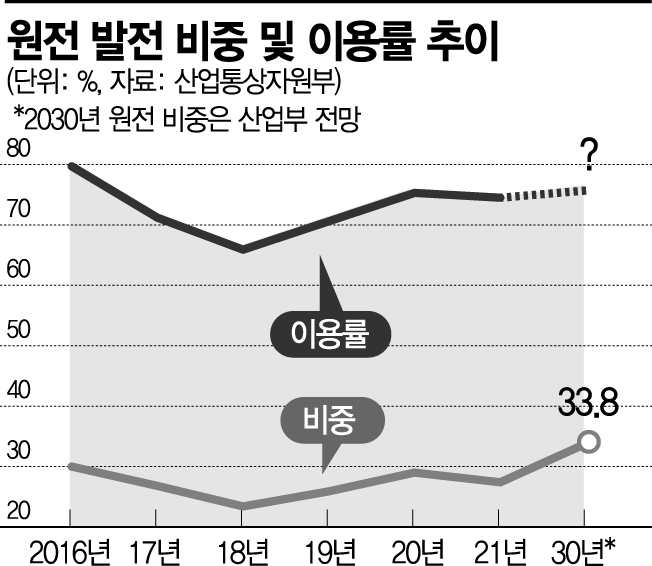
The nuclear industry is also unable to hide its disappointment. It is pointed out that if technological superiority in the SMR field is not secured by 2030, Korea may fall behind in global competition. An industry official said, "The golden time for SMR technology development is until 2030," adding, "Even if the government increases the budget, it will still be insufficient given the cuts."
Jung Dong-wook, president of the Korean Nuclear Society, said, "The SMR project included various new technology tasks such as the development of nuclear fuel that did not exist before, but budget cuts have made it difficult to achieve the goals," and suggested, "To avoid falling behind in the global SMR competition, supplementary tasks should be prepared to support technology development."
© The Asia Business Daily(www.asiae.co.kr). All rights reserved.
![Clutching a Stolen Dior Bag, Saying "I Hate Being Poor but Real"... The Grotesque Con of a "Human Knockoff" [Slate]](https://cwcontent.asiae.co.kr/asiaresize/183/2026021902243444107_1771435474.jpg)













