[Seoul District News] Seongdong-gu Transforms Idle Space into Daehyeonsan Rose Garden with 35 Varieties and About 22,000 Roses; Rose Festival with Residents on June 4... Gangdong-gu’s Iconic Herb Astronomical Park at Iljasan Foot in Dunchon-dong Draws Visitors... Gwanak-gu Opens ‘Gwanaksan Valley Camping Forest’ for Rest and Healing... Songpa-gu Launches ‘Conscience Parasol Rental Service’ Along Tancheon Path to Combat Heatwave... Guro-gu’s Deokui Neighborhood Park, Cheonwang Neighborhood Park, and Solgil Children’s Park Water Playgrounds to Open in July... Ma
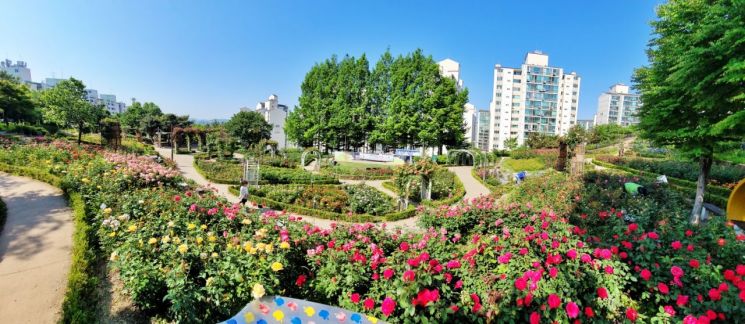
[Asia Economy Reporter Park Jong-il] The Daehyeonsan Rose Garden in Seongdong-gu, filled with a deep floral fragrance, has become a ‘healing spot’ for local residents as visitors continue to flock there daily.
Located in Geumho 1-ga-dong, the Daehyeonsan Rose Garden is home to about 22,000 rose bushes of 35 varieties that bloom year-round from spring to autumn, filling the nearby area with a rich and deep rose scent.
The petals, ranging from deep red to soft pink, blend harmoniously with the vibrant green leaves, creating clusters that adorn the garden beautifully.
The roses display a variety of colors, changing from bright yellow to red, pure white, or purple, naturally blooming and reaching their peak moments, conveying the wonders of nature to visitors.
Many roses with unfamiliar names such as ‘Mother’s Day,’ ‘Mr. Bluebird,’ ‘Gold Facade,’ and ‘Pink Perfume’ greet those strolling through the hillside garden, establishing Daehyeonsan Rose Garden as a popular place for walks and relaxation.
The Daehyeonsan Rose Garden was created on an old concrete walkway and stone retaining wall (1,900㎡) within Daehyeonsan in Haengdang-dong.
Utilizing a 5,000㎡ idle space, the project was gradually implemented over two years starting in 2018. Initially, about 10,000 rose bushes were planted in early 2019, and now the number has more than doubled, making the rose field even more abundant.
The walking paths are designed with a ‘nature-friendly rainwater infiltration system’ that allows rainwater to slowly seep into the soil and evaporate, enabling visitors to safely and comfortably use the park even during rainy weather.
Additionally, photo zones, hammocks, and benches are placed throughout the garden, allowing visitors to enjoy the beautiful roses while resting comfortably. Families with young children and couples frequently visit, keeping the area lively.
Social media is also filled with visitors’ testimonials, such as “I was happier because I love roses,” “A rose garden to enjoy even at night with a sentimental atmosphere,” and “Had a great time with my child among the rose vines.”
Due to its popularity, the ‘Daehyeonsan Rose Garden Festival’ will be held on the 4th. Starting at 11 a.m. with a congratulatory performance at the Geumho 1-ga-dong Community Center, the event will include a flea market and booth experiences, offering residents a chance to appreciate the full beauty of the roses together.
A Seongdong-gu official said, “We hope everyone can fully enjoy the beauty of the roses, a gift of nature in May, at Daehyeonsan Rose Garden,” adding, “We will continue to plant seasonal flowers throughout the region to bring the beauty of the seasons into daily life.”
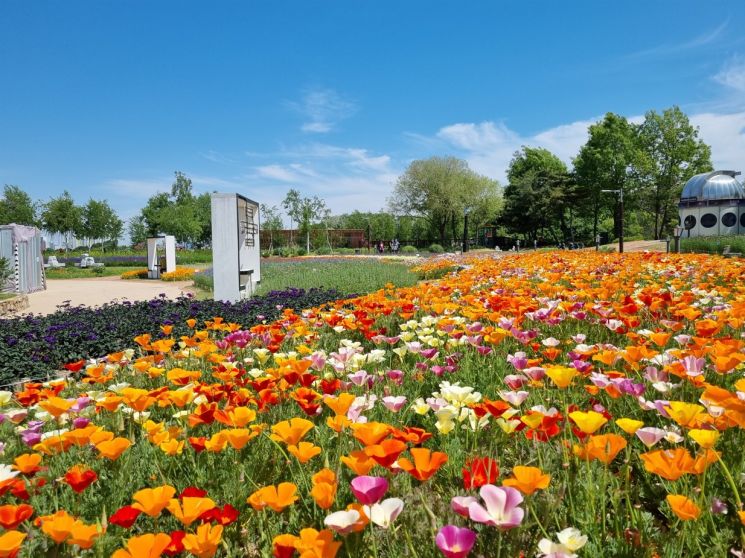
At the foot of Iljasan in Dunchon-dong, Gangdong-gu’s representative attraction, ‘Herb Astronomy Park’ (San 86, Dunchon-dong, Gangdong-gu), is attracting visitors’ attention with about 100 varieties of herbs including colorful lavender, geranium, sage, and poppy reaching their peak bloom.
‘Herb Astronomy Park’ was established in 2006 as a park combining over 180 species of herbs and trees arranged in the shape of an astronomical observatory connecting the sky and earth. Since its creation, the park has continuously added various attractions such as photo zones, framed gardens, observation decks, experiential learning centers, and sculpture gardens, gaining even greater love from residents.
Currently, flowers blooming throughout the park are at their peak for May. At the entrance and center of the park, vibrant roses and sweetly scented wild roses welcome visitors.
At the astronomical observatory, cherry sage with its red-tinted face greets visitors, along with pineapple sage and apple cider geranium with fresh fruity scents, English lavender swaying gently in the fragrant breeze, curry sage with subtly spreading curry aroma from its yellow flowers, and colorful California poppies and cornflowers singing in hues.
This spring herb festival will reach its peak until early June, just before summer arrives. A district official said, “‘Herb Astronomy Park’ is the only herb cluster in Seoul,” and added, “We hope visitors come to the park to enjoy the colorful herb plants and the healing scent carried by the breeze.”
How about spending a refreshing night outdoors, fully immersed in the natural atmosphere with fresh forest air?not in a deep valley or mountain, but in the city?where families can enjoy simple camping together?
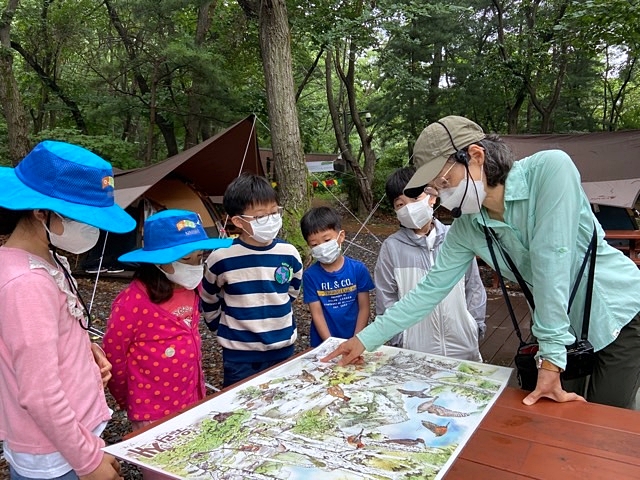
Gwanak-gu is offering ‘Gwanaksan Valley Camping Forest,’ an affordable camping site that provides rest and healing, responding to the rapid increase in family-centered leisure culture and camping users amid the COVID-19 pandemic.
Gwanaksan Urban Natural Park is a popular spot where many people can feel nature within Seoul’s city center. The ‘Gwanaksan Valley Camping Forest’ is located a 10-minute walk from the entrance of Gwanaksan and features a children’s playground inside the camping forest, with a cool valley suitable for water play and a rose garden opposite.
The ‘Gwanaksan Valley Camping Forest’ program was popular even during the two years of social distancing when outings were difficult, operating on a small scale.
This year, with the lifting of social distancing, the district plans to expand the number of participating families and hold the program 18 times in total, twice each weekend (Friday-Saturday / Saturday-Sunday) from June 10 for a one-night, two-day schedule.
The program offers various forest experiences beyond camping, including forest rope play, nighttime insect exploration, bird watching, forest trail walking, and forest healing and education over the one-night, two-day period.
Starting with ‘Our Family Happiness Index UP’ in June, followed by ‘Have You Ever Been Hit by Cicada Pee?’ in July, ‘Water and Forest Insects’ in August, and ‘Wise Fragrant Forest’ in September, the program runs monthly with themes and rich activities suited to the forest environment.
Using the ‘Gwanaksan Valley Camping Forest’ provides accommodation facilities such as a 5-person tent, mats, and shade tents, along with convenience facilities including microwave ovens, refrigerators, and water heaters.
Participating families only need to prepare simple items necessary for forest camping experiences, such as packed meals and drinks for the evening and morning, extra clothes, sleeping bags, and lanterns. However, cooking, fire, and electricity use are not allowed.
A district official said, “Although parking is difficult this year due to construction at the Gwanaksan Urban Natural Park management office and parking lot, visitors can easily access the park on foot from Gwanaksan (Seoul National University) Station by using the Sinlim Line light rail, buses, and subway, which opens on May 28, so there is no need to use private vehicles.”
The Gwanaksan Valley Camping Forest program recruits 18 families per session on a first-come, first-served basis, targeting families with children aged six and older. Families wishing to participate can apply through the Seoul Metropolitan Government Public Service Reservation site from the 20th of the previous month (for June programs, applications start May 30). The usage fee is 10,000 KRW per session.
The district official added, “We hope families can enjoy nature and harmony together through the conveniently located and scenic Gwanaksan camping forest in the city,” and “We highly recommend the Gwanaksan campsite for those who want to deepen family bonds this summer, not only at Gwanaksan but elsewhere as well.”
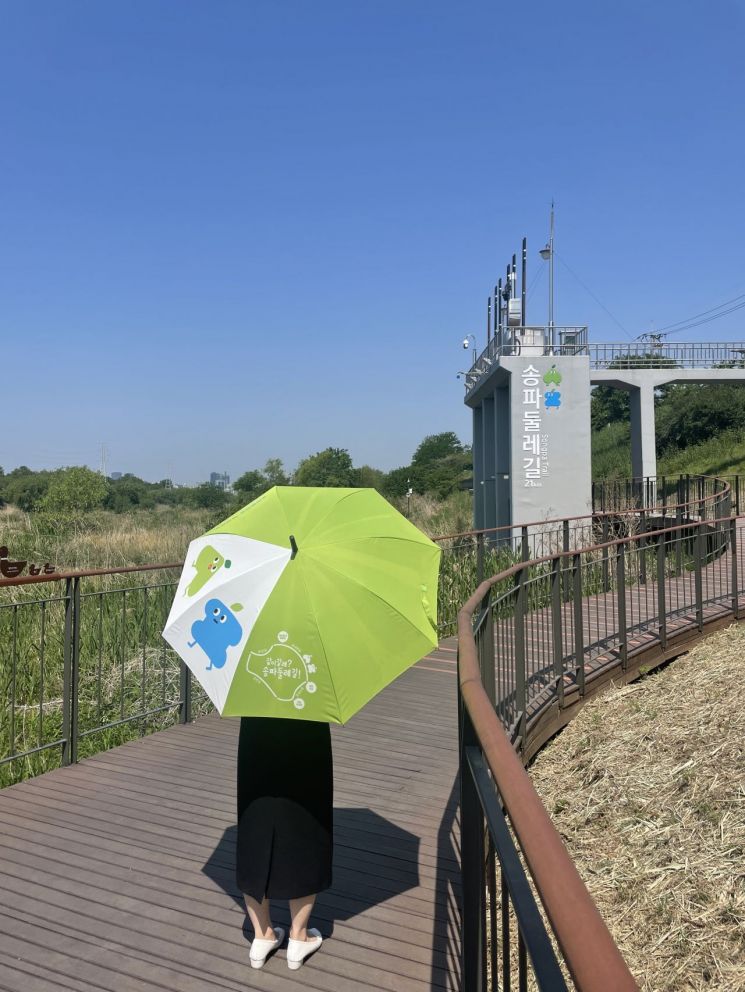
Songpa-gu announced on the 27th that it will operate a ‘Conscience Parasol Rental Service’ along the Tancheon section of the Songpa Dullegil trail to prepare for the summer heatwave.
Last July, the district completed the 21km circular walking trail ‘Songpa Dullegil,’ connecting Seongnaecheon, Jangjicheon, Tancheon, and the Han River along the outskirts of Songpa-gu for the first time in 50 years.
Until now, the walking paths along the Tancheon section were lined with young trees planted just over a year ago, providing insufficient shade. To help residents and tourists visiting Songpa Dullegil escape the summer heat and enjoy a cool walk along Tancheon, the district will rent out ‘conscience parasols.’
The parasols feature the cute and friendly green and blue Songpa Dullegil BI logo, adding a fresh and cool feeling. Rental boxes are located at various entrances and exits between Gwangpyeonggyo and Samsunggyo bridges. There are eight locations in total: ▲Gwangpyeonggyo ▲Tancheongyo ▲Sutnaemaru Observatory ▲Samjeon Nest Observatory ▲Tancheon 1 Bridge ▲Saenae Village Observatory ▲Buryum Village Observatory ▲Samsunggyo, making it easy for anyone to use.
Anyone visiting the Tancheon section of Songpa Dullegil can use the parasols free of charge and return them to the rental boxes on site after use.
The district expects that using the parasols will help prevent heat-related illnesses such as heatstroke and reduce the perceived temperature by about 10°C and the surrounding temperature by about 7°C, allowing visitors to enjoy comfortable walks even in the hot summer.
A district official said, “This ‘Conscience Parasol’ will provide cool shade for everyone visiting Songpa Dullegil,” and added, “We will continue to do our best to establish Songpa Dullegil as a representative urban recreational area.”
Meanwhile, Songpa-gu is accelerating the ‘Songpa Dullegil Season 2’ project, which connects local attractions and Songpa Dullegil, creating specialized spaces in each section. The district is installing various convenience facilities such as public Wi-Fi and security CCTV along Tancheon and operates the ‘Songpa Dullegil Keepers,’ a group of residents who voluntarily maintain the environment and lead local festivals.
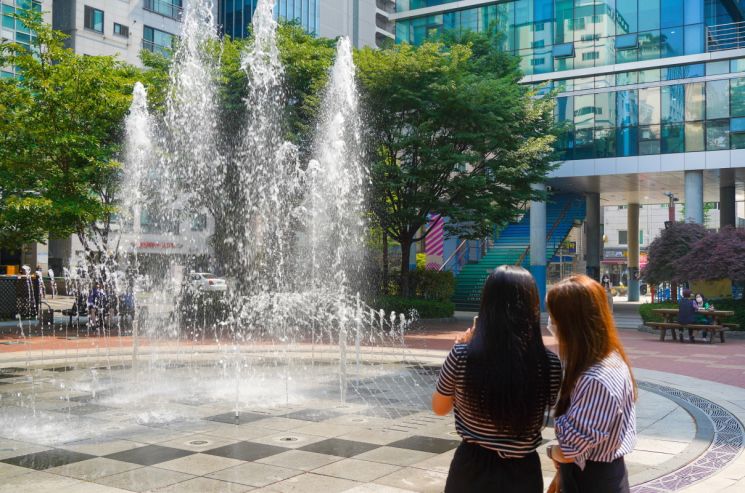
Guro-gu (Mayor Lee Sung) will start operating water play areas and water features following the lifting of social distancing measures.
On the 27th, Guro-gu announced, “To help residents enjoy a cool and pleasant summer, water play areas that were suspended for over two years due to COVID-19 will open in July.”
The water play areas are located in Deokui Neighborhood Park, Cheonwang Neighborhood Park, and Solgil Children’s Park.
The Deokui Neighborhood Park water play area in Gocheok-dong features a combination playground, water drop, water seesaw, and wall fountain. The Cheonwang Neighborhood Park water play area covers 500㎡ and includes a combination playground, animal bench fountain, and tunnel fountain. Notably, the Solgil Children’s Park water play area in Guro-dong will open for the first time since its completion in 2020, equipped with a frog-themed combination playground, water drop, and semicircular tunnel.
The water play areas will operate from July 5 to August 28, from 10 a.m. to 5 p.m., closed every Monday and during rainy weather.
Guro-gu will also operate water features in the city until September 30.
In Guro-gu, there are 20 water features including three water play areas in parks, seven ground fountains in Guro Neighborhood Park, Guro-ri Park, Sindorim Techno Neighborhood Park, and Street Park, four wall fountains in Mirae Sarang Children’s Park and Aekyung Children’s Park, three streams in Cheonwanggol Ecological Park, and three ecological ponds in Gungdong Ecological Park.
These operate 3-4 times a day for 30 minutes each, flexibly adjusted based on events, weather, and energy conditions.
Meanwhile, the artificial rock wall at Cheonwangsan, completed last year, will operate as an artificial waterfall until September when the water features are active, with the first operation scheduled for next month.
A Guro-gu official said, “The Anyangcheon water play area is also scheduled to open on July 5,” and added, “We hope residents enjoy their daily lives this summer at nearby water play areas.”
As of May, the cumulative rainfall in the Seoul area is only 135.7mm, about 64% of the average, indicating a mild drought stage.
This condition is expected to continue until early June, and Mapo-gu announced that it has prepared a comprehensive plan for drought prevention of street trees and green spaces and has begun focused management.
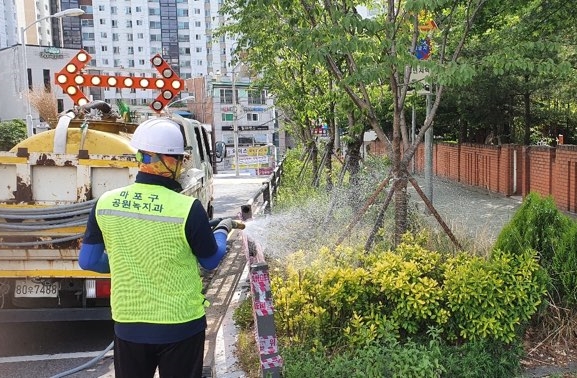
The district plans to actively respond until the drought is resolved by deploying dedicated personnel and equipment along 12 street routes including World Cup Road.
Through tree diagnosis and field surveys, water bags have been attached to about 360 street trees affected by drought, and nine water trucks are operating to provide watering.
Meanwhile, in April, the district requested a tree hospital to diagnose street trees with poor growth to promote healthy green spaces.
The diagnosis confirmed damage symptoms caused by salt accumulation in the soil from deicing agents applied in winter, and ongoing drought has caused new leaves and branches to dry and weakened tree vitality.
Therefore, the district is conducting washing work on street trees and green belts using calcium chloride neutralizers and nutrients, continuing watering activities until the drought is resolved.
A district official said, “We will monitor and intensively manage damaged trees such as street trees until the drought is resolved to provide a pleasant street environment.”
© The Asia Business Daily(www.asiae.co.kr). All rights reserved.



















