[Asia Economy Reporter Kim Hyunjung] Chinese authorities have instructed financial institutions to expand loans to small and medium-sized enterprises (SMEs) in order to normalize economic indicators hit by the spread of COVID-19. They also announced consumption-driving measures such as subsidies for purchasing home appliances.
The People's Bank of China, the central bank, posted a notice titled "Notice on Establishing a Long-term Effective SME Loan System" on its website on the 26th, stating that difficulties for some companies have intensified due to the spread of COVID-19, and instructed financial institutions to reform SME loan services to further activate lending. It also demanded that banks ease internal exemption systems related to non-performing loans. This is an effort to directly address the issue of banks avoiding SME loans due to concerns over default risks.
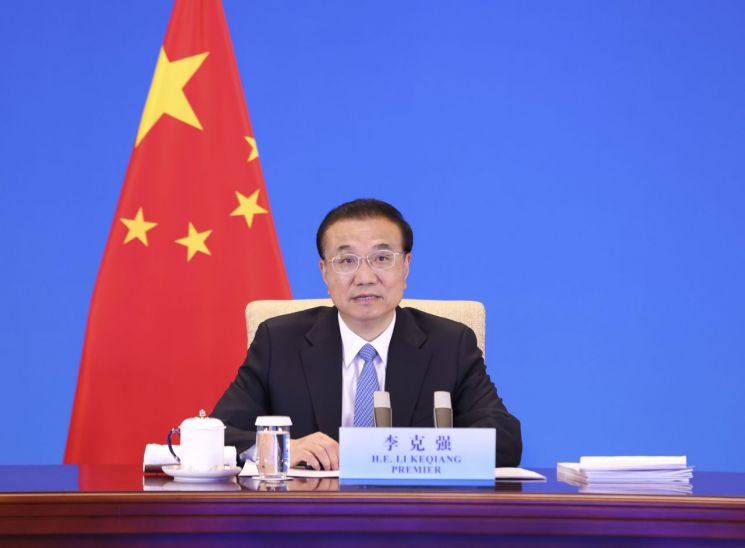
Earlier, Premier Li Keqiang held a video conference with 100,000 local officials, emphasizing the need to return the economy to a "reasonable growth" track in the second quarter (April to June) of this year and actively support the recovery of damage suffered by SMEs and local governments. Premier Li particularly mentioned that corporate liquidations in April, when the entire city of Shanghai was locked down, surged by more than 23% compared to the previous year, underscoring the necessity of policy support. At the meeting, he said, "We must ensure both the smooth functioning of supply chains and COVID-19 prevention," adding, "Many SMEs and local authorities have told me that 'the worst day has come.'"
The share of "universal benefit microloans" targeting SMEs and self-employed individuals in China's financial sector loans increased from 8% in 2018 to 12% in 2021. In the context of emphasizing the importance of securing funds to support loan expansion, the People's Bank of China mentioned, "We must continue to increase the input of supportive microloans for vulnerable targets by effectively utilizing tools such as reserve requirement ratios and re-lending," suggesting the possibility of further reserve requirement ratio cuts. Earlier, China lowered the reserve requirement ratio by 0.25 percentage points in April, supplying about 100 trillion won worth of long-term liquidity to the market.
Authorities reportedly instructed each commercial bank to increase loans in May compared to the same period last year in the form of "window guidance." According to economic media Caixin and others, financial authorities called each bank around the 20th to order that May loans increase compared to the same month last year. The same demand was reportedly conveyed at a credit loan status review meeting hosted by the People's Bank of China on the 23rd, attended by 24 financial institutions.
The reason Chinese authorities are urging financial institutions to actively lend is that loans sharply declined in April amid the economic shock from COVID-19. New loans in April amounted to 645.4 billion yuan (approximately 120.864 trillion won), down 823.1 billion yuan compared to the same month last year. The scale of new loans in April was even smaller than in February 2020 (95.7 billion yuan), the early stage of the pandemic.
The Ministry of Finance and the Civil Aviation Administration will provide subsidies from May 21 to July 21 to airlines operating domestic routes, based on the proportion of their loss amounts. Authorities set the subsidy cap per lost flight hour at 24,000 yuan. The industry expects that subsidies paid to the sector by central and local governments over two months will total 13 billion yuan. Among local governments, Shenzhen City in Guangdong Province announced on the 26th that it will provide subsidies of up to 2,000 yuan (approximately 380,000 won) per person, covering up to 15% of the price when purchasing household appliances such as TVs, air conditioners, and refrigerators by August. The same level of subsidies will be given for purchasing IT products such as smartphones, computers, tablet PCs, home robots, and wearable devices, and a subsidy of 10,000 yuan (approximately 1.9 million won) per unit will be provided for purchasing electric vehicles and other new energy vehicles.
© The Asia Business Daily(www.asiae.co.kr). All rights reserved.

















