New Concept Electric-Based
Carbon Neutral Production System 'HiCube' Announced
Goal to Produce Low-Carbon Premium Steel Sheets
Through Scrap and Direct Reduced Iron by 2030
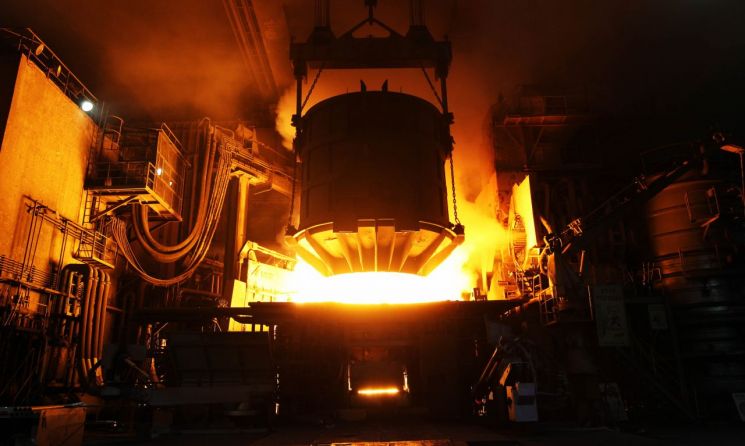
[Asia Economy Reporter Donghoon Jeong] Hyundai Steel is set to produce high-quality steel sheets for automobiles using electric furnaces.
On the 26th, Hyundai Steel announced that it will establish its independent electric furnace-based carbon-neutral steel production system called 'Hy-Cube' and aims to produce low-carbon high-grade steel sheets by transitioning to a hydrogen-based steel production system by 2030.
The goal is to lead carbon neutrality in the electric furnace sector through this new concept of electric furnace production technology.
Hy-Cube refers to Hyundai Steel's proprietary hydrogen-based process-integrated steel production system. It is an advancement from the conventional electric furnace that melts scrap metal to produce molten iron; the core of Hy-Cube technology is a 'new concept electric furnace' capable of melting iron raw materials, removing impurities, and adding components all in one.
Hyundai Steel will use scrap metal, molten iron (produced from blast furnaces), and DRI (Direct Reduced Iron) in the new concept electric furnace to minimize carbon emissions while producing high-grade steel sheets such as automotive steel sheets. Direct Reduced Iron refers to an alternative iron produced in solid form by heating iron ore below its melting point and injecting carbon monoxide, hydrogen, and other gases.
Hyundai Steel is the largest electric furnace steelmaker in Korea, producing over 10 million tons of electric furnace products annually. It has accumulated know-how and technological competitiveness by producing a variety of products in electric furnaces, ranging from rebar and shaped steel to hot-rolled steel sheets.
This experience and technological capability are expected to be significant advantages for Hyundai Steel in establishing a carbon-neutral production system centered on electric furnaces.
Additionally, due to the nature of raw materials and processes, electric furnace products emit only about 25% of the carbon compared to blast furnaces, placing Hyundai Steel in a favorable position to achieve carbon neutrality compared to other steelmakers centered on blast furnaces. Moreover, since 2015, Hyundai Steel has participated as the lead research institution in major national projects by the Ministry of Trade, Industry and Energy aimed at carbon reduction, developing key technologies in the electric furnace sector.
Hyundai Steel, which possesses outstanding technological capabilities in the electric furnace field, has operated three large blast furnaces stably since the first blast furnace at the Dangjin Steelworks began operation in 2010, accumulating excellent know-how in managing various products and process operations, including high-grade automotive steel sheets.
Based on Hyundai Steel's unique strength of 'synergy between blast furnace and electric furnace sectors,' the established 'Hy-Cube' has the advantage of flexibly responding to carbon reduction challenges in terms of raw materials, processes, and products. First, in the raw materials sector, it means appropriately using scrap, the conventional electric furnace raw material, based on artificial intelligence (AI), while mixing hydrogen-reduced iron and carbon-neutral molten iron.
In manufacturing processes, it optimizes the unique characteristics of various raw materials such as hydrogen-reduced iron and molten iron for the production process and organically connects these processes.
Regarding products, it is a concept that can respond to the full range of products, from conventional electric furnace products like shaped steel to high-grade steel sheets produced in blast furnaces.
Hyundai Steel stated, "Based on these three flexibilities, we plan to establish a new electric furnace-centered process that not only reduces carbon emissions during the process but also builds a complete production system considering products and markets."
To this end, alongside improving existing processes to gradually reduce carbon emissions through low-carbon raw materials and renewable energy transitions, Hyundai Steel plans to introduce a 'new electric furnace (Hy-Arc)' capable of performing the functions of blast furnace, converter, and electric furnace, unlike previous electric furnaces, to produce low-carbon high-grade steel sheets, pursuing a 'two-track strategy.'
A Hyundai Steel official said, "Our goal is not simply to reduce carbon emissions during production but ultimately to produce high-performance products that were previously impossible with conventional electric furnaces and supply them to the carbon-neutral product market. We will continue our efforts through solidarity and cooperation with domestic steelmakers."
© The Asia Business Daily(www.asiae.co.kr). All rights reserved.
![Clutching a Stolen Dior Bag, Saying "I Hate Being Poor but Real"... The Grotesque Con of a "Human Knockoff" [Slate]](https://cwcontent.asiae.co.kr/asiaresize/183/2026021902243444107_1771435474.jpg)
















