Refused Nomination of Pro-Government Witnesses
Opposition Experts Gather to Discuss Enactment of Anti-Discrimination Law
"It Will Be an Opportunity to Eliminate Discrimination and Promote Equality"
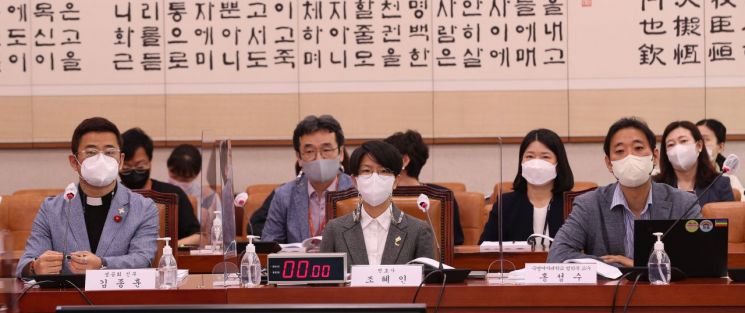
[Asia Economy Reporter Park Jun-yi] For the first time in 15 years since the Anti-Discrimination Act was proposed, a public hearing was held at the National Assembly. Although it marked the first step in the discussion, the hearing was a 'half-hearted' event as the figures recommended by the People Power Party did not attend. The witnesses who participated that day expressed various opinions on the historical significance of the Anti-Discrimination Act and its legal provisions.
The Legislation and Judiciary Committee's Bill Review Subcommittee 1 held a "Public Hearing on the Enactment of the Anti-Discrimination Act" at the National Assembly on the morning of the 25th. The National Assembly created the first discussion platform to promote the legislation of the Anti-Discrimination Act, but only figures recommended by the Democratic Party of Korea attended the hearing. The People Power Party did not recommend any witnesses and did not attend the hearing, stating they would not participate in an unagreed hearing.
On that day, each witness presented reasons why the enactment and legislative discussion of the Anti-Discrimination Act are necessary. Father Kim Jong-hoon of the Anglican Church of Korea stated, "I am here today as a religious person and social activist to explain why Christians support the Anti-Discrimination Act."
He explained, "In 2014, at the Queer Culture Festival held in Sinchon, I conducted a parade blessing ceremony together with Pastor Lim Bo-ra, who was involved in various human rights movement solidarities, and Protestant pastors," adding, "After the blessing ceremony, I repeatedly witnessed some Christians and religious figures disrupting the event activities with physical and verbal violence, distorting and cursing. I wondered why they, who clearly exist and live as members of Korean society, would pour extreme distortion and curses on sexual minorities and other minorities."
He further emphasized the need for discussion by stating, "Foreign anti-discrimination laws specify exceptions to discrimination in more detail," and "There is an opinion that Korea also needs such provisions."
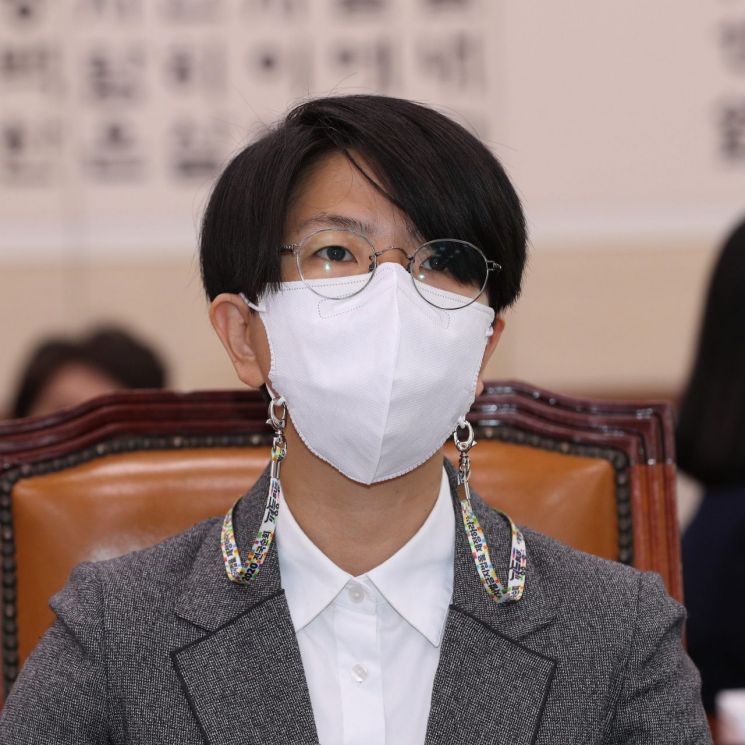
Next, lawyer Cho Hye-in from the Public Interest Human Rights Lawyers' Group Hope Making Law argued, "Sexual orientation and gender identity are based on Article 11 of our Constitution, and the content of the Anti-Discrimination Act should be seen as concretizing and codifying these constitutional principles," pointing out, "From an international law perspective, these grounds have long been established as reasons for prohibiting discrimination, and all seven major international human rights treaties to which Korea is a party recognize sexual orientation and gender identity as grounds for prohibition of discrimination under international human rights norms."
She also insisted that the Anti-Discrimination Act should include special provisions to ease and shift the burden of proof. Lawyer Cho said, "The burden of proof is the most important issue in all anti-discrimination legislation. The disadvantaged party is usually the one who holds the evidence of discrimination, and it is practically impossible for the discriminated person to fully prove the existence of discrimination."
Professor Hong Sung-soo of Sookmyung Women's University, who has studied hate and discrimination, emphasized the historical significance of the Anti-Discrimination Act. Professor Hong explained, "The enactment of the Anti-Discrimination Act has been pursued for 20 years, and it is time for the National Assembly to respond," adding, "Much effort has been made to reach this point."
He suggested, "Many people in civil society are already working hard to eliminate discrimination, and the National Assembly should play a role in providing a basic law related to discrimination to stabilize and provide grounds."
He added, "The Anti-Discrimination Act is not an end in itself but should be understood as a law that creates an opportunity to eliminate discrimination and aim for equality." He also criticized the fact that the Anti-Discrimination Act has repeatedly failed in the legislative process over the past 20 years, saying, "The fact that it has been practically neglected is regression, and I want to say it is an abandonment of the National Assembly's duty."
At the hearing, Democratic Party of Korea's Legislation and Judiciary Committee whip Park Joo-min, members of the Bill Review Subcommittee 1 from the Democratic Party, Democratic Party lawmaker Lee Sang-min who proposed the Equality Act, Justice Party lawmaker Jang Hye-young who proposed the Anti-Discrimination Act, and independent lawmaker Yoon Mi-hyang attended.
© The Asia Business Daily(www.asiae.co.kr). All rights reserved.


















