Korea Economic Research Institute Holds Seminar on 'Assessing the Possibility of Entering Stagflation and Policy Directions'
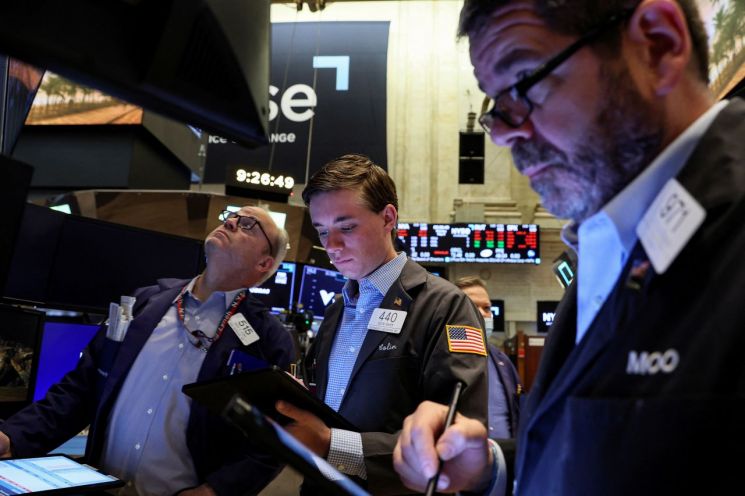
[Asia Economy Reporter Park Sun-mi] An analysis has emerged that South Korea's economy has already entered stagflation (economic stagnation amid high inflation). It is also pointed out that due to labor market rigidity and other factors, the stagflation situation could worsen, necessitating policies to flexibilize the labor market and reduce corporate supply costs.
On the 25th, the Korea Economic Research Institute held a seminar titled "Diagnosis of the Possibility of Entering Stagflation and Policy Directions" at the Federation of Korean Industries Conference Center. Kwon Tae-shin, president of KERI, expressed concerns in his opening remarks, saying, "The consumer price index in April recorded 4.8%, the highest since the global financial crisis, and domestic and foreign institutions are revising growth forecasts downward this year." He added, "The coincident index of the leading economic indicator has declined for nine consecutive months, raising serious concerns about stagflation." He stated, "The most effective policy to overcome stagflation is to create a business-friendly environment through deregulation and labor market reforms," and explained, "When companies increase new industry discovery, investment, and employment, the economy's total supply capacity expands, stabilizing prices and increasing production."
Stagflation Already Underway Due to Rising Supply Costs, Situation May Worsen
Professor Sung Tae-yoon of Yonsei University's Department of Economics, who gave the keynote presentation, diagnosed, "South Korea is already experiencing stagflation, a combination of economic recession and rising prices," and described it as "a typical stagflation situation caused by a supply cost shock." He explained that the rise in energy supply prices strongly acted as a cost shock, and the liquidity expansion during the COVID-19 response increased inflationary pressures, thereby raising price pressures.
Professor Sung predicted that the stagflation situation could worsen due to labor market rigidity, tightening monetary policies such as interest rate hikes and liquidity withdrawal, and expanded fiscal spending such as supplementary budgets. He argued, "Due to the rigid labor market, productivity is weakening and potential growth rates are declining, which may increase the need for fiscal and monetary policies to stimulate the economy, thereby increasing the domestic economy's supply cost burden." He added, "Liquidity withdrawal and interest rate hikes will proceed to respond to inflation and prevent the interest rate inversion between Korea and the U.S., which will inevitably deepen the recession," and forecasted, "Expansion of fiscal spending such as supplementary budgets will also act as additional inflationary pressure."
He also expected that expanded fiscal spending such as supplementary budgets would act as additional inflationary pressure. He said, "The U.S. interest rate hikes and the corresponding pressure for interest rate hikes in Korea could induce economic downturns, further increasing stagflationary pressures."
Professor Sung emphasized, "To respond to stagflation, liquidity in the market must be withdrawn through base interest rate hikes, but to prevent worsening stagflation and secure long-term growth engines, policies to ease labor market rigidity and reduce corporate supply costs through tax support should be pursued simultaneously."
Experts Say "Price Stability Should Be Prioritized"
In the comprehensive discussion, Professor Kim Sang-bong of Hansung University said, "Our economy has had lower growth rates than other major countries for several years, and recently, with rapid inflation, it faces a major crisis with concerns about stagflation," adding, "The consumer price index averaged 4% until April, and the producer price index averaged 8.7% until March, while this year's economic growth forecast is only in the low 2% range." He diagnosed, "Our economy has either already entered stagflation or is very likely to enter it in the second half of the year."
Professor Kim Hyun-seok of Pusan National University stated, "Interest rate hikes have been frequently mentioned by the monetary authorities of the U.S. and Korea, so they are anticipated measures rather than market shocks," and argued, "Domestically, responding to the financial burdens of household and self-employed debts caused by the COVID-19 crisis is most important, and externally, measures are needed against the adverse effects of exchange rate increases on the international balance of payments and prices."
Lee Tae-seok, a research fellow at KDI, said, "Although there is inevitable inflation during the COVID-19 shock recovery process, economic recovery is ongoing, so it is difficult to judge it as stagflation," but suggested, "It is desirable to mitigate the side effects of abrupt price adjustments through efforts to stabilize asset prices and terms of trade."
Professor Heo Jun-young of Sogang University pointed out, "There are several factors that increase the possibility of stagflation in the future," citing prolonged global supply chain disruptions, rapid rises in expected inflation, and increased wage pressure due to rising inflation and expected inflation. He proposed, "Conflicting signals from monetary and fiscal authorities could increase confusion in inflation and economic forecasts, so monetary authorities should stabilize private inflation expectations through communication with the market, and fiscal authorities should minimize inflationary pressures from expansionary fiscal policies through efficient fiscal execution."
© The Asia Business Daily(www.asiae.co.kr). All rights reserved.


















