Court: "Different methods of crime should be considered separate offenses... The court's sua sponte recognition was wrong"
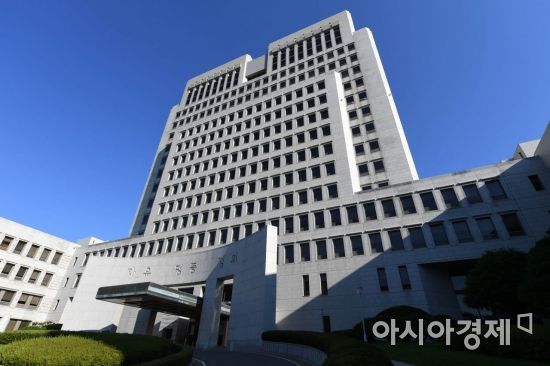
[Asia Economy Reporter Heo Kyung-jun] The Supreme Court has ruled that if a court applies a law with heavier penalties ex officio without amending the indictment, it is unfair as it disadvantages the defendant's right to defense.
The Supreme Court's First Division (Presiding Justice Noh Tae-ak) announced on the 24th that it overturned the original sentence of 10 years imprisonment in the appeal trial of Mr. A, who was indicted for violating the Act on the Aggravated Punishment of Specific Economic Crimes (fraud), and remanded the case to the Seoul High Court.
Mr. A, the CEO of a travel agency, was tried on charges of deceiving Mr. B, introduced by an acquaintance, into investing in an airline ticket block business, claiming it was a safe business with no principal loss, and embezzling approximately 1.439 billion won over 127 times from January 2011 to December 2015.
Additionally, Mr. A was separately indicted on charges of embezzling over 3 billion won in 2011 through a similar type of fraud related to another business.
The first trials, conducted separately by two courts, sentenced Mr. A to six years and seven years imprisonment respectively. The second trial, which combined the two cases, also found him guilty but reduced the sentence to 10 years considering partial restitution of damages.
However, the Supreme Court judged the second trial's ruling to be incorrect. Although the prosecution additionally separated and indicted Mr. A as a concurrent offender in another fraud case, including some victims who were the same as those in the previously indicted case, the second trial did not recognize this separate indictment and combined it with the previous indictment, finding him guilty of fraud under the Act on the Aggravated Punishment of Specific Economic Crimes.
The issue was that the part originally charged as general fraud, which carries relatively lighter penalties, was subjected to the heavier penalties under the Act on the Aggravated Punishment of Specific Economic Crimes due to the second trial court's ex officio linking with other fraud offenses.
The Supreme Court stated, "Even if the victims are the same, if the methods of fraud differ, they should be regarded as separate crimes. It was wrong for the court to recognize the special fraud charge ex officio without amending the indictment in this case, where the prosecutor indicted under the general criminal law for fraud."
© The Asia Business Daily(www.asiae.co.kr). All rights reserved.

















