Unlike those born in the 1960s, half of the elite university graduates major in science and technology after diverse experiences
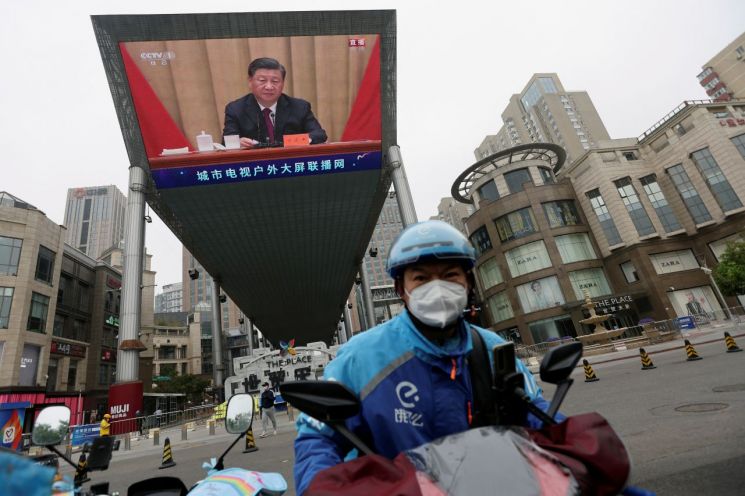
[Asia Economy Reporter Kim Hyunjung] The Hong Kong South China Morning Post (SCMP) reported on the 23rd that the group born in the 1970s is rapidly emerging as the next generation of leaders of the Communist Party. SCMP stated that President Xi Jinping, who is expected to secure a third term through the 20th National Congress of the Communist Party scheduled for October this year, will elect a new Central Committee.
SCMP forecasted that many of those born in the 1960s will retire from the new Central Committee, the highest decision-making body of the Communist Party. The list of next-generation officials is not yet well known. According to SCMP, the Party has promoted at least 12 officials born in the 1970s to high-level positions in provincial standing committees this year. Analysts predict that these officials, now in their 40s and early 50s, will climb the political ladder and join the national leadership group, viewing promotion to provincial standing committees as a preliminary stepping stone or testing ground.
Currently, all provincial party secretaries and governors in China are born in the 1960s. John L. Thornton, director of the China Center at the Brookings Institution, predicted in an analysis released last month that the proportion of 1970s generation leaders in the new Central Committee will reach about 10%.
The Post reported that the former top personnel agency of the Party, the Central Organization Department, selected and sent over 1,000 officials born in the 1970s and 1980s to the Central Party School for training. Vivian Chan, associate professor of public administration at the Chinese University of Hong Kong, said, "Officials must demonstrate both ability and loyalty to become successors," adding, "Especially President Xi will want capable successors who can carry out ambitious goals and key policies such as the Belt and Road Initiative and anti-corruption campaigns."
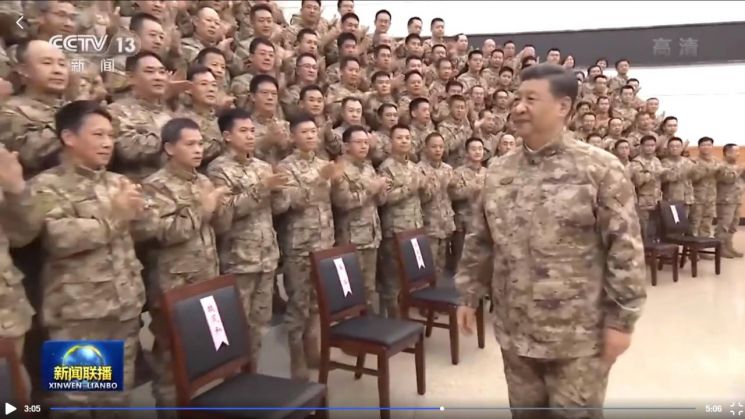
Representative figures include Zhu Gewu, born in 1971, Party Secretary of Shanghai, and Si Guanghui, born in 1970, Party Secretary of Guizhou. Both are regarded as young elites strong in 'fieldwork' with experience managing state-owned enterprises. Zhu Gewu, who became a standing committee member of the Shanghai Municipal Committee in May 2017 and was then the youngest provincial-level party standing committee member, previously served as president of Shanghai International Port in 2011. Si Guanghui also spent 15 years at a road construction company in Shanghai before moving to the city government in 2006. Other names mentioned include Yang Pasun, Party Secretary of Urumqi, Xinjiang; Liu Qiang, former Party Secretary of Shandong; Wei Tao, Party Secretary of Taiyuan, Shanxi; and Liu Hongjian, Party Secretary of Kunming, Yunnan.
SCMP reported, "Unlike leaders born in the 1960s who did not receive formal university education, those born in the 1970s graduated from prestigious universities such as Tsinghua University, Peking University, and Renmin University, with about half holding doctoral degrees." It also noted, "About half of this group majored in science, technology, engineering, and mathematics (STEM) subjects, and a quarter studied economics, finance, and accounting," interpreting this as reflecting China's preference for professionals as it pursues technological self-reliance.
However, women remain scarce. Among more than 50 provincial standing committee members born after 1970, only four are women: Guo Ningning, Vice Governor of Fujian Province; Zhang Yingchun, Vice Governor of Hunan Province; and Hu Lijie, Head of the United Front Work Department of Liaoning Province. This ratio is even lower than that of the 19th Central Committee, which consisted of 376 members with 29 women (7%).
© The Asia Business Daily(www.asiae.co.kr). All rights reserved.


















