Increased Use of Hospitals and Clinics Expected Due to Eased Social Distancing
Legal Amendments Required to Adjust Maximum 8% Cap
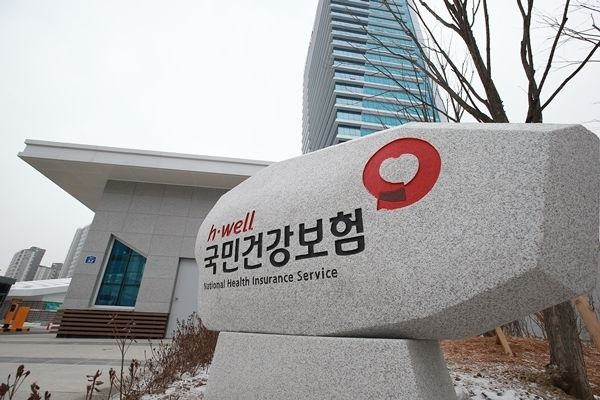
[Asia Economy Reporter Jo In-kyung] As negotiations with the medical community to determine next year’s health insurance service fees (medical service costs) are underway, attention is also focused on the health insurance premium rate (Geonbo rate) that will be adjusted based on the negotiation results. If the Geonbo rate rises and exceeds 7% of income, it will soon approach the legal ceiling of "8% of income." Considering the recent inflation and interest rate hikes that have increased the burden on the working-class economy, the possibility of freezing the Geonbo rate, which could impose a burden on households and businesses, cannot be ruled out.
According to the Ministry of Health and Welfare and the National Health Insurance Service on the 22nd, the authorities and various healthcare organizations?including the Korean Medical Association, Korean Hospital Association, Korean Dental Association, Korean Oriental Medicine Association, Korean Pharmaceutical Association, and Korean Midwives Association?have been conducting fee negotiations since early this month.
Service fees refer to the costs of medical benefits paid by the health insurance authorities on behalf of the public to healthcare provider organizations for the health services they provide to the people. If the fee negotiations are smoothly concluded, the National Health Insurance Service’s Financial Management Committee, composed of representatives of health insurance subscribers, will review and approve the negotiation results, and the Minister of Health and Welfare will make the final announcement. According to the National Health Insurance Act, the fee contract must be concluded by the 31st of this month, or by the end of next month if negotiations fail.
In last year’s negotiations, the National Health Insurance Service raised this year’s fees by 3.0% for local clinics, 2.2% for dental clinics, 1.4% for hospitals, 3.1% for oriental medicine clinics, 3.6% for pharmacies, 4.1% for midwifery centers, and 2.8% for public health institutions (health centers). The overall average increase rate was 2.09%. For next year’s fees, each organization is demanding increases. The main argument is that fee contracts should compensate for the decrease in patient numbers due to COVID-19 since 2020, infection control and quarantine costs, and expenses related to cooperation with quarantine policies.
Based on the fee negotiation results, the Health Insurance Policy Deliberation Committee (Geonjeongsim), which includes representatives of health insurance subscribers, medical service providers, and the government, will convene at the end of this month to set next year’s health insurance premium rate. Currently, the Geonbo rate is 6.99%, barely maintaining the 6% range, thanks to minimizing the increase in premiums last year in consideration of the socio-economic difficulties caused by COVID-19.
However, if the Geonjeongsim decides to raise the premium rate for next year, it will immediately rise to the 7% range. Over the past five years, the premium rate increases were 2.04% in 2018, 3.49% in 2019, 3.2% in 2020, 2.89% in 2021, and 1.89% in 2022.
In particular, this year, as social distancing measures strengthened due to COVID-19 have been eased, the previously suppressed use of medical services is normalizing, which is expected to increase financial expenditures accordingly. Also, with the second phase of the health insurance premium system reform in the second half of the year expanding property deductions for regional subscribers, insurance premium revenue is expected to decrease, raising concerns about the deterioration of health insurance finances. Therefore, the general view is that the likelihood of freezing the premium rate is low. Given the rapid increase in the elderly population due to accelerated aging and the consequent surge in national medical expenses, there are also calls to expedite the establishment of a stable financial foundation alongside efforts to optimize medical expenditure.
Some argue that preparations should be made in case the Geonbo rate exceeds the legal ceiling of 8%. This would require amendments to the National Health Insurance Act through parliamentary discussions. However, as public opposition to increased premium burdens is strong, disputes are expected to be inevitable during the process of reaching social consensus.
© The Asia Business Daily(www.asiae.co.kr). All rights reserved.
















