
[Asia Economy Reporter Yoo Hyun-seok] Hyundai Motor Group has decided on its first dedicated electric vehicle (EV) factory in the United States. The group plans to establish an EV production hub in Georgia, investing 6.3 trillion KRW.
On the 21st, Hyundai Motor Group announced that it will invest 6.3 trillion KRW to build an EV-dedicated factory and a battery cell plant in Georgia, USA, establishing a production hub for electric vehicles.
At the planned site for the EV factory in Georgia, Hyundai Motor President Jang Jae-hoon, Jose Munoz, Governor Brian Kemp of Georgia, and other officials attended the 'Hyundai Motor Group-Georgia EV Dedicated Factory Investment Agreement Ceremony' to formalize the investment plan.
Hyundai Motor Group Chairman Chung Eui-sun said in a video message, "We will establish a dedicated EV production hub in Georgia, USA, and produce innovative electric vehicles for American customers," adding, "By introducing manufacturing innovation technologies and utilizing renewable energy, this first smart factory in the US will play an important role as a foothold for achieving Hyundai Motor Group’s future mobility vision."
Brian Kemp, Governor of Georgia, welcomed Hyundai Motor Group’s investment in Georgia, stating, "We will work together with Hyundai Motor Group to ensure the success of the largest project in the state’s history."
The Georgia state government responded to Hyundai Motor Group’s investment decision by promising tax incentives and other benefits to support the successful establishment and stable operation of the new EV factory and battery cell plant, along with ongoing comprehensive support.
◆Annual capacity of 300,000 units... Completion scheduled for the first half of 2025= The factory to be built in Georgia aims to begin operations in the first half of 2025, with construction starting in the first half of next year. The plant will be located on a 11.83 million square meter (㎡) site and is planned to have an annual production capacity of 300,000 electric vehicles.
The new factory will produce multiple EV models targeting the North American market. It is expected to enhance production efficiency and cost competitiveness through economies of scale and strengthen strategic responsiveness to the electrification trend.
Hyundai Motor Group also anticipates that the factory will be able to flexibly respond to local government regulations and policy changes related to the automotive industry, including electric vehicles.
The US government is promoting policies to expand EV adoption, aiming to increase the share of electrified vehicles in new car sales to 50% by 2030, install 500,000 charging stations, and increase subsidies. Additionally, the 'Buy American' policy favors EVs produced domestically.
The new EV factory will be located approximately 400 km from Kia’s US manufacturing plant. Therefore, along with Hyundai Motor Manufacturing Alabama (HMMA) located in Alabama, it is expected to share parts suppliers and logistics systems. The company explained that this will create synergy effects through efficient supply chain management.
In particular, Hyundai Motor Group will introduce the manufacturing innovation platform developed by the Singapore Global Innovation Center (HMGICS) at the new US EV factory.
HMGICS’s innovation platform applies various new manufacturing technologies, including demand-driven AI-based intelligent control systems, eco-friendly low-carbon construction methods to achieve carbon-neutral RE100, and human-friendly facilities that enable safe and efficient work. This is a smart manufacturing platform differentiated from existing production plants.
Through this, Hyundai Motor Group expects to realize a new-concept future factory that not only achieves efficiency and optimization of the EV factory’s production system but also promotes early implementation of factory RE100 and enhances sustainability.
To ensure stable local procurement of batteries necessary for expanding EV production and sales, Hyundai Motor Group will establish a battery cell plant in the US through strategic partnerships with battery companies.
This plant will be located adjacent to Hyundai Motor Group’s EV vehicle assembly plant. Hyundai Motor Group will be able to procure optimized battery cells locally according to vehicle performance and detailed specifications, enabling timely production and sales of highly competitive EVs with high efficiency, high performance, and safety tailored to market conditions. Specific plans for the battery plant establishment will be finalized after comprehensive review of various options.
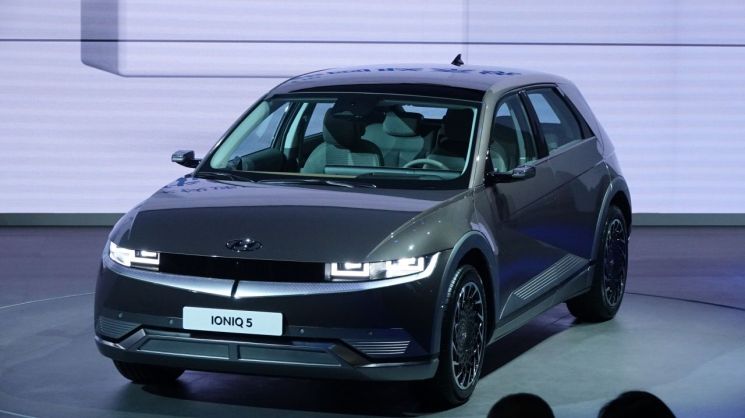
◆Hyundai Motor Group aims for 3.23 million global EV sales by 2030... 840,000 units targeted in the US= Once the new factory starts operations in 2025, Hyundai Motor Group will have a dedicated EV assembly plant in the US for the first time in 20 years since starting local production at the Alabama plant in 2005.
This investment, symbolizing the paradigm shift in the automotive industry, will serve as a stepping stone for Hyundai Motor Group to establish its position as a leader in electrification in the US market. The US is a representative market with high environmental awareness and strong demand for EVs. Hyundai Motor Group aims to sell 840,000 EVs in the US by 2030.
Hyundai Motor Group’s global EV sales target for 2030 is 3.23 million units (1.83 million Hyundai vehicles, 1.4 million Kia vehicles), representing a 12% share of the global EV market. By then, Hyundai plans to offer more than 18 EV models including Genesis, while Kia plans to launch 13 EV models.
A Hyundai Motor Group official explained, "Based on the establishment of an EV production system in the US, domestic automotive parts companies’ overseas expansion and market development will accelerate," adding, "This is expected to be an opportunity to advance the global competitiveness of the Korean automotive industry through revitalization of the domestic EV ecosystem."
© The Asia Business Daily(www.asiae.co.kr). All rights reserved.
![Clutching a Stolen Dior Bag, Saying "I Hate Being Poor but Real"... The Grotesque Con of a "Human Knockoff" [Slate]](https://cwcontent.asiae.co.kr/asiaresize/183/2026021902243444107_1771435474.jpg)

















