[Seoul District News] Jongno-gu Builds Traditional Pavilion Using Private Open Space Sites, Capital, and Hanok Demolition Materials Owned by the District, Showcasing Construction Techniques... Unveils New ‘Smart Gangdong’ Logo
[Asia Economy Reporter Park Jong-il] Jongno-gu, known as the 'Han Culture Ancestral Home,' is promoting traditional Hanok architectural methods imbued with the wisdom and elegance of ancestors to solidify the identity of this historic city by advancing the 'Public-Private Han (韓) Heart Traditional Pavilion Construction Project.'
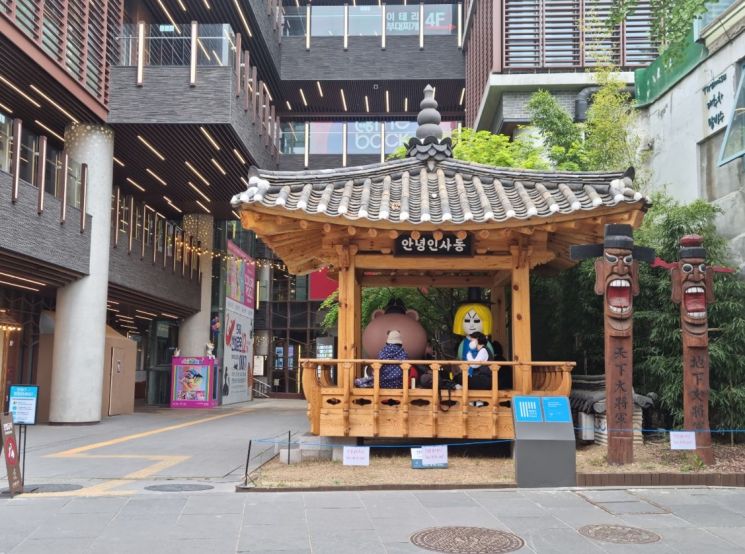
To preserve and revitalize Hanok culture, since 2017, six traditional pavilions such as ‘Waryongjeong,’ ‘Songgangjeong,’ ‘Cheongjinjeong,’ and ‘Samojung’ (photo) have been constructed on public land, and currently, one more pavilion is under construction.
Jongno-gu is not stopping there; it plans to continuously expand citizen rest areas by collaborating with private large-scale building owners and the district office to build traditional pavilions.
The traditional pavilions built on public land have been well received by residents, but there have been limitations regarding public land availability and budget for construction.
According to the Building Act, open spaces that must be secured for citizen rest areas in buildings above a certain size have low utilization due to issues such as storage of goods and lack of rest facilities, failing to fulfill their intended purpose.
Therefore, Jongno-gu planned this project utilizing private land and capital along with traditional Hanok demolition materials and construction technology owned by the district.
From the architectural review stage of new buildings subject to open space installation, the district will recommend installing traditional pavilions in open spaces of a certain size located along main roads through consultation with private developers. During construction, they will provide not only standard design plans but also technical advice and high-quality materials (foundation stones, roof tiles, wood, etc.) from the Hanok Construction Material Recycling Bank to reduce the developers' burden.
The district will continue to explore ways to encourage voluntary construction of traditional pavilions by the private sector, including proposing amendments to Seoul city ordinances to support part of the construction costs.
A district official stated, “This project maximizes the utilization of open spaces, secures rest areas for citizens, and contributes to creating a historic city where the past and present coexist,” adding, “We will continue to create traditional pavilions reflecting local characteristics throughout the region.”
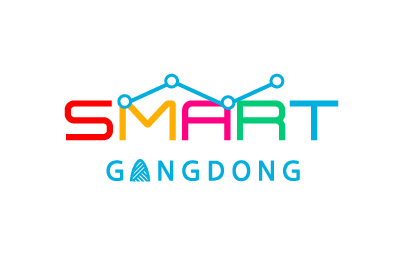
Gangdong-gu has unveiled the ‘Smart Gangdong’ logo, embodying its commitment and vision for building a smart city.
Although various projects?47 in total across different fields?have been promoted over the past few years based on the smart city master plan, there was no logo or symbol representing the city’s identity and vision, leading to the creation of this logo.
The newly designed ‘Smart Gangdong’ logo expresses the unique identity of Gangdong as a smart city spanning from prehistoric times to the Fourth Industrial Revolution era, showcasing the district’s diverse and vibrant future vision within a dynamic design.
The Gangdong-style design features comb-pattern motifs harmonized with a sharing icon representing information and communication technology (ICT). The passion, hope, and energy toward a smart city are expressed in red; dynamism and youthfulness in yellow and pink; and advanced technology and future values in green and blue, symbolically representing the future city of Gangdong.
A Gangdong-gu official said, “We expect the creation of this unique smart logo, aiming for inclusive urban growth and a smart green city, to invigorate the promotion of projects across various fields,” and added, “At this point, as we approach a population of 500,000, we ask for residents’ active interest and participation in building an advanced smart city.”
The new ‘Smart Gangdong’ logo will be continuously used in official documents, promotional materials, application materials, events, and both online and offline platforms related to smart projects, advancing more proactive and resident-friendly smart policies.
© The Asia Business Daily(www.asiae.co.kr). All rights reserved.


















