Korean Film Directors Association Holds Interview with Hosario Maldonado, AVACI President
"Fair Compensation in Korea Should Lead to Chain Benefits in India and China"
"Joining the 1996 Berne Convention and Consistently Raising Voices Is Important"
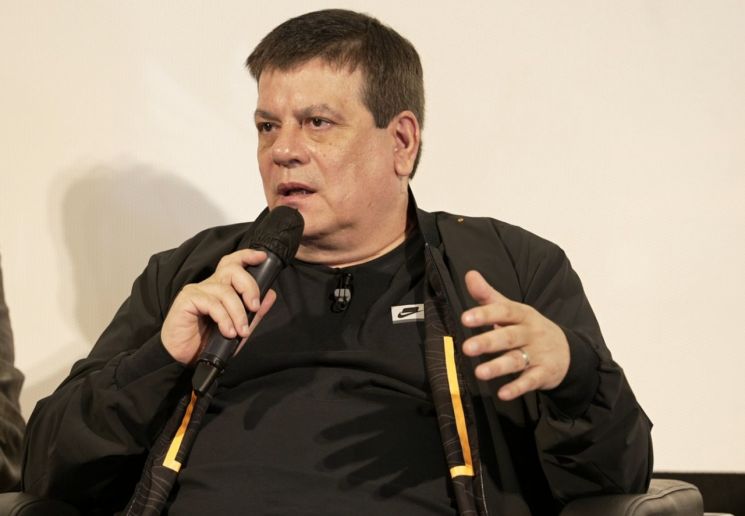
Many film directors and writers work part-time jobs to make a living. Aside from directing fees or writing fees, the only income they can expect is a bonus based on box office success. They do not receive any payment when their films are broadcast on TV or online video services (OTT). This is because all rights are transferred to the investing distributors or production companies. Although recognized worldwide for originality and craftsmanship, both laws and systems neglect creators. This undermines the inauguration speech of Park Bo-gyun, Minister of Culture, Sports and Tourism, who proudly declared that "the foundation for becoming a cultural powerhouse has been laid."
The Korean Directors' Guild (DGK), which has been advocating for legal amendments, publicized the issue of unfairness on the 16th at the Korean Film Archive. They invited Horacio Maldonado, president of the International Federation of Audiovisual Creators (AVACI), to hold a dialogue titled "Talking about the Basic Rights of Audiovisual Authors Beyond Borders." Maldonado, who is also the secretary-general of the Argentine Directors' Guild, said, "It is surprising that Korean film directors, who lead the world, do not receive 'Fair Remuneration'." He added, "I worry that even the rights of creators in culturally small countries where fair remuneration is ensured might be perceived as unreasonable demands," emphasizing, "The sooner protection is established, the more countries without audiovisual copyright legislation, such as India and China, can benefit in a chain reaction."
In fact, the amendment of Argentina's copyright law influenced the entire Latin America. Colombia, Chile, and Uruguay quickly joined the movement. Brazil is also preparing for a recent amendment. Maldonado said, "Although Argentina enacted copyright law in 1935, creators' rights were only guaranteed in 2004," adding, "When five directors first called for the amendment, most filmmakers did not believe change was possible."
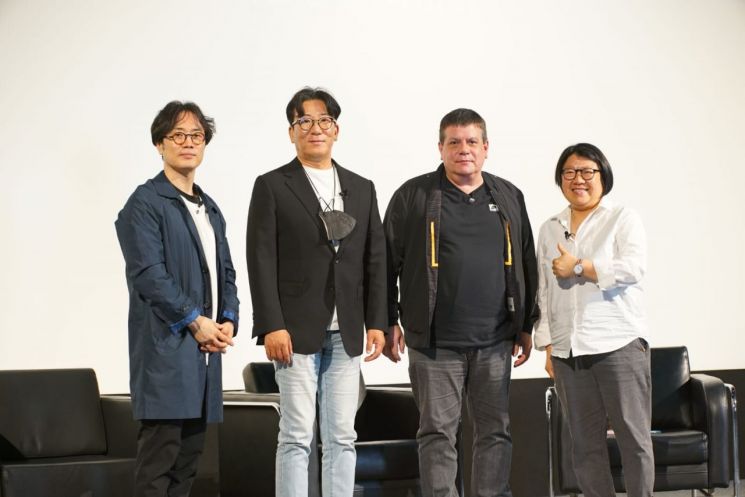
The core issue is fair remuneration for the secondary use of works. This concept originated in Europe, including Germany and France. It states that authors must be fairly compensated for usage fees, and that this right cannot be waived or transferred. Director Yoon Je-kyun, who directed films such as Haeundae (2009) and Ode to My Father (2014), said, "Fair remuneration is 'a rightful compensation,'" and added, "Platform operators in thirty-three countries where it is legislated naturally pay a certain copyright fee to creators when acquiring broadcasting rights for films." He emphasized, "Fair remuneration is like the driving force that enables directors and writers to continue their creative activities."
Director Min Kyu-dong, known for Whispering Corridors 2 (1999) and Herstory (2018), stated, "Delayed legislation could cause international disputes." He explained, "France pays copyright fees to Korean directors under the 'Berne Convention,'" and expressed concern, "Conversely, Korea not paying copyright fees to French creators violates the principle of reciprocity and equality." The Berne Convention explicitly states that copyright holders are protected regardless of nationality.
Korea joined the Berne Convention in 1996. Maldonado viewed this as a starting point for resolving the issue. "Argentina was able to amend its copyright law upon joining the Berne Convention," he said, advising, "Korea already has the conditions in place, so it is important for creators to consistently raise their voices." He continued, "If many creators participate, DGK could also be elevated to a Collective Management Organization (CMO)." A CMO manages works and grants licenses on behalf of copyright owners. It signs contracts with various CMOs in other countries or regions and decides how to distribute the resulting revenue to creators.
© The Asia Business Daily(www.asiae.co.kr). All rights reserved.


















