Gas Price Surge Leads to Sanctions Evasion Allowed Against Russia
Poland "Will Not Succumb to Putin's Threats" Protests
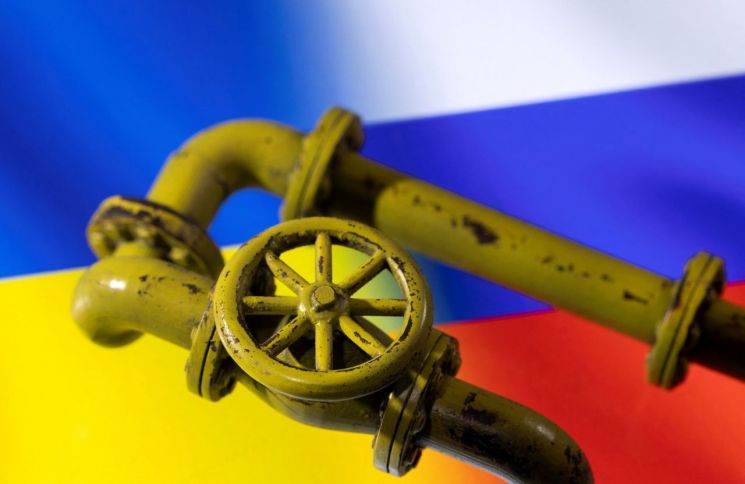
[Asia Economy Reporter Hyunwoo Lee] The European Union (EU) has sparked controversy by announcing that it will allow member countries' gas companies to open accounts at Gazprombank as demanded by Russia in relation to Russian gas purchases. Concerns are rising that the EU's cohesion may weaken amid criticism that it has softened sanctions against Russia by yielding to threats of gas supply cuts.
According to Bloomberg on the 16th (local time), the EU Commission stated in a press release, "On the 13th, we sent new guidelines to member states regarding gas purchase transactions with Russia," adding, "Gas companies are not prohibited from opening accounts at banks designated by Russia under the EU's sanctions against Russia. Companies that pay for Russian gas in the currency agreed upon in existing contracts and report that the transaction was completed in that currency will be considered compliant with the sanctions."
Bloomberg reported that this means the EU is allowing companies to accept Russia's demand to create special accounts at Gazprombank as an exception after the Russian government announced a ruble payment measure for gas fees. Previously, the EU had opposed member states opening accounts at Gazprombank, stating that direct purchases of Russian gas in rubles and opening special accounts at Gazprombank could be considered violations of sanctions against Russia.
Earlier, Russian President Vladimir Putin signed a presidential decree last month requiring buyers from unfriendly countries, including EU member states, to pay for Russian gas in rubles starting April 1. However, in actual payments, foreign buyers have been allowed to transfer euros to Gazprombank's foreign currency account, a financial subsidiary of the Russian state-owned gas exporter Gazprom, which then converts the euros into rubles and pays Gazprom.
As a result, criticism has arisen that the EU has softened sanctions by yielding to Russia's threat to cut gas supplies. The Polish government, which has been advocating for ultra-tough measures such as a gas embargo, strongly opposed and condemned the EU's move. Polish Prime Minister Mateusz Morawiecki said at a press conference, "We are very disappointed with the EU's decision," emphasizing, "Poland will stick to the rules and will not succumb to Putin's threats."
© The Asia Business Daily(www.asiae.co.kr). All rights reserved.

















