Fatality Rate 18.4% Since 2013 ... No Vaccine or Treatment Available
[Asia Economy Reporter Jo In-kyung] This year, for the first time, a death caused by Severe Fever with Thrombocytopenia Syndrome (SFTS) has occurred, prompting health authorities to urge caution during outdoor activities.
According to the Korea Disease Control and Prevention Agency on the 17th, a 69-year-old woman identified as A, residing in Donghae City, Gangwon Province, recently developed symptoms such as sore throat, decreased consciousness, and slurred speech after working in a field in front of her house. She visited the emergency room on the 9th and was hospitalized for treatment but passed away on the 16th.
When Ms. A arrived at the emergency room, she showed signs of leukopenia and thrombocytopenia. She tested positive for SFTS on the 12th, and her condition worsened, leading to her transfer to the intensive care unit on the 13th, where she received oxygen therapy.
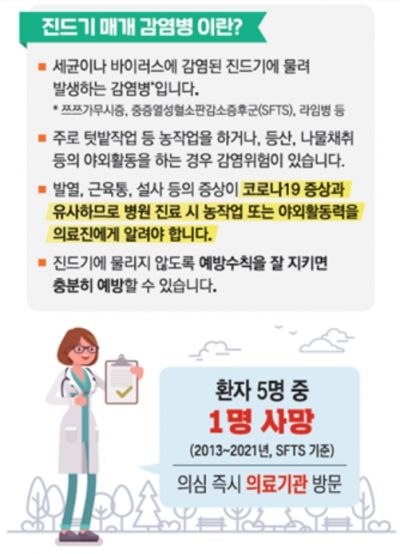
SFTS mainly occurs from April to November after being bitten by ticks carrying the SFTS virus. The incidence begins to increase in spring due to increased exposure to ticks during outdoor activities such as farming, weeding, and gathering wild vegetables. Symptoms include high fever, nausea, vomiting, and diarrhea. Particularly, since the fatality rate is high and there are no preventive vaccines or treatments, special caution is necessary.
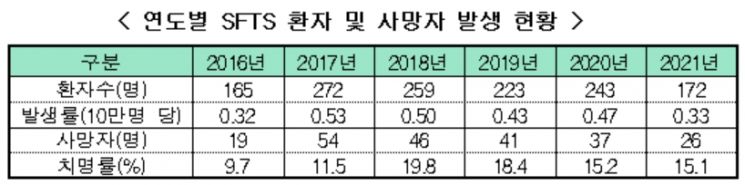
Since the first domestic case was reported in 2013, a total of 1,504 cases have occurred up to last year, with 277 deaths, resulting in a fatality rate of 18.4%. It is most common among agricultural and forestry workers aged 65 and older living in rural areas, and the fatality rate increases with age.
However, not everyone bitten by a tick becomes infected. Experts explain that only a very small portion of ticks living in Korea carry the SFTS virus, so in most cases, being bitten does not lead to SFTS infection.
The Disease Control Agency advised, "The best prevention during farming and outdoor activities is to wear protective clothing such as long sleeves and long pants to avoid tick bites." They added, "If high fever or gastrointestinal symptoms appear within two weeks after outdoor activities, immediately visit a medical institution, inform the medical staff about your outdoor activities, and receive medical care."
© The Asia Business Daily(www.asiae.co.kr). All rights reserved.


















