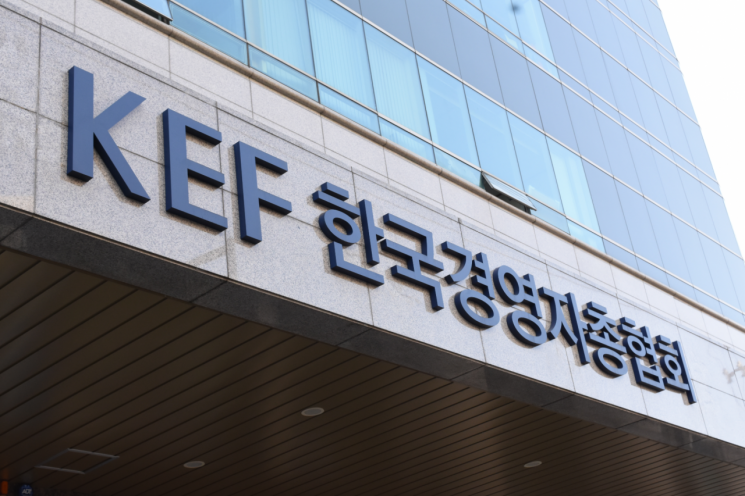
[Asia Economy Reporter Yoo Hyun-seok] The Korea Employers Federation (KEF) announced on the 15th that it will submit a proposal regarding the "Amendment to the Enforcement Decree of the Serious Accidents Punishment Act" to related government ministries including the Ministry of Trade, Industry and Energy, the Ministry of Justice, and the Ministry of Employment and Labor.
KEF stated, "Although the Serious Accidents Punishment Act, which imposes very strict penalties on management officials in the event of accidents, has been in effect since January 27, there has been no clear reduction in industrial accidents. Instead, unclear regulations have intensified confusion at worksites and even stifled business activities." They added, "Since the Act was hastily enacted without thorough discussion and contains many issues, urgent supplementary legislation is necessary." Furthermore, they noted, "Considering that legal amendments take some time, we have prioritized proposing amendments to the enforcement decree to immediately resolve confusion at the field level."
The KEF's proposals can be summarized into six main points. First, KEF argued that severity criteria should be established for occupational disease cases. Minor illnesses that do not align with the purpose of the Act can be considered serious industrial accidents. Also, considering consistency with the serious public accident disease regulation (requiring treatment for more than three months), severity must be included as a criterion for occupational disease cases.
They also emphasized the need to revise the scope of fatalities under serious industrial accidents. They proposed adding provisions in the enforcement decree to exclude deaths from cerebro-cardiovascular diseases that do not meet clear causality, employer preventability, or severity criteria from the Act’s application, and to limit the scope of fatalities to acute poisoning disease cases as defined by the enforcement decree.
Additionally, KEF explained that the target and scope of management officials should be specified. They suggested establishing separate provisions in the enforcement decree to clarify the target and scope of management officials. They pointed out that if a suitable person is appointed as a management official according to the "or" clause, the business representative should be exempted from the responsibility to fulfill safety and health obligations under the Act.
KEF also stated that the obligations of management officials related to serious industrial accidents need clarification. They highlighted that vague expressions such as "necessary budget for accident prevention" in Article 4 and "diligently performing" safety and health management responsibilities in Article 5 should be revised for clarity.
Moreover, KEF stressed the need for improvements such as specifying "related laws and safety and health-related laws" and enhancing the safety and health education attendance system. KEF emphasized, "Due to the lack of sufficient legal delegation, amending the enforcement decree alone has fundamental limitations in resolving uncertainties at the field level." They added, "To clarify the scope and obligations of management officials and to ease excessive penalties, supplementary legislation must be pursued." They concluded by stating, "A comprehensive proposal for amending the Serious Accidents Punishment Act, reflecting the difficulties faced by the industry, will also be submitted to the government and the National Assembly soon."
© The Asia Business Daily(www.asiae.co.kr). All rights reserved.

















