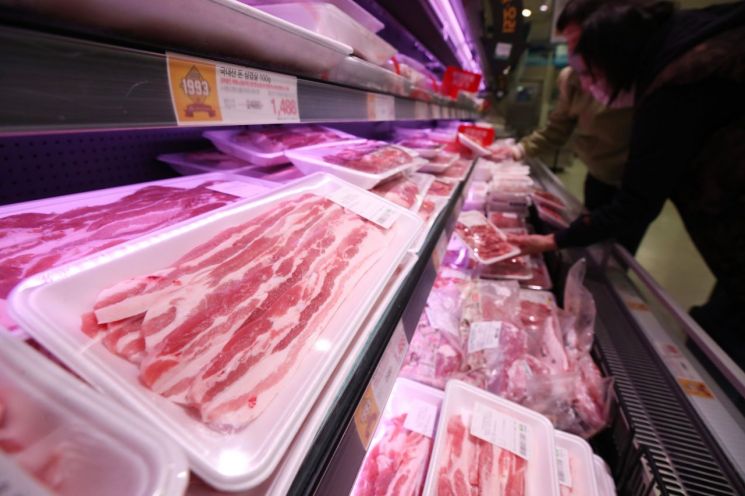
[Asia Economy Reporter Hwang Sumi] Since Russia's invasion of Ukraine, the burden of food prices has increased, causing fluctuations in the global meat market as well.
According to Yonhap News on the 14th, Tyson Foods, the largest meat processing company in the United States, raised beef prices by an average of 23.8% in the first quarter of this year compared to the same period last year, citing increased labor and feed costs. Chicken prices rose by 14.4%, and pork prices by 10.8%.
The U.S. Department of Labor announced that the Consumer Price Index (CPI) in April rose 8.3% compared to the same month last year. In particular, meat prices increased by 14.3%.
Last month, food costs in the Chicago area of the United States also rose by more than 10% compared to a year ago, with meat prices showing the highest increase at 13%.
In Australia, beef prices have risen 9% since the beginning of this year due to increased demand from China and a shortage of livestock workers caused by COVID-19.
The industry is concerned that the shortage of international grain feed caused by the Ukraine crisis could lead to price increases in chicken and pork as well. Matt Dalglish, a commodities officer at Thomas Elder Market (TEM), an agricultural and livestock market analysis firm, said Australian farmers are on the verge of passing increased breeding costs onto supermarkets and consumers.
The domestic meat market is no different. According to Statistics Korea, consumer prices in April rose 4.8% compared to last year, with imported beef prices increasing by 28.8%. Pork prices rose by 5.5%, and domestic beef by 3.4%. This appears to be due to increased import costs caused by international supply chain instability and logistics difficulties.
Moreover, the rising import prices of compound feed and feed grains are increasing the breeding cost burden on domestic livestock farms.
According to the Korea Rural Economic Institute, the import price per ton of feed grains in April was $329 for wheat and $327 for corn, rising 21.4% and 30.8% respectively over one year. South Korea depends on Russia and Ukraine for about 10% of its annual wheat and corn imports.
Compound feed prices have also increased. According to the Ministry of Agriculture, Food and Rural Affairs, as of March this year, the price of compound feed for meat cattle was 505 KRW per kilogram, up 20% from 421 KRW a year earlier.
Since international grain prices are reflected in South Korea’s import prices with a 3 to 7 month lag, experts predict that the grain price increases caused by the Ukraine crisis will put significant pressure on domestic compound feed and livestock product prices in the second half of the year.
© The Asia Business Daily(www.asiae.co.kr). All rights reserved.
![Clutching a Stolen Dior Bag, Saying "I Hate Being Poor but Real"... The Grotesque Con of a "Human Knockoff" [Slate]](https://cwcontent.asiae.co.kr/asiaresize/183/2026021902243444107_1771435474.jpg)
















