Purchase Limits Per Person at Some Large Discount Stores
If the Crisis Prolongs, Overall Food Prices May Surge
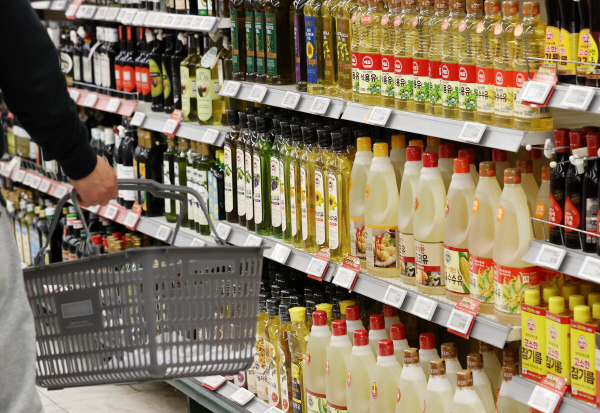 Some large discount stores are limiting the number of cooking oil bottles that can be purchased per person. The photo is not related to any specific expression in the article. Photo by Yonhap News
[Asia Economy Reporter Lim Juhyung] The global shortage of cooking oil supply, known as the 'cooking oil crisis,' is becoming a reality in South Korea as well. Some large discount stores have implemented restrictive measures limiting the number of cooking oil bottles each person can purchase. Consumers are expressing anxiety, saying, "Is there really going to be a day when we can't find cooking oil at all?"
On the 12th, many posts expressing concerns about the cooking oil crisis appeared on online communities and social networking services (SNS). A Twitter user said, "I heard that large marts are selling only one bottle of cooking oil per person. Shouldn't we buy a few bottles in advance at local supermarkets before it gets worse?" and added, "I thought food shortages were only a foreign issue, but it's scary to see this happening in our country."
Another user lamented, "This is the first time I've experienced restrictions on cooking oil sales. There are so many dishes made with cooking oil; are those all going to be okay?" and said, "I never imagined I'd have to worry about food from the morning."
Voices of concern about cooking oil supply are also rising in the foodservice industry community, which is sensitive to ingredient prices. Member A of the country's largest self-employed community 'Apeunikka Sajangida' said the day before, "When I went to the cooking oil section, there was a notice saying that no one can buy more than two 1.8-liter bottles per person. The price was over 6,000 won, and the expiration date was until June next year," adding, "I really felt the cooking oil crisis."
On the 11th, some domestic warehouse-type discount stores limited the number of cooking oil bottles per person. 'Emart Traders' restricted purchases to two per person at 20 stores nationwide, and 'Costco' limited some products to one per person per day at all branches. Other large discount stores have not yet imposed purchase limits but are reportedly closely monitoring the situation.
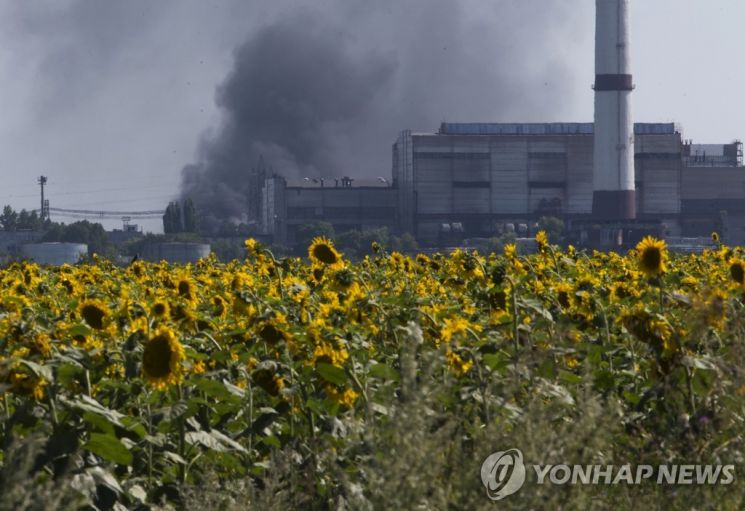 Since Russia's invasion of Ukraine, the export of sunflower seeds, the main raw material for cooking oil, has been disrupted. The photo shows a sunflower field in Ukraine. / Photo by Yonhap News
The cooking oil shortage is not a phenomenon occurring only in South Korea. Previously, some European countries such as the UK, Spain, Greece, Turkey, and Belgium also limited cooking oil purchases to 2-3 bottles per person.
The cooking oil crisis was triggered by overlapping supply chain disruptions caused by COVID-19 and the Russia-Ukraine war. When Ukraine's export routes were blocked, the supply of sunflower seeds, the main raw material for cooking oil, was cut off, and prices of substitutes like soybean oil and palm oil surged. Furthermore, Indonesia, which accounts for more than half of the global palm oil market supply, halted palm oil exports starting from the 28th of last month, intensifying the cooking oil supply instability.
In particular, if the palm oil export suspension continues long-term, there are concerns that not only 'table prices' but also dining-out costs and processed food prices overall will rise sharply. This is because cooking palm oil is widely used in processed foods such as flour-based snacks, fried foods, confectionery, bakery products, and ramen.
In response, the Ministry of Agriculture, Food and Rural Affairs issued a press release on the 29th of last month stating, "The food industry imports about 200,000 tons of palm oil annually for use in manufacturing processed foods such as ramen and snacks," and analyzed, "Currently, major companies hold inventories and also import Malaysian palm oil, so the impact is expected to be limited, but if prolonged, supply instability due to rising international palm oil prices is a concern."
They emphasized, "We will closely communicate with the industry to prevent supply chain disruptions in preparation for the possibility that Indonesia's export ban may be prolonged."
© The Asia Business Daily(www.asiae.co.kr). All rights reserved.


















