Among Large Conglomerates, the Biggest Decline
HDC Affected by Apartment Collapse
Kakao Faces Aftermath of Stock Options
[Asia Economy Reporter Minji Lee] Amid the domestic stock market faltering due to external adverse factors, Kakao and HDC Group showed the largest declines among major domestic conglomerates.
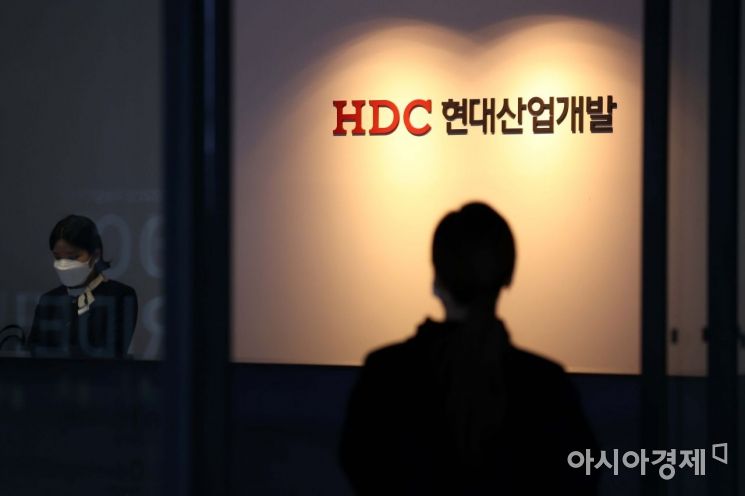
According to financial information firm FnGuide on the 12th, among major domestic conglomerates, HDC Group experienced the highest market capitalization decline rate among major groups in Korea from the beginning of this year until the 11th. Its market cap shrank from 2.6893 trillion KRW to 1.7451 trillion KRW, a drop of over 35%. This was due to rapidly shrinking investor sentiment toward HDC Hyundai Development Company following the Gwangju Hwajeong I-Park collapse accident, delayed construction starts at major sites, and contract cancellations. With dividends becoming uncertain, the investment appeal has significantly diminished. Seungjun Kim, a researcher at Hyundai Motor Securities, analyzed, "Looking at the financial status, the company has abundant cash liquidity, so it is unlikely to collapse, but due to the damage to business value, the business scale may shrink, so caution is needed in investment."
The next largest decline was seen in Kakao Group. Its market capitalization, which reached 110.5376 trillion KRW this year, shrank to 74.3619 trillion KRW. More than 36 trillion KRW evaporated this year, with the average stock price decline rate of Kakao Group shares recorded at 32.76%.
Although interest rate hikes by the U.S. Federal Reserve (Fed) and other major central banks dampened growth stock investor sentiment, Kakao Group also faced individual stock-related adverse factors. The affiliate in the worst condition was Kakao Pay. Kakao Pay's market cap halved from 23 trillion KRW to 12 trillion KRW (-47.9%) in five months. After the news that key executives, including former Kakao Pay CEO Youngjun Ryu, exercised stock options just over a month after the company's listing last year, which angered shareholders, a series of poor earnings announcements and the impending release of lock-up shares (about 13.9 million shares out of 76 million shares, excluding Kakao's one-year voluntary lock-up shares) further pressured the stock price downward. Other affiliates such as Neptune (-47%), Kakao Games (-36.7%), Kakao Bank (-32%), and Kakao (-25.33%) also showed significant declines.
As external conditions became unstable, most other major groups also saw decreases in market capitalization. In order of largest decline: Celltrion (-21.43%), LG (-17.75%), SK (-16.75%), Samsung (-13.89%), Hyundai Motor (-7.9%), and POSCO (-5.3%).
On the other hand, some companies grew larger even amid the declining market. Although the Russia-Ukraine war phase increased cost burdens for companies, it was a positive factor for Harim (28.3%) and Hyundai Heavy Industries (10.27%). All five listed companies?Harim Holdings (33.38%), Pan Ocean (30.34%), Harim (26.63%), Seonjin (12.17%), and Farmsco (5.14%)?showed upward trends. For Harim, the surge in feed prices due to Russia's invasion of Ukraine combined with the impact of avian influenza (AI) led to a rise in chicken product prices, which was effective.
Hyundai Heavy Industries Group received expectations that liquefied natural gas (LNG) orders would increase due to the war's aftermath. The major stocks' growth rates were Hyundai Heavy Industries (34.7%), Hyundai Electric (16.7%), and Hyundai Mipo Dockyard (12.7%).
© The Asia Business Daily(www.asiae.co.kr). All rights reserved.


















