"Disposable Cups Release Trillions of Nanoplastic Particles per Liter"
Microplastics Also Act as Vectors for Pathogens
Adversely Affect Environment, Animals, and Humans
Commonly Detected in Everyday Items Like Wet Wipes, Face Masks, and Tea Bags
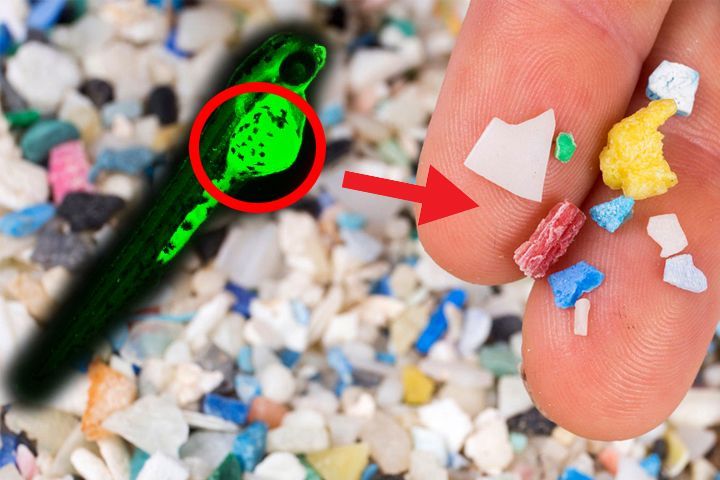 A recent study has found that disposable cups used for hot beverages release trillions of microplastics, raising concerns about potential adverse effects on human health. The photo is unrelated to specific expressions in the article. Photo by XXX
[Asia Economy Reporter Kim Jung-wan] Recent research has revealed that hot beverage containers release trillions of microplastic particles into drinks, reigniting concerns about the harmful effects of microplastics. Microplastics are ultrafine plastics with diameters less than 100 nm (nanometers, where 1 nm is one-millionth of a millimeter), small enough to penetrate cells and potentially cause adverse effects on the human body.
Researchers at the U.S. National Institute of Standards and Technology (NIST) announced on the 20th of last month (local time) in the scientific journal Environmental Science & Technology that "trillions of nanoplastic particles per liter leach from disposable cups." The team poured water at 22℃ and 100℃ into commercially available disposable cups (355ml) and observed them for 20 minutes. As the film coating on the inner walls dissolved, they detected 2.8 trillion microplastic particles per liter in the 22℃ water and 5.1 trillion microplastic particles per liter in the 100℃ water.
The detected nanoparticles averaged 30?80 nm in size, indicating extremely small particles. It is interpreted that such tiny nanoparticles are released along with hot beverages, potentially entering cells and disrupting biological functions. The researchers warned, "These experimental results show that products used by consumers in daily life can be a major source of nanoparticles that may pose health risks."
Additionally, a study has shown that bacteria and parasites living on land can hitch a ride on microplastics to the ocean, infecting marine life. According to a joint study published in Scientific Reports by the University of California Davis School of Veterinary Medicine, Bodega Marine Laboratory, University of Nebraska College of Veterinary Medicine, and University of Toronto’s Department of Evolutionary Biology and Ecology, microplastics serve as vectors transmitting pathogens that cause diseases to the ocean, threatening marine ecosystems as well as human health.
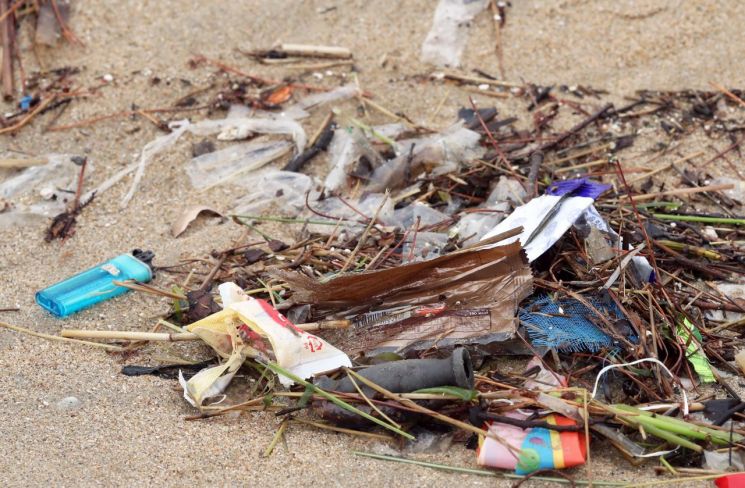 Microplastics act as carriers that transport pathogens causing diseases into the ocean, threatening not only marine ecosystems but also human health.
The research team analyzed zoonotic pathogens such as the parasite Toxoplasma gondii, which can cause neuropsychiatric disorders; Cryptosporidium, which causes respiratory issues and gastroenteritis; and Giardia, which leads to diarrhea and cholecystitis, along with spherical microplastics and linear microfibers to investigate the relationship between pathogens and plastics in seawater.
Experimental results showed that both microplastics and microfibers can harbor terrestrial pathogens like bacteria and parasites, with microfibers more readily carrying these pathogens than granular microplastics. The team stated that plastics facilitate the delivery of pathogens to marine organisms through various mechanisms.
The researchers emphasized that such microplastics cause serious harm not only to the environment and animals but ultimately to humans. Professor Karen Shapiro of UC Davis said, "Pathogens are 'hitchhiking' on microplastics, spreading to places where they would otherwise be undetectable," adding, "Microplastics cause serious damage to the environment, wildlife, and humans alike."
In fact, in March, a study was published for the first time detecting microplastics in human blood. According to a research team from Vrije Universiteit Amsterdam in the Netherlands, polyethylene terephthalate (PET) was found in blood samples of 50% of the 22 adult participants.
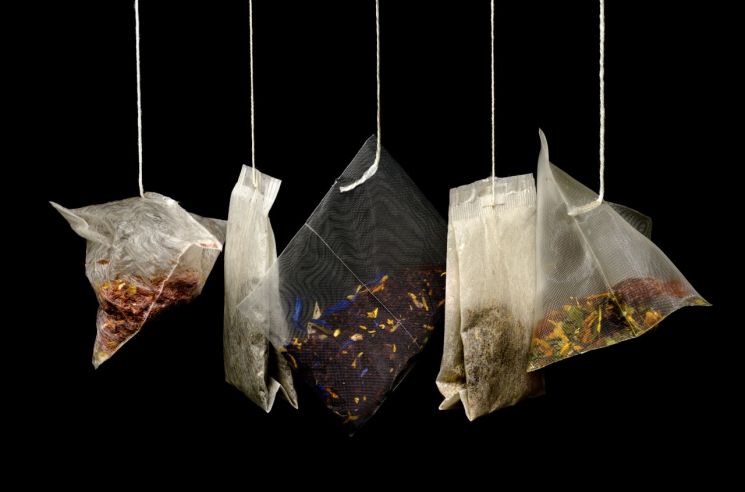 In addition to disposable cups, a large amount of microplastics is released from commonly used everyday items such as wet wipes, face masks, and tea bags. [Image source=Pixabay]
Microplastics are detected not only in disposable paper cups but also in commonly encountered daily items such as △wet wipes △sheet masks △tea bags. Wet wipes are non-woven fabrics made by compressing synthetic fibers like rayon and polyester; they do not dissolve in water and are not recyclable. Sheet masks are also considered plastics made by mixing nylon, polyester, and other materials. Large amounts of microplastics were detected in tea bags as well. A recent Canadian study measured microplastics released after steeping triangular tea bags in 95℃ water for 5 minutes and found 11.6 billion microplastic particles. Paper tea bags often use polypropylene-coated paper, which contains plastic, so caution is advised.
© The Asia Business Daily(www.asiae.co.kr). All rights reserved.

![Clutching a Stolen Dior Bag, Saying "I Hate Being Poor but Real"... The Grotesque Con of a "Human Knockoff" [Slate]](https://cwcontent.asiae.co.kr/asiaresize/183/2026021902243444107_1771435474.jpg)

















