Despite Inflation and Interest Rate Hike Challenges,
Strong Earnings Support Stock Performance
[Asia Economy Reporter Minji Lee] Even in a plunging market, the reliable stocks were those related to utilities and automobiles. Despite the overlapping impact of the U.S. Federal Reserve's (Fed) monetary tightening policy and China's COVID-19 lockdown measures, which have dampened investment sentiment toward domestic companies, utility and automobile stocks are attracting investor interest with their "solid performance."
According to the Korea Exchange on the 10th, from the 1st of last month to the 9th of this month, the KRX Utility Index rose by 1.96%, posting the highest returns among the major KRX indices. The KRX Automobile Index followed with a 0.29% increase. During this period, the KRX300 Index, composed of major KOSPI and KOSDAQ stocks, fell by 5.9%, reflecting the subdued domestic stock market. The domestic market has been hit by high inflation, high interest rates, and a high exchange rate, and since last month, concerns have intensified that China's stringent COVID-19 lockdown measures will increase cost burdens for domestic companies.
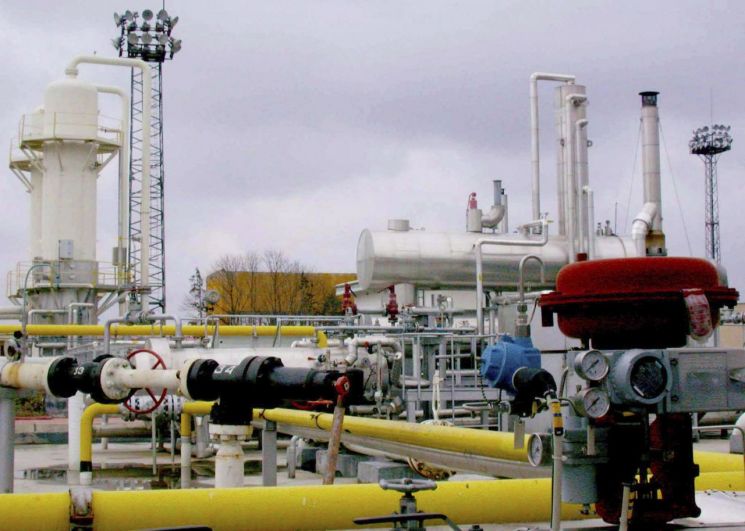
Despite this, utility stocks showed relatively superior gains because the unstable external conditions such as high interest rates and high inflation worked to their advantage. The stocks rose in the order of Korea Gas Corporation (16%), Samchully (12.74%), Korea Electric Power Corporation (3.2%), and KEPCO Industrial Development (3.3%). Korea Gas Corporation, which had the largest increase, is expected to earn an annual operating profit of 1.5 trillion won, a 21% increase compared to the previous year. The company purchases natural gas wholesale and supplies it exclusively to domestic power plants. The key indicator for profit, the appropriate investment return rate, was raised by 0.4 percentage points compared to last year, which is expected to increase gas sales. The appropriate investment return rate is determined by external variables such as interest rates and oil prices. For overseas operations, profits are also predicted to increase due to the strong prices of oil and natural gas.
The new government's intention to expand nuclear power projects was also a positive factor for stock prices. If nuclear power generation becomes feasible, Korea Electric Power Corporation can lower production costs. During the Moon Jae-in administration, Korea Electric Power Corporation's production costs rose due to the nuclear phase-out policy, but it was unable to raise electricity rates, causing deficits to balloon, and its stock price plunged about 47% over the past five years. Yu-jin Jeon, a researcher at Hi Investment & Securities, explained, "Nuclear power is a politically sensitive energy source, but from an economic perspective, reducing the use of nuclear power is not easy," adding, "It is also positive that recently Europe, the U.S., and even Japan have been softening their stance on nuclear power operations."
The automobile index reflected the positive performance of Hyundai Motor and Kia Motors. Both companies rose by 1% and 6.6%, respectively, over the past month, reflecting expectations for annual performance growth following strong first-quarter results. Although the semiconductor supply chain disruption has negatively affected auto parts suppliers, finished car manufacturers Hyundai and Kia have passed on increases in raw material and logistics costs to sales prices, achieving sales growth rates of over 10% in the first quarter alone. Pyeongmo Kim, a researcher at DB Financial Investment, analyzed, "The strong performance of finished car manufacturers lies in their pricing power," adding, "Since the second half of last year, they have raised new car prices in line with model year changes and new launches, and the U.S. auto market's selling prices also increased by double digits (16%) compared to the previous year, so stable profits are expected through the end of the year." Hyundai and Kia are projected to record profits of 8.1706 trillion won and 6.5355 trillion won this year, growing by 22% and 29%, respectively.
© The Asia Business Daily(www.asiae.co.kr). All rights reserved.
![Clutching a Stolen Dior Bag, Saying "I Hate Being Poor but Real"... The Grotesque Con of a "Human Knockoff" [Slate]](https://cwcontent.asiae.co.kr/asiaresize/183/2026021902243444107_1771435474.jpg)











