[Seoul District News] Safety Issues and Energy Efficiency Decline Since Completion in 1981, Construction Started in March Last Year, Recently Completed · Seismic Reinforcement with Steel Frame, Energy Saving with Insulation and Double-Glazed Glass ... External Design Improved for Consistency with Annex · Meeting Rooms and Civil Service Consultation Rooms Created Using Idle Space Between Main and Annex Buildings · Parking Lot in Front of Office Renovated to Enhance Resident Convenience ... Gwanak-gu Youth Small Business Owners' Han-kkina-num Lunchbox Support Project Praised ... Yongsan-gu Publishes '2010?2022 Yongsan Property White Paper' ... Jongno
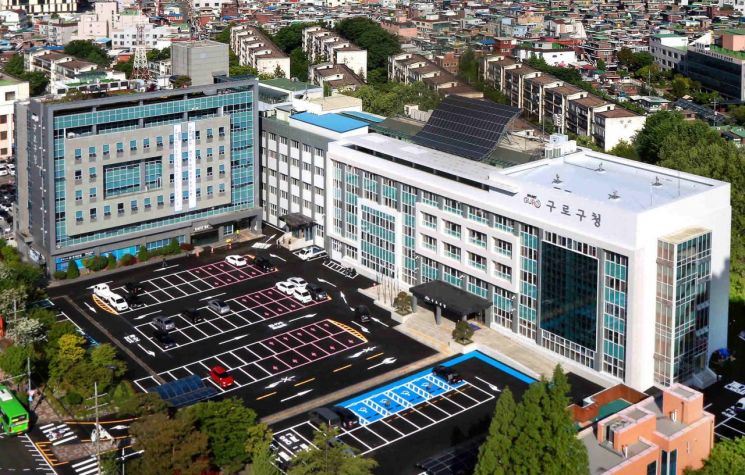
[Asia Economy Reporter Jong-il Park] Guro-gu (Mayor Lee Sung) has newly renovated the main building of the district office, which is over 40 years old.
The main building of the district office, completed in 1981, was an aging structure. In the detailed safety inspection and seismic performance evaluation conducted in 2017, experts advised that reinforcement was necessary.
Additionally, the old and worn exterior walls of the office building posed safety issues and had low insulation effectiveness, resulting in poor energy efficiency.
To ensure the safety of residents and employees and to improve the aging office building, Guro-gu started construction in March last year and recently completed it. A total budget of approximately 7.5 billion KRW was invested, including a special grant of 450 million KRW from the Ministry of the Interior and Safety.
First, for seismic reinforcement, steel frames and shear walls were installed on the exterior of the building, and carbon fiber reinforcement methods were used inside the building to strengthen the concrete and ensure structural safety.
Insulation materials were added to the exterior walls, and double-glazed windows were installed to improve energy efficiency, which is expected to reduce heating and cooling costs. Along with this, the exterior design of the main building was also improved to unify its appearance with the annex building constructed in 2015.
Furthermore, the idle space between the main building and the annex was utilized to create meeting rooms and civil service consultation rooms of approximately 34.8㎡ (about 10 pyeong) on five floors, providing convenience to residents and enhancing work efficiency for employees.
To assist residents' convenience and ensure safe parking, the parking lot in front of the office was also newly renovated. The parking lot floors on the front and rear sides of the district office, totaling 5,000㎡, were paved with asphalt concrete, and lane markings and parking space lines were freshly painted. Additionally, traffic safety facilities such as bollards, speed bumps, and guide posts were newly installed.
A Guro-gu official stated, “With this safety remodeling of the district office, we expect to facilitate convenient use for residents visiting the office and improve employees' work efficiency. We will provide the best administrative services in a comfortable office equipped with safety and energy-saving effects.”
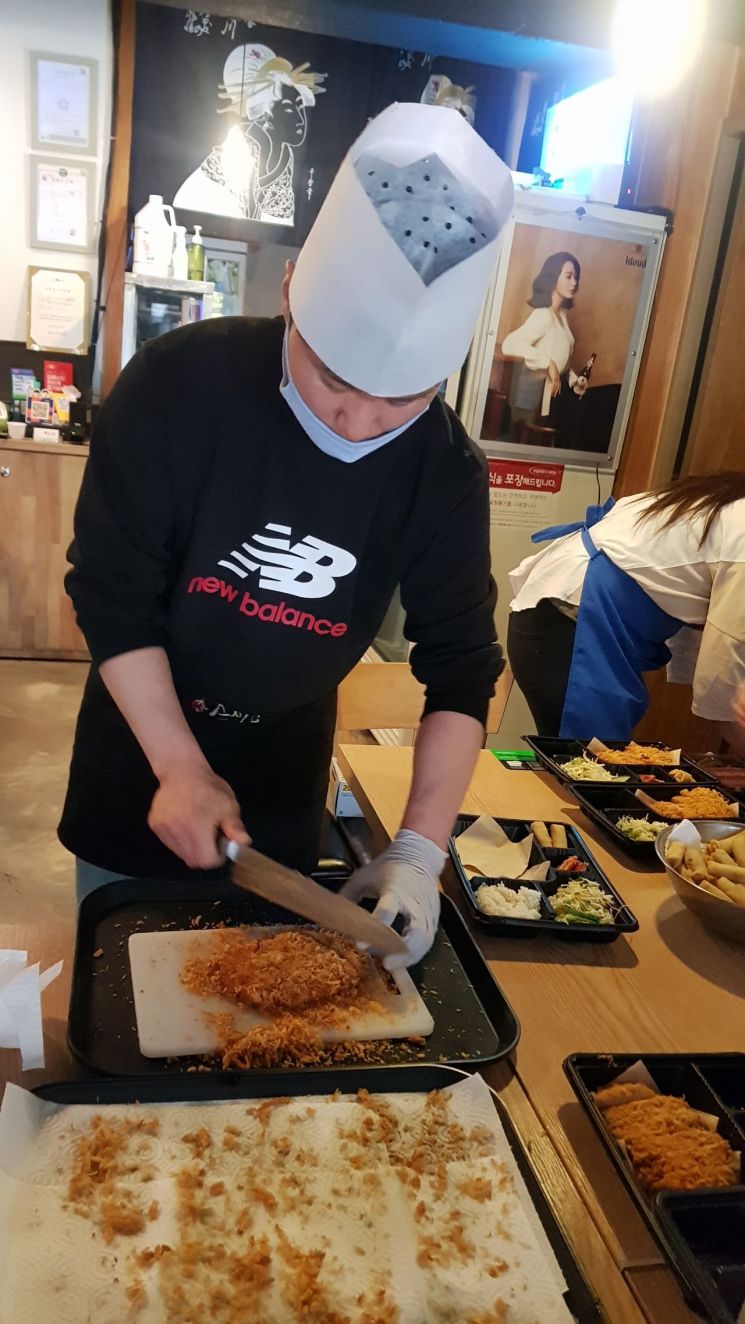
Gwanak-gu’s support project for youth small business owners’ meal-sharing lunchboxes, aimed at helping youth small business owners cope with long-term sales declines due to COVID-19 and providing opportunities to contribute to the local community, is gaining attention.
The youth small business owners’ meal-sharing lunchbox support project is a community coexistence initiative that shares lunchboxes with vulnerable groups at risk of food insecurity and helps youth small business owners increase sales amid the prolonged COVID-19 pandemic, which has dampened consumer sentiment and caused sharp sales drops and fixed expenses.
The district designated five comprehensive welfare centers in the area (▲Gang Gam-chan Gwanak ▲Bongcheon ▲Jungang ▲Sillim ▲Seongmin) as project implementing agencies. For two months from May to June, lunchboxes are manufactured and supplied by youth small business owners and delivered to residents in need of meal support.
In April, 35 youth small business owner companies were recruited and finalized, aiming to strengthen community bonds through life-oriented support for about 400 households in welfare blind spots.
Moreover, the project provides emergency sales channels to youth small business owners to enhance business sustainability, offers income-generating opportunities rather than simple financial aid to youth delivery workers, and prevents food insecurity and social isolation among vulnerable single-person households, creating a triple-win effect.
A district official said, “Through this youth small business owner community coexistence project, we aim to operate a program that benefits all members of the local community. We will continue to prepare projects that youth and neighbors facing difficulties in our area can truly feel.”
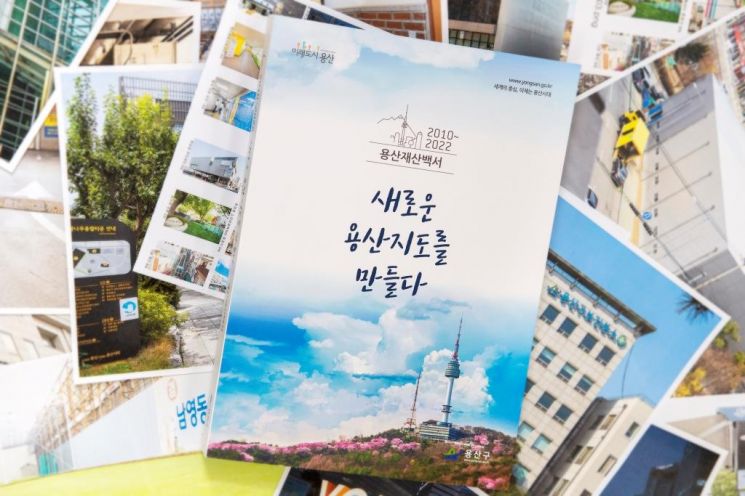
Yongsan-gu (Mayor Seong Chang-hyun) has published the 2010?2022 Yongsan Property White Paper titled ‘Creating a New Map of Yongsan.’ It records the increase in district-owned properties by type over 12 years to improve the efficiency of property management and utilization.
As of 2022, Yongsan-gu owns 317 buildings and 4,638 land parcels, with a total property value of approximately 4.8453 trillion KRW, nearly double the 2.5653 trillion KRW in 2010.
Over the past 12 years, the value of district-owned properties acquired by type includes ▲public contribution acquisitions of 1.9489 trillion KRW ▲purchase through shared property management funds of 49.4 billion KRW ▲budget purchases of 205.2 billion KRW ▲discovery of hidden assets worth 30.4 billion KRW.
The newly published Yongsan Property White Paper is A4 size (210 mm width x 297 mm height), 543 pages long, and consists of four parts including the introduction.
The introduction contains the foreword, district administration status, property history, and a property timeline illustrated with photos. Part 1 introduces buildings, land, acquisition status, and property increase due to hidden asset discovery. Part 2 covers future property increase prospects related to the Hannam Redevelopment Promotion District, Yongsan Railroad Hospital site special planning zone public contributions, and the establishment of a dementia-safe village. Part 3 categorizes district property status by land lists per neighborhood and building status by property management officers (heads of property management departments).
A district official said, “After discovering the existence of hidden district-owned properties, we began organizing property lists in 2014.”
Chapter 3 of Part 1 highlights the efforts to discover hidden assets and restore them as district property.
In July 2013, the district confirmed through surveying that it was occupying district land at Yongsan-dong 1-ga 2-8, 8-49, 8-51, and 6-1, totaling 185㎡, 1,126.3㎡, 111.7㎡, and 666㎡ respectively, near the War Memorial of Korea. Subsequently, the district won an administrative lawsuit (February 2016 to February 2018) and has been receiving usage fees from the War Memorial Project Association, the management trustee, for district land occupation since November 1, 2010.
Yongsan-gu Mayor Seong Chang-hyun said, “In 2011, the district was the first autonomous district in the nation to enact an ordinance for the shared property management fund and published the district-owned property booklet in 2014. Based on our property management know-how, we will ensure that the benefits from Yongsan area development are distributed evenly among all residents.”
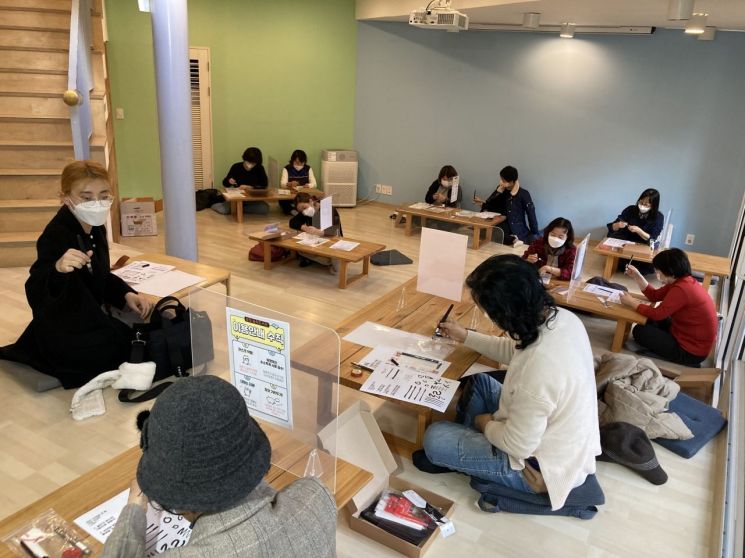
Jongno-gu operates the ‘2022 Neighborhood Learning Centers Within One Step’ project, utilizing local art museums, museums, and small libraries as learning spaces for residents throughout the area and providing customized lifelong learning programs.
The focus is on enabling all residents to enjoy the joy of learning easily and conveniently near their homes. Every year, the district plans and offers free educational content that meets the needs of learners, receiving positive responses.
The neighborhood learning centers at the dong (neighborhood) level in Jongno-gu include ▲Pyeongchang-dong Neighborhood Learning Center (Hwajeong Museum) ▲Buam-dong Neighborhood Learning Center (Hwan-gi Art Museum) ▲Muak-dong Neighborhood Learning Center (Muak-dong Community Center) ▲Hyoja-dong Neighborhood Learning Center (Miin Psychological Counseling Cafe) ▲Cheongun-dong Neighborhood Learning Center (Sangchonjae) ▲Samcheong-dong Neighborhood Learning Center (Science Bookstore Galda) ▲Jongno 1, 2, 3, 4-ga Neighborhood Learning Center (Seoul Jewelry Support Center) ▲Changsin 1-dong Neighborhood Learning Center (Kkumteul School) ▲Sungin 1-dong Neighborhood Learning Center (Sungin Maru Small Library) ▲Sungin 2-dong Neighborhood Learning Center (Susuhun), totaling 10 locations.
This year, as always, 67 diverse programs have been prepared, reflecting the characteristics of each location, including ‘Reading Humanities Lectures,’ ‘Psychological Journey to Find Myself,’ ‘Understanding the Nature of Light through Classical Experiments,’ ‘Jewelry Making by Hand,’ ‘Home Gardening,’ and ‘Calligraphy.’
More detailed information such as class schedules and target audiences can be found on the Jongno Education Portal.
Tuition is free, but learners must cover material costs. Applications open from 10 a.m. on May 10 via the Jongno Education Portal. Priority is given to Jongno-gu residents, but if there are vacancies, residents from other districts may apply.
For more details and inquiries about the Neighborhood Learning Center programs, contact the Jongno-gu Lifelong Learning Center.
A district official said, “By operating neighborhood lifelong learning centers at the dong level, we plan to improve access to lifelong education and offer various programs that residents desire. We recommend enjoying lifelong learning programs close to home to add vitality to daily life.”
© The Asia Business Daily(www.asiae.co.kr). All rights reserved.
![Clutching a Stolen Dior Bag, Saying "I Hate Being Poor but Real"... The Grotesque Con of a "Human Knockoff" [Slate]](https://cwcontent.asiae.co.kr/asiaresize/183/2026021902243444107_1771435474.jpg)


















