[Seoul District News] Seongdong-gu Children Virtually Walk the 'Way to School' Incorporating Game Elements Like Competitions with Friends, Sharing Impressions... Dongjak-gu Launches First Step in Operating Early Childhood Sports Team... Gangseo-gu Promotes '2022 Gangseo Innovation Education District Contest Project'... Gwangjin-gu Conducts Comprehensive Cleanup of 130 Million KRW in Unclaimed Local Taxes... Yeongdeungpo-gu Selects 14 Companies in 'Social Economy Enterprise Business Development Fund Contest,' the Most Among Seoul Districts
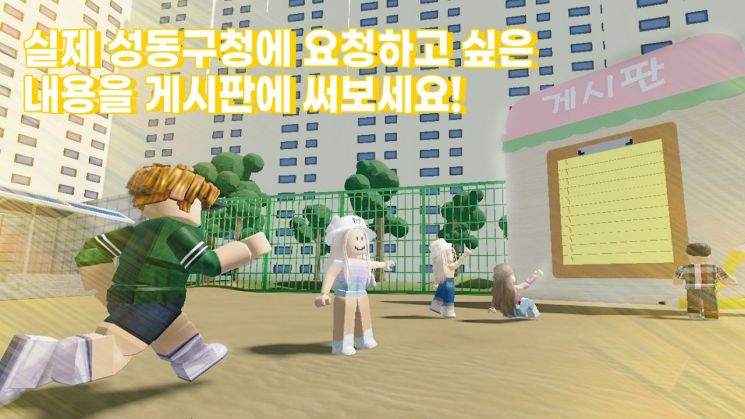
[Asia Economy Reporter Park Jong-il] Seongdong-gu is creating a metaverse game to gather children's opinions for establishing ‘safe school routes.’
The term ‘metaverse’ is a compound of ‘Universe,’ meaning the real world, and ‘Meta,’ meaning ‘virtual’ or ‘abstract,’ referring to a three-dimensional virtual world. By reflecting traffic environments similar to actual school routes, the district is building a virtual reality space where children can directly participate to collect diverse opinions for safe school routes and establish a Living Lab (a community-based research approach where residents actively participate in urban policy decision-making to solve social problems in their daily environment).
This Living Lab, targeting ‘Seoul Geumok Elementary School,’ will be conducted using the metaverse platform ‘Roblox,’ which is popular among elementary students due to its ability to collect and record opinions and the high freedom of character customization.
Through this familiar platform, such as games, children’s interest is encouraged, and during participation, they can obtain items to increase their abilities, stimulating interest. Obstacles that enhance the fun of the game are also placed.
Children can enjoy the game simultaneously with friends, and class competitions are also possible. After the experience, they can leave their impressions and suggestions for improvement on the bulletin board, and these opinions will be collected and used as data to solve safety issues.
Over the past three years (2018?2020), the district formed a living research group and conducted a ‘Living Lab’ with parents to create safe school routes. This time, they are making a new attempt to understand what children perceive as ‘safe school routes.’
Along with inconveniences perceived from an adult perspective, such as illegal parking, slippery roads, and narrow sidewalks, children are freely expressing their actual experiences and wishes while walking. The district plans to minimize the gap between reality and policy for creating ‘safe school routes’ by conducting offline meetings in addition to online activities.
A district official said, “Through the increasingly utilized metaverse, children can participate in discussions about their routes to school and share diverse and free opinions,” adding, “We will enhance policy effectiveness by involving the actual users, the children, directly.”
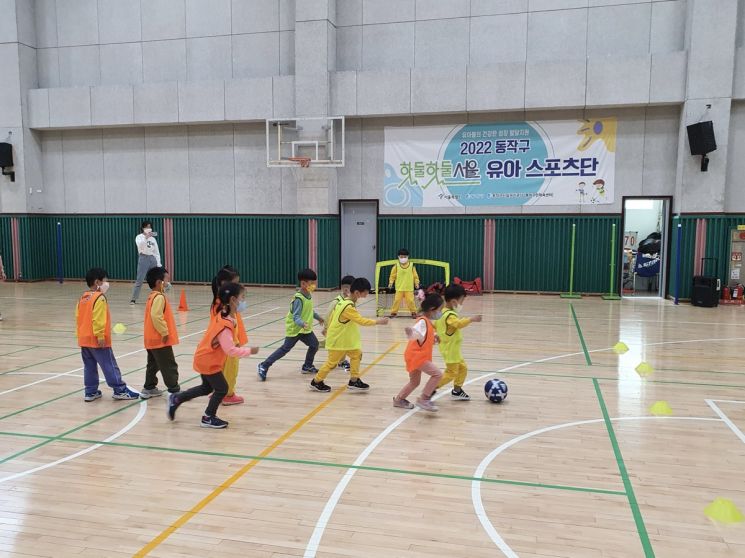
Dongjak-gu (Mayor Lee Chang-woo) announced that it has been selected as a pilot district for the Seoul Metropolitan Government’s ‘Hotdul Hotdul Seoul Early Childhood Sports Team’ contest and will operate the ‘2022 Dongjak-gu Early Childhood Sports Team.’
The ‘Dongjak-gu Early Childhood Sports Team’ is a newly launched project this year aimed at restoring physical activity after COVID-19. It supports regular physical activities for children aged 3 to 5 by linking local daycare centers and sports facilities.
The purpose is to supplement the lack of physical activity caused by the closure of sports facilities due to COVID-19 and weather factors such as fine dust, protecting children’s health and providing regular experiences in physical education.
With this contest selection, the district secured 132 million KRW in city funds and is actively promoting the project with diverse and interesting programs starting around Children’s Day in May.
Earlier, in March, the district recruited 10 local daycare centers interested in participating through the Dongjak-gu Office website. This year’s programs include ▲early childhood futsal ▲water safety swimming ▲musical jump rope ▲early childhood ballet ▲growth development gymnastics, totaling 10 programs. These are composed of various activities difficult to experience indoors at daycare centers, with possible changes after consultation.
Professional instructors conduct classes for each program, systematically teaching basic postures and fundamental skills so that children can learn the activities joyfully and enthusiastically. Programs are held twice a week for one hour each at ▲Dongjak-gu Citizen Sports Center ▲Heukseok Sports Center ▲Sadang General Gymnasium ▲Dongjak Samil Swimming Pool.
The district has established a response manual tailored to the COVID-19 situation and built a constant response system to thoroughly ensure children’s safety.
For more details, contact the Sports and Culture Division.
Park Tae-han, head of the Sports and Culture Division, said, “At the turning point of daily recovery, we will put all our efforts into supporting early childhood sports teams so that children can grow emotionally and physically healthy.”
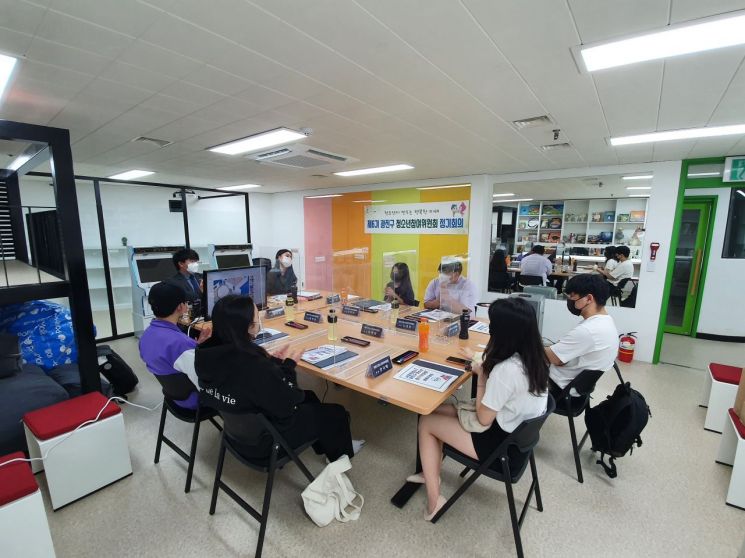
Gangseo-gu, Seoul (Mayor Noh Hyun-song) is taking steps to create a happy educational environment for children and adolescents.
The district announced the launch of the ‘2022 Gangseo Innovation Education District Contest Project’ to discover local educational resources.
The Gangseo Innovation Education District Contest Project is a program where students, parents, teachers, and local residents utilize community resources to create innovative education programs themselves, realizing a village education community for the happy growth of children.
The contest will select 35 projects in three categories: ▲Parent Club Support Project ▲Visiting Creative Experience School ▲Village School Network Project, providing a total of 95.5 million KRW in support.
First, the Parent Club Support Project targets parent groups of five or more members gathered around themes such as talent donation linked to school curricula and research activities on future education, supporting 15 groups with 1 million KRW each.
The Visiting Creative Experience School supports resident groups (organizations) operating creative experience programs for youth, such as career camps, media experiences, and traditional games, in cooperation with local elementary, middle, and high schools. Fifteen projects will receive 2.5 million KRW each.
The Village School Network Project targets organizations developing and operating youth education programs reflecting local characteristics such as culture, arts, and character education. Five projects will receive support ranging from 5 million KRW to a maximum of 10 million KRW. However, to participate in this project, at least three organizations such as resident groups, institutions, or schools must apply jointly.
Interested organizations (groups) can download the application form from the ‘Gangseo-gu Office website - News Plaza - Notices/Announcements’ between May 11 and 13, fill it out, and submit it via email.
The district will announce the selection results at the end of May after document and interview evaluations, consulting, and final review by the Local Subsidy Review Committee.
A district official said, “Through the Gangseo Innovation District Contest Project, parents, community groups, and schools will come together to strongly support the dreams of children and adolescents,” adding, “We ask for much interest and participation in this contest project for the future of children and youth.” For detailed inquiries, contact the Gangseo-gu Office Education Support Division.
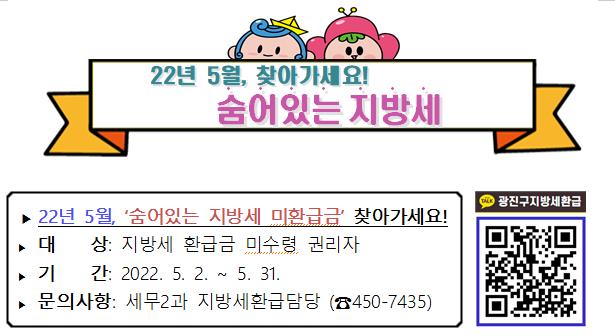
Gwangjin-gu is operating a ‘Local Tax Unclaimed Refunds Intensive Collection Period’ for the month of May regarding 130 million KRW in local tax refunds unclaimed by taxpayers.
Local tax unclaimed refunds arise from cases such as ownership transfer after annual automobile tax prepayment or national tax corrections. Due to lack of interest in small refund amounts, mismatches in resident registration, and long-term overseas stays, as of the end of April, Gwangjin-gu has accumulated 3,928 cases totaling 130 million KRW.
To promptly and accurately return these unclaimed refunds to residents, the district will operate the intensive collection period in May, actively promoting refunds through ▲sending notices to all refund recipients ▲producing foreign language refund notices for foreign taxpayers ▲heir inquiries ▲improving refund application methods.
Eligible residents can receive refunds through various methods: online applications via ▲KakaoTalk (search ‘Gwangjin-gu Local Tax Refund’) ▲Seoul ETAX ▲WETAX ▲smartphone app STAX ▲Government24, or via ▲text message-only number ▲fax ▲phone applications.
This year, the refund application service via KakaoTalk was newly introduced to enhance convenience. Individual members can add the ‘Gwangjin-gu Local Tax Refund’ channel on KakaoTalk to easily check and apply for local tax refunds anytime, anywhere.
Additionally, instead of receiving the refund, residents can choose to donate to help low-income vulnerable groups in Gwangjin-gu. Donations can be made via KakaoTalk, internet (ETAX, WETAX), or ARS.
Meanwhile, since the intensive collection period could be exploited for electronic financial fraud, taxpayers should be especially cautious of voice phishing and other scams through ATMs.
A district official urged, “Local tax refunds expire if not claimed within five years, so even small refund amounts should be paid attention to and property rights exercised.”
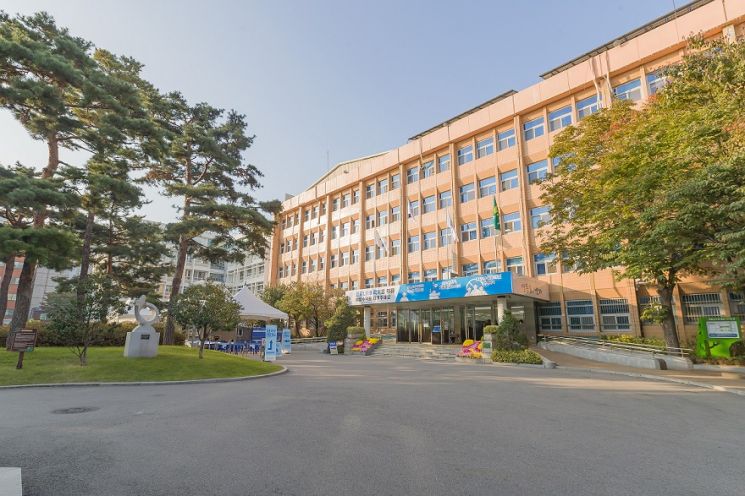
Yeongdeungpo-gu announced that 14 companies were selected in the Seoul Metropolitan Government’s ‘2022 Social Economy Enterprise Business Development Fund Support Project’ contest and will receive a total of 232 million KRW in support, marking the highest number of selections among Seoul’s autonomous districts.
This contest was conducted to establish a sustainable and stable revenue base for social economy enterprises and to enhance social value and corporate self-sustainability throughout the local community by supporting business development funds.
Since the project contest began in February this year, the district has started full support procedures. From March, it verified whether applicant companies met approval requirements and eligibility, reviewed submitted documents, and conducted on-site inspections.
During the face-to-face review by the Seoul Metropolitan Government’s evaluation committee, which included expert judges, the necessity of business support, appropriateness of plans, growth potential of companies, innovation in products and operations, realization of social objectives, and efforts to build a social ecosystem were focused on. After final approval, support was decided for a total of 14 companies located in Yeongdeungpo-gu.
The selected companies include certified and preliminary social enterprises and social cooperatives that have contributed to spreading social value, such as developing and distributing small smart farm systems that recycle old refrigerators to cultivate special crops, providing ARS-based shared parking services, and developing psychological testing tools for the disabled and establishing online testing systems. Each company will receive business development funds ranging from a minimum of 5 million KRW to a maximum of 48 million KRW.
The business development funds must be used for projects to develop companies’ revenue models, mainly for ▲brand (logo) development ▲technology development ▲promotion and marketing services ▲product performance and quality improvement ▲patent applications and certification acquisition costs ▲website development and construction.
Additionally, the district plans to complete the first disbursement of business development funds in May and regularly monitor and inspect whether the projects are progressing smoothly according to plans.
A district official said, “The fact that the most companies located in our district were selected in this year’s business development fund contest recognizes the growth potential and capabilities of Yeongdeungpo-gu’s social economy enterprises,” adding, “We will continue to strive to enhance the operational capabilities of social enterprises, social cooperatives, and village enterprises and to spread social values centered on empathy and solidarity.”
© The Asia Business Daily(www.asiae.co.kr). All rights reserved.
![Clutching a Stolen Dior Bag, Saying "I Hate Being Poor but Real"... The Grotesque Con of a "Human Knockoff" [Slate]](https://cwcontent.asiae.co.kr/asiaresize/183/2026021902243444107_1771435474.jpg)


















