[Seoul District News] Dongdaemun-gu, Korea Railroad Corporation Cheongnyangni Station, and Bridge Comprehensive Support Center operate 'Homeless Hope Job Project Team' for 6 months of environmental cleaning and homeless guidance; 8 homeless participants last year escaped homelessness... Gangseo-gu supports 80% of purchase costs for 121 types of ICT assistive devices... Dongdaemun-gu hospitals, banks, and marts also start Care SOS accompaniment support service
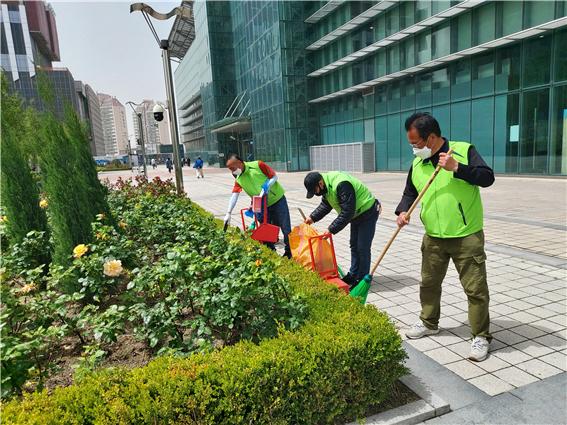
[Asia Economy Reporter Park Jong-il] Dongdaemun-gu (Mayor Yoo Deok-yeol) has signed a business agreement with Korea Railroad Corporation Cheongnyangni Station and Bridge Comprehensive Support Center to support the independence and self-sufficiency of homeless people and will operate the ‘Homeless Hope Job Project Group.’
The Homeless Hope Job Project Group is implemented with the purpose of providing jobs such as environmental cleanup to homeless people residing around the station to boost their motivation to work and support their independence through employment.
The provision of jobs and project funding will be handled by Korea Railroad Corporation Cheongnyangni Station, while employment counseling and vocational rehabilitation program operation will be managed by Bridge Comprehensive Support Center.
To promote the full-scale project, on April 29, Korea Railroad Corporation Cheongnyangni Station, Bridge Comprehensive Support Center, and Dongdaemun-gu Office’s Social Welfare Division agreed to actively cooperate in the collaborative project for creating jobs for the homeless and signed a business agreement.
With the signing of this agreement, project participants will work five days a week (three hours per day) from May 1 to October 31 for six months, engaging in environmental cleanup activities at Cheongnyangni Station Plaza and surrounding areas, as well as homeless protection and guidance. Participants will receive a monthly salary of 890,000 KRW and continuous support such as medical care, housing, daily necessities, and connections to employment agencies.
Last year, all eight participants in the Homeless Hope Job Project Group achieved the outcome of overcoming homelessness through independence and self-sufficiency, firmly establishing themselves as members of society.
A district official stated, “Since last winter, we have been consistently interested in and providing welfare services for the homeless by visiting places where homeless people mainly reside, such as Cheongnyangni Station, Jeongneung Stream, and Yongdu Bridge, listening to their difficulties, and organizing and operating a homeless patrol task force.” He added, “The most important factor for the successful independence of the homeless is job provision, and we are grateful to Korea Railroad Corporation Cheongnyangni Station for creating opportunities for the homeless to restart their lives through the formation of the Hope Job Project Group.”
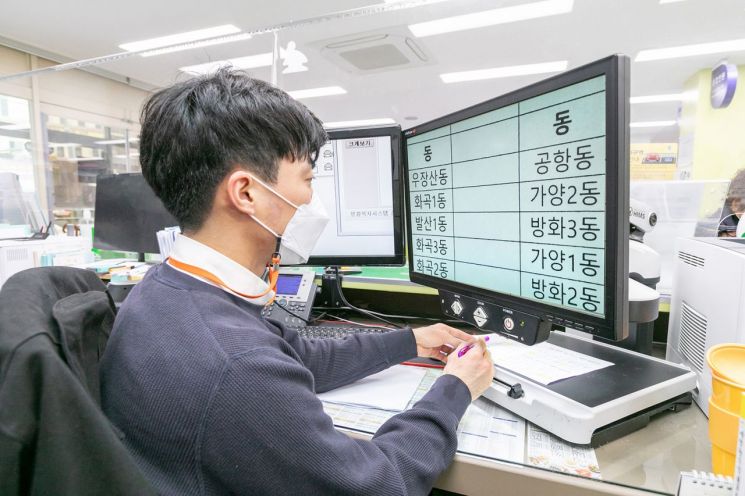
Gangseo-gu, Seoul (Mayor Roh Hyun-song) has taken steps to bridge the information gap for people with disabilities.
The district announced that it will promote the ‘2022 Assistive Information and Communication Devices Distribution Project for People with Disabilities’ to help them utilize information and communication devices.
The project aims to eliminate the information gap and support economic and social participation by assisting people with disabilities who have difficulty accessing and using information with the purchase of assistive information and communication devices tailored to their disability type.
Assistive information and communication devices are aids designed to help people with disabilities comfortably use various information devices (computers, wireless terminals, etc.).
Representative examples include reading magnifiers for the visually impaired, special keyboards for people with physical or brain lesions, and voice amplifiers for the hearing impaired. These are essential devices for smooth use of information devices by people with disabilities.
The support targets registered disabled persons residing in Gangseo-gu and national veterans who have been assessed with disability grades.
The support amount covers 80% of the device price, with the remaining 20% being self-pay. Basic livelihood security recipients and near-poverty groups may receive additional support depending on the product price.
The distributed items include a total of 121 types: 67 types in the visual impairment category such as reading magnifiers and screen reading software, 21 types in the physical and brain lesion impairment category such as touch monitors and special mice, and 33 types in the hearing and speech impairment category such as wireless signal devices and voice amplifiers. Support is customized according to the disability type.
Applicants wishing to receive support must submit an application form, disability certificate or national veteran confirmation, and other required documents by June 17 either by visiting or mailing to the district’s Information and Communication Division or by visiting the nearest community service center.
Online applications are also possible through the Assistive Information and Communication Devices website. Detailed information and application forms can be found on the ‘Gangseo-gu website - Gangseo News - Notices/News’ section.
The district will select recipients based on eligibility and priority and announce the results on the website on July 15, with individual notifications to the selected applicants.
Additionally, in the second half of this year, the district plans to conduct an internal review for unselected applicants and provide additional distribution.
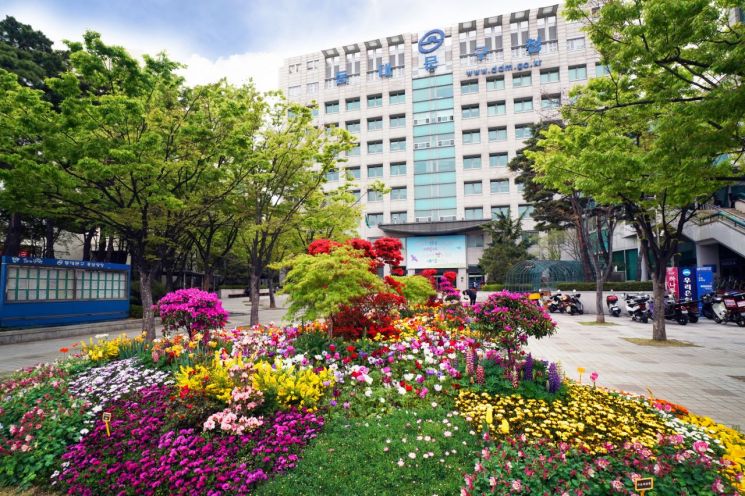
Dongdaemun-gu (Mayor Yoo Deok-yeol) Care SOS Center will increase the number of service providers from 21 to 26 in May and additionally implement an accompaniment support service.
The Care SOS Center is a project that provides temporary home care, short-term facility admission, meal support, and residential convenience services (cleaning, disinfection, etc.) to seniors aged 65 or older who cannot care for themselves with household income below 85% of the median, middle-aged people aged 50 or older, and people with disabilities aged 6 or older. Last year, 762 people benefited from the service.
The newly introduced accompaniment support service this year is a service where a care worker accompanies individuals with mobility difficulties to essential places such as hospitals, banks, public institutions, and markets to carry out basic daily activities. This service is separate from the temporary home care service mainly provided at home and has the advantage of improving residents’ convenience in daily life.
Service applications and detailed inquiries can be made through the local community service center of the applicant’s residence.
A district official said, “In a situation where social changes such as low birth rates, aging, and an increase in single-person households are increasing individual care burdens, the Care SOS Center will play a significant role as a concrete measure to strengthen public responsibility and realize ‘universal care welfare’.”
© The Asia Business Daily(www.asiae.co.kr). All rights reserved.



















