Correction is Most Effective Around Ages 12 to 13
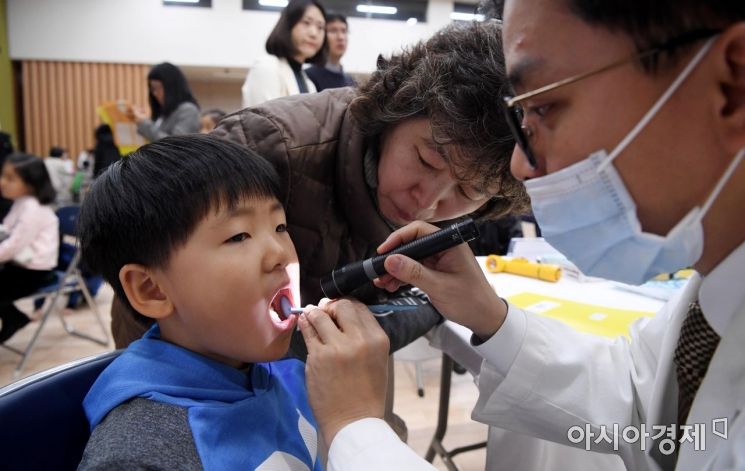
[Asia Economy Reporter Lee Chunhee] Children are often afraid of going to the dentist. Due to their great fear of treatment, they tend not to express pain or discomfort well, which often leads to missing the appropriate time for treatment. As a result, even though early treatment was possible, they end up visiting the dentist only after their condition has worsened to the point where root canal treatment or tooth extraction is necessary. Recently, many pediatric patients visiting dental clinics have had such poor dental conditions that root canal treatment or extraction was required. Professor Park Soyeon of the Pediatric Dentistry Department at Seoul Asan Medical Center emphasized, "Timely dental checkups and treatments are essential from infancy," adding, "It is important for parents to carefully guide their children to develop good oral hygiene habits such as brushing their teeth."
To maintain well-aligned teeth, proper care should begin as soon as baby teeth start to emerge. Around six months of age, the lower and front teeth begin to appear. From this time, parents should start cleaning their children's teeth using gauze or a baby toothbrush. Additionally, to prevent tooth decay, it is important to avoid habits such as falling asleep while sucking on a milk bottle or carrying food in the mouth.
By the time the child is 18 months old, parents should brush their teeth more thoroughly using toothpaste and a toothbrush. Since children may swallow toothpaste before they learn to spit it out, it is necessary to use toothpaste specifically designed for children. Around the age of three, when the upper and lower baby teeth begin to align, it is a good time to teach children how to brush their teeth and help them develop regular brushing habits.
Baby teeth can also develop cavities. Some may leave them untreated because they will eventually fall out, but baby teeth play a crucial role in maintaining space for the permanent teeth to come in properly. Therefore, treating cavities in baby teeth is essential. If treatment is delayed, early loss of baby teeth due to cavities can cause severe crowding or, in cases of severe inflammation, prevent permanent teeth from erupting.
At the age of six, the first permanent molars begin to emerge at the very back. Since these newly erupted permanent teeth are located behind the baby teeth, they are often mistaken for baby teeth and neglected even if cavities develop. However, these are permanent teeth and require preventive care or immediate treatment for any new cavities. From the time permanent teeth start to come in, visiting the dentist regularly every six months for checkups is key to maintaining even and beautiful teeth.
When permanent teeth begin to emerge, many consider orthodontic treatment for well-aligned teeth. However, if there are no issues with facial shape or jawbone, it is best to undergo orthodontic treatment around the pre-adolescent stage, at about 12 to 13 years old, when growth is active and all permanent teeth have come in. This period offers a good treatment response, allowing teeth to be moved easily in the desired direction, shortening the treatment duration and reducing post-treatment complications.
© The Asia Business Daily(www.asiae.co.kr). All rights reserved.
!["The Woman Who Threw Herself into the Water Clutching a Stolen Dior Bag"...A Grotesque Success Story That Shakes the Korean Psyche [Slate]](https://cwcontent.asiae.co.kr/asiaresize/183/2026021902243444107_1771435474.jpg)
















