[Seoul District News] Dongjak-gu installs elevator and escalator at Namseong Station Line 7 to improve mobility for the transportation disadvantaged... Jongno-gu designates Gwan-su-dong 107 area as maintenance zone... Dobong-gu fully opens escalator at Ssangmun Station Exit 3... Gangbuk-gu revitalizes local economy through specialized street creation... Gwanak-gu volunteers plant corn seedlings at Nakseongdae urban garden as part of 21-dong volunteer camp Mom-Ae-Yo project... Yangcheon-gu completes renovation of Dalmaeul Neighborhood Park in Mok 2-dong... Yeongdeungpo-gu supports installation of box gardens at 8 daycare centers
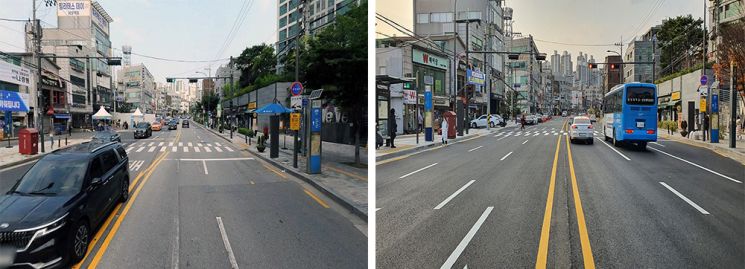
[Asia Economy Reporter Park Jong-il] Dongjak-gu (Mayor Lee Chang-woo) completed the road expansion construction on April 30th for the section of Sadang-ro from the old Beomjin Passenger Terminal (Sadang-ro 240) to the entrance of Solbat-ro (Sadang-ro 182), which had suffered severe congestion.
Additionally, elevator and escalator installation work was completed to improve mobility convenience for transportation-vulnerable individuals using Namseong Station.
Until now, the Sadang-ro section had been plagued by severe traffic congestion and bottlenecks during commuting hours, leading to continuous demands from local residents for traffic congestion relief.
In response, the district prepared a road expansion plan, completed the detailed design for Sadang-ro expansion in 2017, and commenced construction in November 2018 with a budget of 46.6 billion KRW.
The road expansion project involved extending 618 meters of the existing 4-lane road to 6 lanes by adding 2 lanes, installing transportation convenience facilities for vulnerable groups, and creating a street park.
During the construction process, there were many difficulties due to compensation for land and buildings and complaints related to the relocation of subway ventilation shafts. However, these were resolved by installing dust-blocking walls in the ventilation shaft relocation area and making great efforts for smooth compensation negotiations.
Also, some exits of Line 7 Namseong Station lacked elevators and escalators, causing inconvenience to transportation-vulnerable individuals such as the disabled and elderly, as well as residents visiting the nearby Sadang Market.
To alleviate this inconvenience, the district installed an escalator at Exit 2 of Namseong Station and an outdoor elevator between Exits 1 and 2, significantly improving accessibility.
A 79-year-old user of Namseong Station, Mr. A, said, “I had difficulty using the subway due to mobility issues, but now that there is an elevator at Exit 2, it is much more convenient and saves time.”
Furthermore, to improve the surrounding environment and provide a resting place for market visitors, the district purchased two parcels of land around Namseong Station to create a street park. Pine trees were planted and nighttime lighting installed, transforming the area into a local attraction.
Baek Won-gi, Director of the Road Management Division, stated, “We will continue to take the lead in expanding the local road network for the development of Dongjak-gu by proactively expanding surrounding roads expected to experience traffic congestion for the benefit of local residents.”
Jongno-gu is designating a maintenance zone in the area around 107 Gwan-su-dong to efficiently utilize land and restore urban functions, where old and deteriorated buildings are densely concentrated.
Currently, redevelopment projects are actively underway in nearby areas such as Gongpyeong and Euljiro 3-ga urban maintenance-type redevelopment zones, intensifying disharmony between the 107 Gwan-su-dong area and its surroundings. Additionally, poor road conditions and safety concerns within old buildings have increased the need for maintenance projects.
To address this, Jongno-gu plans to reflect the current road network system in the area, connecting some disconnected sections and widening road widths.
Also, to fully consider regional characteristics and preserve abundant cultural and industrial resources, unlike large-scale general maintenance development, the district intends to apply a small-scale management method that builds on existing parcel units in some areas and a maintenance method for joint development of medium and small-scale parcels around 1,000㎡.
Jongno-gu expects that this maintenance project will revitalize the commercial district encompassing Jongno 3-ga Station and Sewoon Shopping Center and bring balanced development harmonizing with the surroundings.
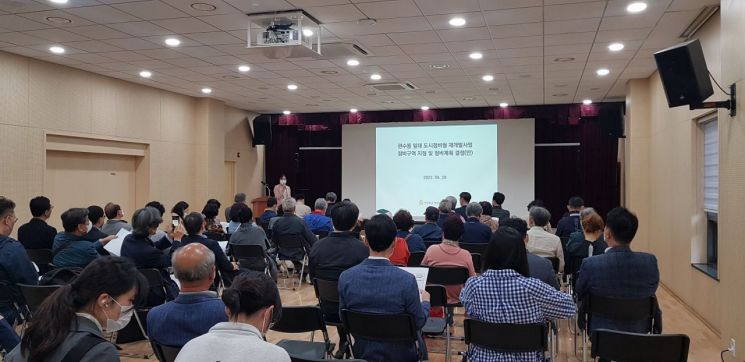
Following the planning of the maintenance project, a residents’ briefing session was held on April 29 at the Jongno 1, 2, 3, 4-ga Community Service Center with about 80 landowners attending. Since last month, a public inspection of the maintenance plan (draft) has been underway until May 16.
For more information about Jongno-gu’s urban environment maintenance project and the maintenance plan (draft), please check the Jongno-gu newsletter on the district office website or contact the Urban Development Division.
An official from the district said, “Maintenance of the 107 Gwan-su-dong area is essential to restore urban functions and revitalize commercial districts. We will steadily promote maintenance projects that protect residents’ safety and invigorate the local economy.”
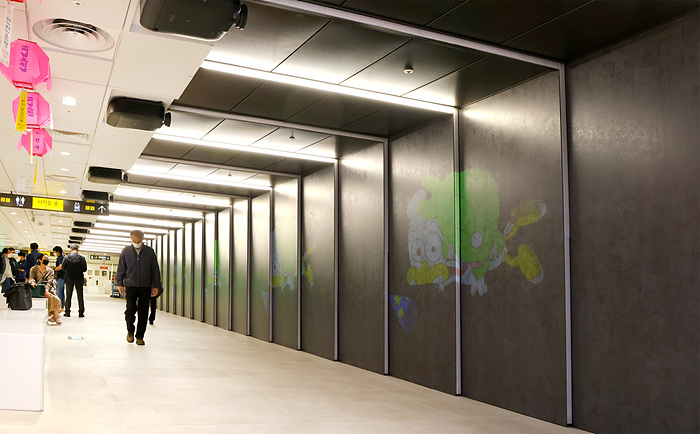
Dobong-gu (Mayor Lee Dong-jin) completed escalator construction at Exit 3 of Ssangmun Station on Line 4 and opened it for residents’ use from May 3.
Previously, Exit 3 of Ssangmun Station had only stairs, making it inconvenient for transportation-vulnerable individuals such as the disabled and elderly.
Accordingly, Dobong-gu installed an escalator with a Seoul city budget of 4 billion KRW, engaging in active consultations with Seoul City and Seoul Metro, and maintaining steady communication with local residents to advance the project.
Starting with the opening of the escalator at Ssangmun Station Exit 3, the district plans to complete the installation of transfer elevators between Lines 1 and 4 at Chang-dong Station and escalators at Exits 1 and 2 of Nokcheon Station by the end of this year.
Dobong-gu has improved accessibility for transportation-vulnerable individuals at subway stations in the area by opening elevators at Banghak and Dobong Stations in 2020 and escalators in the east-west passage at Chang-dong Station in 2021.
Meanwhile, under the supervision of Seoul Metro, Ssangmun Station underwent cultural and artistic railway construction covering 6,646㎡ in March 2022, and escalator installation was completed in April 2022. On May 3, a completion report meeting was held with the participation of the Dobong-gu mayor and city council members. Through this project, old facilities such as the station concourse and platforms were replaced, and two escalators were newly installed.
Lee Dong-jin, Mayor of Dobong-gu, said, “Ssangmun Station is a particularly busy area within our district. The installation of the escalator at Exit 3 will greatly improve mobility conditions for the elderly, disabled, and other transportation-vulnerable groups. We will continue to enhance convenience facilities to ensure no inconvenience in using public transportation.”
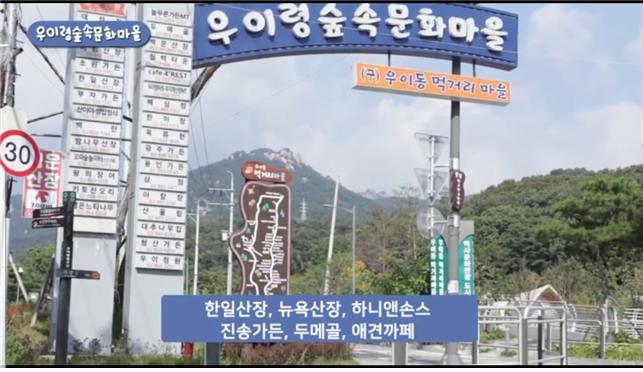
Gangbuk-gu (Mayor Park Gyeom-su) is implementing the ‘Local Commercial District Revitalization and Specialized Street Support Project’ to create specialized streets.
This support project is promoted to discover and nurture specialized streets by linking the unique characteristics and diverse features of local commercial districts.
Eligible participants are merchant organizations with autonomous bodies such as prosperity associations or merchant associations, where at least 20 stores of the same industry or 40 clustered stores participate in a certain area to apply for the support project.
The district has allocated 320 million KRW for this support project and plans to provide up to 80 million KRW per specialized street. However, merchant organizations must bear at least 10% of the total project cost when implementing the project.
Selected merchant organizations will carry out projects such as environment improvement that aligns with themes reflecting the tradition and characteristics of the local commercial district, joint marketing, joint product and design development, promotion for revitalizing the local commercial district, education and cultural projects, and customer attraction projects to create specialized streets.
Those wishing to participate can apply by visiting, mailing (Gangbuk-gu Dobong-ro 89-gil 13, 6th floor, Job and Economy Division), or emailing by the 27th.
Application forms and other required documents can be found on the Gangbuk-gu office website. For details, contact the Local Economy Team of the Job and Economy Division in Gangbuk-gu.
Last year, the district promoted the specialized street support project focusing on traditional markets and large stores, supporting Uiryeong Forest Culture Village and Misam Merchants Association. This year, continued support will be decided through the Local Subsidy Deliberation Committee’s review.
Park Gyeom-su, Mayor of Gangbuk-gu, said, “I hope the local commercial districts, which were depressed due to COVID-19, will revive through this specialized street support project. We encourage many merchants to participate to bring out the unique characteristics of local commercial districts.”
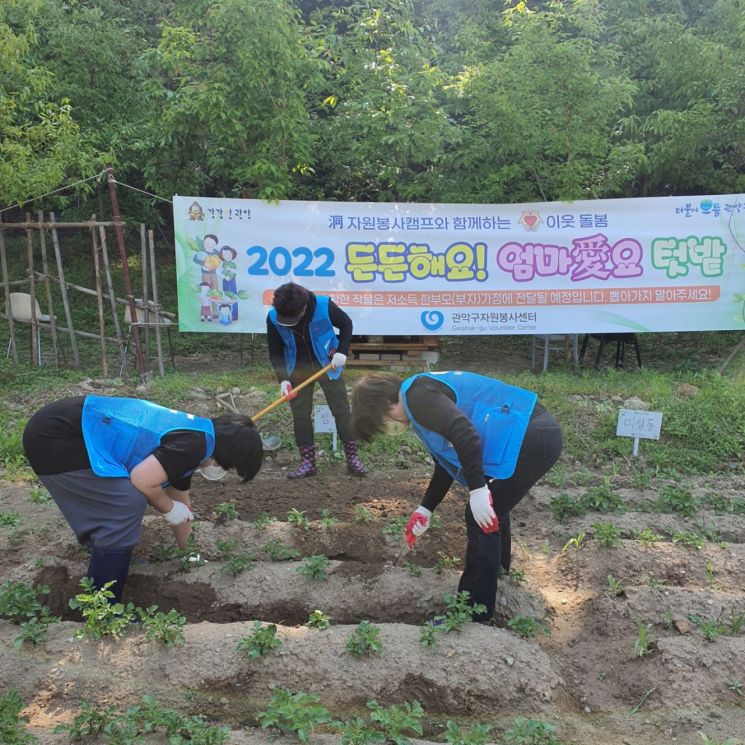
About 60 activists and volunteers from the Gwanak-gu Dong Volunteer Camp carried out corn seedling planting activities over two days from May 3 to 4 at the ‘Dundunhaeyo! Mom-ae(愛)yo’ volunteer camp garden in Nakseongdae urban garden.
Gwanak-gu’s ‘Dundunhaeyo! Mom-ae(愛)yo’ is a project where volunteer camps and volunteers harvest cabbages, radishes, and other crops grown directly in the urban garden to make kimchi-based side dishes and deliver a mother’s love to low-income single-parent father-child families.
The 21 Dong volunteer camps rented 25 plots in the Nakseongdae urban garden, cultivated the garden directly in April, and planted seed potatoes. This year, corn farming was newly attempted.
The various crops carefully grown by the hands of Dong volunteer activists are used as ingredients for kimchi or side dishes after harvest and delivered to places needing dietary support such as local children’s centers and low-income father-child families.
Since 2017, ‘Dundunhaeyo! Mom-ae(愛)yo’ has received great response from residents and has delivered kimchi and side dishes to about 9,800 low-income father-child families, practicing volunteer work that shows care for marginalized neighbors and the community.
Moreover, the project shares household know-how and parenting methods with father-child families to jointly solve difficulties and problems in child care.
In particular, the district plans to carry out a year-end ‘Sharing Love Kimchi’ activity using kimchi radishes harvested from the ‘Dundunhaeyo! Mom-ae(愛)yo’ garden.
An official from the district volunteer center said, “The Dundunhaeyo! Mom-ae(愛)yo project is a representative resident-centered volunteer activity sustained for over six years through residents’ efforts. We will continue to do our best to make Gwanak-gu a place where happy smiles never cease throughout the community.”
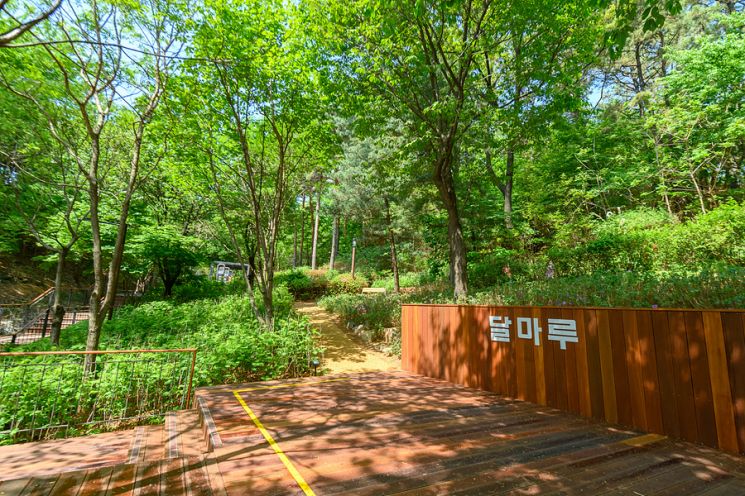
Yangcheon-gu announced that it has completed the renovation of Dalmaeul Neighborhood Park in Mok 2-dong into a resting space where all generations can gather and has fully opened it to residents.
Dalmaeul Neighborhood Park, adjacent to Mokdong Culture and Sports Center and residential areas, has been loved as a resting place for local residents due to its high foot traffic and usage. However, the need for renovation had been continuously raised due to aging facilities such as rest areas.
Accordingly, the district received special grants and expanded the resting area called Dalmaru (333㎡). Trees, plants, and sitting walls were installed to create a park with ample resting space, leisure, and culture. Welcoming the fresh spring, about 13,000 trees including zelkova, azalea, burning bush, lilyturf, and iris were planted, boasting a refreshing landscape.
In particular, the stream facility, which had been out of operation for some time, was refurbished to become a ‘flowing water ecological space.’ To support healthy physical activity through daily recovery, six outdoor exercise equipment for public walking were additionally installed.
For more details about the Dalmaeul Neighborhood Park renovation, contact the Parks and Greenery Division.
An official from the Parks and Greenery Division said, “We hope the renovation will increase satisfaction among citizens using Dalmaeul Neighborhood Park. We will continue to thoroughly maintain aging parks by proactively identifying and resolving residents’ inconveniences.”
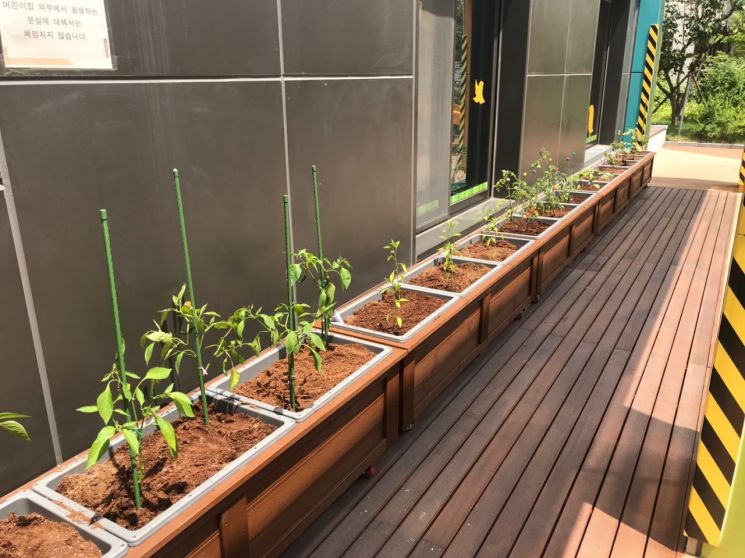
Yeongdeungpo-gu announced that, welcoming the season of spring when all things come to life, it is providing children with opportunities to cultivate eco-friendly crops directly, educating them on the preciousness of life and the joy of living in harmony with nature.
The district supports the installation of box gardens where lettuce, tomatoes, and other crops can be grown in idle spaces of local daycare centers until May and supplies soil and seedlings together.
The daycare centers confirmed for support this year are eight in total: KRX Pruni Daycare in Yeoui-dong, Neulbom Boramae SK View Daycare and Shingil Park Ja Solsup Daycare in Shingil-dong, Yeongsin Daycare, Shingil 5-dong Daycare, Saesol Adel Foret Daycare in Daerim-dong, Daon Daycare, and Moa Miraedo Daycare in Mullae-dong.
The target daycare centers were recruited through a demand survey conducted by the district at the end of last year for those wishing to install gardens.
The installed box gardens are produced in two sizes: 1240mm length × 450mm width × 450mm height and 1840mm length × 850mm width × 450mm height. Support is provided by varying the size and number of boxes according to each daycare center’s demand and installation environment.
Also, the inside of the garden boxes is equipped with an automatic watering rod and water gauge, enabling children to easily replenish water.
The box gardens will be installed by May, and the district plans to monitor the facilities for one year after installation to check for any issues and continuously address inconveniences.
Furthermore, ecological program instructors recommended by the Seoul Agricultural Technology Center will be dispatched to daycare centers to conduct programs for enrolled children on the principles of germination, how to grow crops, protecting nature, and nurturing ecological sensitivity.
An official from the district said, “We hope our children can meet nature nearby through the children’s gardens, feel the preciousness of life, and the joy of bearing fruit. We will continue to operate programs that help children become familiar with agriculture and empathize with nature.”
© The Asia Business Daily(www.asiae.co.kr). All rights reserved.
![Clutching a Stolen Dior Bag, Saying "I Hate Being Poor but Real"... The Grotesque Con of a "Human Knockoff" [Slate]](https://cwcontent.asiae.co.kr/asiaresize/183/2026021902243444107_1771435474.jpg)


















