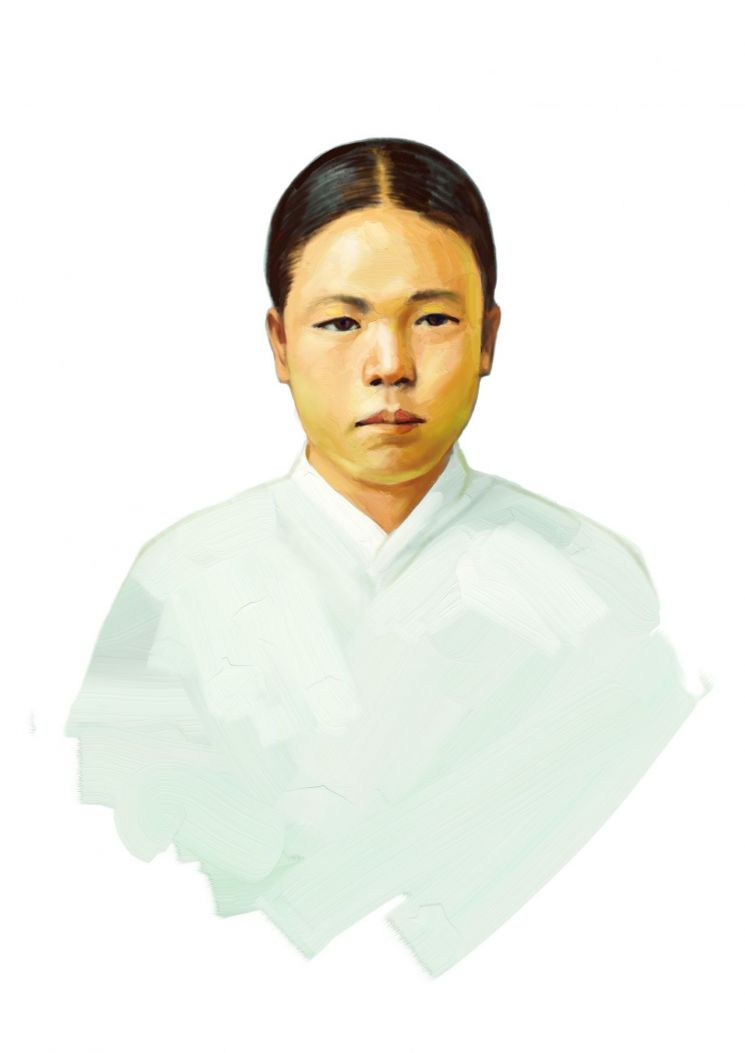
[Asia Economy Military Specialist Yang Nak-gyu] Sergeant Song Tae-ho of the Army (1930.11?1953.6) was selected as the ‘May Hero of the Korean War,’ and Park Won-hee (photo), Kim Young-soon, and Jo Bok-geum were chosen as the ‘May Independence Activists.’
On the 29th, the Ministry of Patriots and Veterans Affairs announced that, in cooperation with the Liberation Association and the Independence Hall of Korea, Park Won-hee, Kim Young-soon, and Jo Bok-geum?who led the founding of the ethnically unifying women’s organization ‘Geunwoohoe’ and fought against ethnic discrimination through anti-Japanese movements?were selected as the ‘May Independence Activists.’
Geunwoohoe was an organization formed by uniting women from ethnic, religious, and socialist groups to promote ‘the unity, status improvement, and anti-Japanese movement of Korean women.’ Despite Japanese oppression, it conducted enlightenment activities for women through various lectures and discussions, supported female student movements such as the ‘Gwangju Student Movement,’ and worked to abolish wage discrimination against female workers.
Park Won-hee and Kim Young-soon were elected as executive committee members of Geunwoohoe in May 1927 and served as members of the organization’s education department, responsible for women’s cultural lectures and enlightenment activities.
Park endured hardships such as being arrested by Japanese police while giving lectures urging countermeasures against Japan’s economic invasion of Joseon. Before her activities in Geunwoohoe, Kim served as secretary of the ‘Korean Patriotic Women’s Association,’ formed in 1919 to support the Provisional Government of the Republic of Korea, and was imprisoned after being arrested. Jo Bok-geum, from Hadong, was active as a delegate of the Hadong branch of Geunwoohoe, engaging in women’s and anti-Japanese movements in the Hadong region. After the central Geunwoohoe was disbanded due to direct and indirect Japanese oppression, she became a worker at the Busan Joseon Spinning Company and participated in labor anti-Japanese movements.
Sergeant Song Tae-ho, selected as the ‘May Hero of the Korean War,’ enlisted in the Army on June 1, 1951, and participated in the anti-guerrilla operations in Jirisan.
Serving as a rifleman in the 1st Platoon, Reconnaissance Company, 15th Regiment, 1st Division, he was deployed to the Goyangdae area on October 1, 1952. When the Chinese Communist forces launched a human wave attack to capture Niki Hill near Goyangdae on the northern bank of the Imjin River north of Yeoncheon, he led a suicide squad and contributed to defending the position.
For his actions, Sergeant Song was awarded the Hwarang Military Merit Medal in November 1952. However, he was killed in action on June 12, 1953, at an unnamed hill on the western front, just over a month before the armistice agreement.
© The Asia Business Daily(www.asiae.co.kr). All rights reserved.
![Clutching a Stolen Dior Bag, Saying "I Hate Being Poor but Real"... The Grotesque Con of a "Human Knockoff" [Slate]](https://cwcontent.asiae.co.kr/asiaresize/183/2026021902243444107_1771435474.jpg)
















