National Research Institute of Cultural Heritage Publishes 'Traditional Lime Analysis Report'
Systematic Data Established Through Sample Collection and Characteristic Analysis
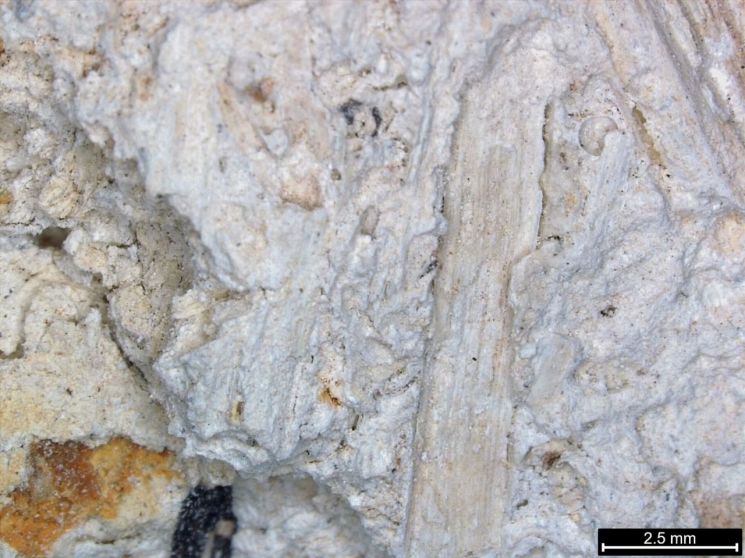 Hanam Gamil-dong Baekje Tumuli Cluster Points 1-3 1? Stone Chamber Tomb Collected Plaster and Herbaceous Plant Impressions
The interior wall stone finishing material of the Hanam Gamildong tumulus, evaluated as a relic to preserve and restore Baekje history, was confirmed to be lime. According to the "Analysis Report on Traditional Lime Excavated from Cultural Heritage and Historic Sites" published on the 18th by the National Research Institute of Cultural Heritage under the Cultural Heritage Administration, the lime appeared as white lumps, mixed with crushed shells (shellfish). There was no sand or gravel. A Cultural Heritage Administration official explained, "We analyzed the rectangular microstructure with a certain directionality and surface form comprehensively," adding, "It was found that shell fragments from bivalve oysters were utilized." The official also added, "Impressions presumed to be from herbaceous stems were observed on the lime surface." Herbaceous plants are those whose above-ground parts are soft and moist, not forming woody tissue.
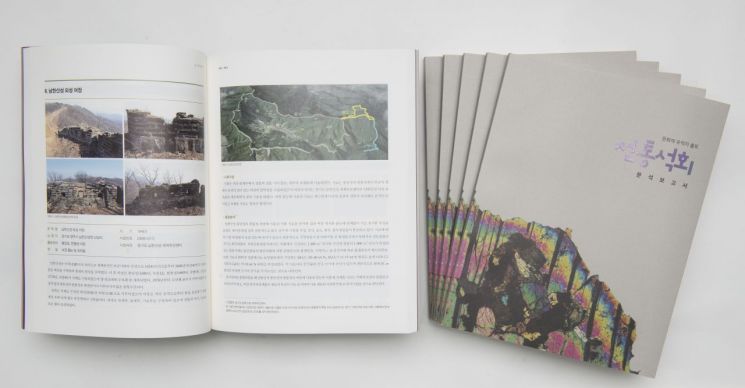
The report includes the results of studying fifty-eight samples of traditional lime from domestic cultural heritage and excavation sites, including the Hanam Gamildong tumulus. The periods covered are the Three Kingdoms, Goryeo, and Joseon eras, and the uses are categorized into fortress walls, buildings, tombs, burial mounds, lime-coated graves, and ondol (underfloor heating) structures. This is part of a five-year research project on the characteristics of traditional lime used for cultural heritage restoration, conducted until last year, providing insights into the properties of traditional lime according to era and usage based on mineralogical and chemical analyses.
A Cultural Heritage Administration official stated, "Traditional buildings have little lime remaining from the time of construction due to natural and artificial damage and repairs. The types vary, and records on construction techniques are insufficient, making it difficult to understand construction patterns," adding, "It was necessary to secure specific samples and analyze the material characteristics to build systematic data." The original text can be found on the Cultural Heritage Administration website or the National Research Institute of Cultural Heritage’s Cultural Heritage Research Knowledge Portal.
© The Asia Business Daily(www.asiae.co.kr). All rights reserved.
![Clutching a Stolen Dior Bag, Saying "I Hate Being Poor but Real"... The Grotesque Con of a "Human Knockoff" [Slate]](https://cwcontent.asiae.co.kr/asiaresize/183/2026021902243444107_1771435474.jpg)

















