[Seoul District News] Gangseo-gu Conducts '2nd International Safe City Certification Inspection' on May 3-4 Evaluating Compliance with 7 Criteria for International Safe City Certification... Gwanak-gu Creates 'Euncheon-dong Safe Village' with Residents... Gangdong-gu Opens 'Cheonho Youth Culture House'... Nowon-gu Analyzes Urban Leisure Population Divided into 4 Zones (Riverside, Station Area, Healing Town, Tourism Zone) Highest Preference Shown for Riverside Area · Increased Tourist Sales at Gongneung-dong Dokkaebi Market
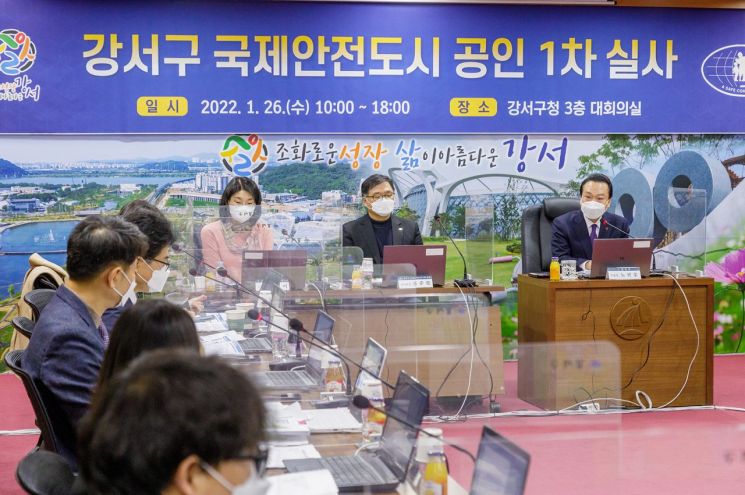
[Asia Economy Reporter Jong-il Park] Gangseo-gu, Seoul (Mayor Noh Hyun-song) is one step closer to international safe city certification.
The district announced that it will conduct the second on-site inspection for international safe city certification over two days from May 3 to 4.
The purpose is to reduce various accidents and injuries through the pursuit of international safe city certification, improve residents' quality of life, enhance the perception of safety, and create a comfortable and safe environment city in Gangseo.
An international safe city refers to a city where all members of the community continuously and actively work to create a safe city free from accidents or injuries, based on the 1989 Stockholm Declaration in Sweden, which states that "all people have an equal right to enjoy a healthy and safe life."
Therefore, international safe city certification is an international recognition that the district has the foundation and capability to continuously improve safety levels.
For this second on-site inspection, three evaluators from the Sweden International Safe Community Certification Center (ISCCC) will participate via video conference to assess whether the district meets the seven criteria for international safe city certification.
On the first day of the inspection, May 3, a total of 20 people including Mayor Noh Hyun-song, district officials, and members of the Safety City Working Committee will attend. The session will begin with a general report, followed by reports on the injury surveillance system and intentional injury prevention programs (suicide prevention, violence prevention). On the second day, May 4, reports on unintentional injury prevention programs (traffic safety, fall prevention), high-risk environments, and target programs will be presented sequentially.
After the reports, there will be a Q&A session, and the second on-site inspection will conclude with the chief evaluator's summary.
The district expects the second inspection to be successfully completed as it has actively improved and reflected the recommendations mentioned in the first inspection conducted on January 26.
Once certified by the Sweden ISCCC through the second inspection, the district plans to hold a proclamation ceremony in June to announce Gangseo-gu's international safe city certification both domestically and internationally.
Mayor Noh Hyun-song said, "The pursuit of international safe city certification is not just about the certification itself but a promise to enhance the safety of residents through the process," adding, "We will prepare thoroughly for this second inspection and do our best to create a safe environment city in Gangseo where all residents can live comfortably."
Since 2018, the district has laid the foundation for international safe city certification by establishing a plan to pursue certification, enacting the Gangseo-gu Safe City Ordinance, and signing a business agreement with the International Safe City Support Center.
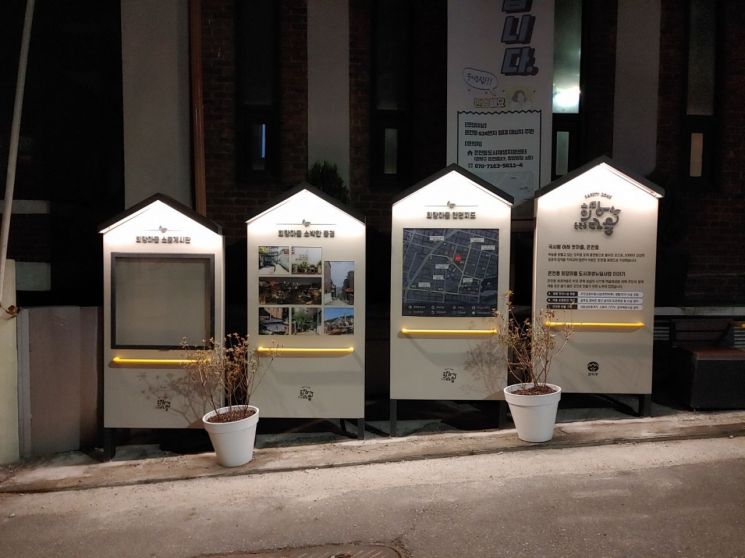
Gwanak-gu has completed the Safe Village creation project as part of the Euncheon-dong urban regeneration New Deal project in the Bongcheon-dong 634 area.
'Safe Village creation' is a project that improves the physical environment through crime prevention design to alleviate residents' anxiety about crime and create a village where anyone can live safely.
The district worked with residents familiar with local conditions to discover tasks suited to the area's characteristics and encouraged resident participation throughout the project to actively reflect voices from the field to achieve urban safety that residents can feel.
Additionally, to ensure effective project progress and sustainability in facility maintenance and management, the district established a strong cooperative system with the police and experts, maintaining professionalism.
The district thoroughly analyzed the current status of Euncheon-dong, identified problems, and focused on three areas: 'sharing safety and strengthening village territoriality,' 'suppressing criminal psychology and creating a predictable environment,' and 'securing communication for community interaction.'
First, 20 wall-mounted fire extinguishers and 11 automated external defibrillators were installed to prepare for fires and emergencies. Rotating fences replaced barbed wire on residential walls, and covers were installed on gas pipes to prevent crime and improve aesthetics.
In particular, through collaboration with the police, crime-prone areas were identified, and additional CCTV and security lights were installed where needed. The emergency bell system was improved so that pressing the emergency bell immediately triggers an urgent dispatch order from the control center to the local police station.
Other efforts to alleviate residents' anxiety and improve the walking environment included installing sensor lights at pilotis building entrances, attaching high-density reflective sheets and mirror sheets, installing convex mirrors, and wrapping utility poles.
A district official said, "The Safe Village creation in Euncheon-dong has received positive responses from residents passing through the area," and added, "We will continue to do our best to enhance practical crime prevention and increase residents' perception of safety."
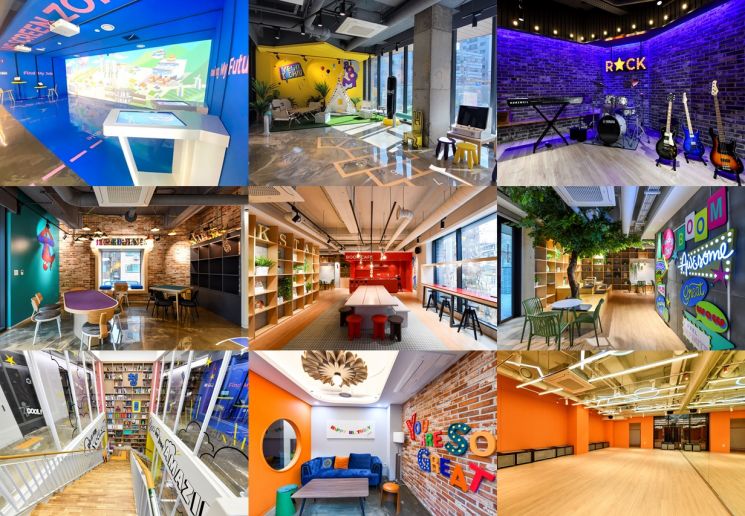
Gangdong-gu (Mayor Lee Jung-hoon) held the opening ceremony of its first youth cultural center, 'Gangdong-gu Cheonho Youth Cultural Center' (61 Cheonjung-ro, Gangdong-gu / Basement 2 to 4th floor) on the 29th and will begin full operation from May 1.
'Cheonho Youth Cultural Center' is a youth activity facility centered on information, culture, and arts, serving as a complex cultural space supporting the creative and healthy growth of youth.
The facility is filled with various creative cultural spaces such as a 'book caf?' for free reading and leisure, a 'cultural playground' for games and play, a 'media playground' for YouTube creators, a 'shared kitchen,' a 'dance room,' and a 'band room.' On the third floor, the 'Future Dream Space' offers virtual career experiences using AI programs and VR equipment based on the 4th industrial revolution.
The operating hours are Tuesday to Sunday from 10 a.m. to 8 p.m. (until 7 p.m. on Sundays). Currently, applications are being accepted for over 40 specialized programs and courses running in May and June, including 'youth club activities,' 'job experience,' 'Zumba dance,' 'yoga,' and 'ballet.'
Detailed schedules for each program can be found on the Cheonho Youth Cultural Center website, and applications can be submitted online or by visiting the center directly.
Mayor Lee Jung-hoon said, "Cheonho Youth Cultural Center was designed with a unique interior full of fun and enjoyment, hoping that youth can paint their dreams in diverse colors," adding, "We will operate the facility as a youth-led space by allowing youth to participate directly in facility management and program selection, establishing it as a representative youth complex cultural space in Gangdong-gu."
He also said, "Customized spaces and various specialized programs for youth are prepared, so we hope many young people will show interest and use the center."
For more information, inquiries can be made to the Gangdong-gu Office Child and Youth Division or the Cheonho Youth Cultural Center Youth Project Team.
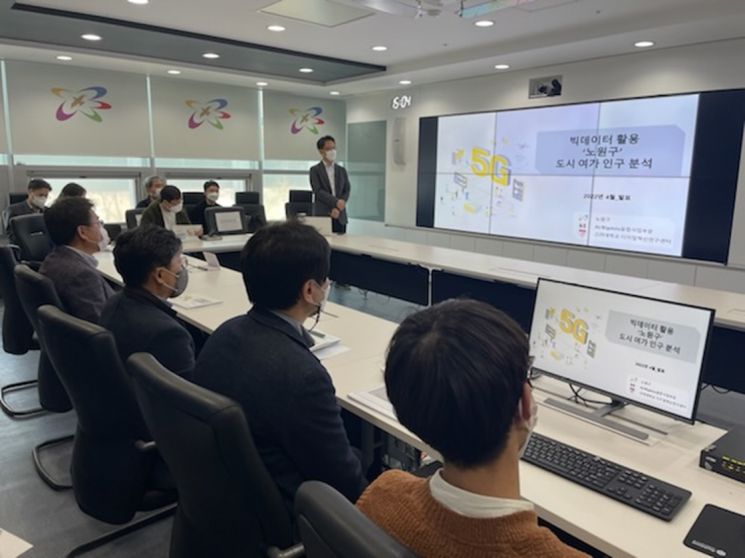
Nowon-gu (Mayor Oh Seung-rok) has completed the second big data analysis focusing on the urban leisure population in Nowon-gu and plans to use it for establishing resident-tailored policies.
Following the first urban leisure population commercial area analysis attempted by a local government in early January, this second big data analysis focused on residents' responses to healing policies by analyzing urban leisure population trends across four major zones.
The analysis divided 13 zones into four categories: riverside (Danghyeoncheon, Jungnangcheon, Uicheon), station areas (Nowon Station, Gongneung Station, Seokgye Station, Sanggye Station, Danggogae Station), healing towns (Bulgamsan Healing Town, Yeongchuksan Healing Town), and tourism zones (Gyeongchun Line Forest Trail, Nowon Light Garden, Gongneung Dokkaebi Market). Notably, analyzing urban leisure population using big data in station areas is the first case in Korea.
The time frame covered three years from 2019 to 2021 to compare pre- and post-COVID-19 periods, utilizing telecommunications and card big data by zone. The study was jointly conducted by Nowon-gu Office (Smart City Team), KT AI/Big Data Convergence Division, and Korea University Digital Innovation Research Center.
The analysis showed that the urban leisure population in 2021 was approximately 100.89 million (monthly average 8.4 million, daily average 276,000), an increase of about 6.5% compared to the previous year. The numbers steadily increased over three years: 85.96 million in 2019, 94.74 million in 2020, and 100.89 million in 2021.
This reflects the district's continuous expansion of healing leisure spaces for residents and the tendency to avoid long-distance travel due to COVID-19, favoring leisure facilities near their residences.
The most preferred urban leisure space was the riverside zone. The success is attributed to riverside regeneration projects that expanded resting areas by installing shade shelters, benches, and exercise equipment, improved convenience by maintaining walking and bike paths, and created seasonal landscaping with specialized flower beds.
In the tourism zone analysis, the Gyeongchun Line Forest Trail and Nowon Light Garden saw increases in urban leisure population, out-of-town tourists, and tourism consumption during the COVID-19 period, suggesting that expanding urban leisure spaces can positively impact the local economy.
Especially, Gongneung-dong Dokkaebi Market showed a tourism consumption amount of 16.6 billion KRW in 2021, a 32.8% increase from the previous year, influenced by the opening of the Gyeongchun Line Forest Trail, Light Garden, and market revitalization. It is expected that connecting the Gyeongchun Line Forest Trail and Nowon Light Garden with Gongneung Station, Gongneung Dokkaebi Market, and Noodle Street will create an urban leisure space belt, further revitalizing the local economy.
Mayor Oh Seung-rok said, "Big data analysis based on behavioral patterns such as visits and consumption, rather than surveys, contains important information that objectively reflects residents' voices that might be misunderstood or overlooked," adding, "We will actively utilize big data analysis projects including mobile communication data, consumption data, and SNS to develop customized policies based on area and age group data."
© The Asia Business Daily(www.asiae.co.kr). All rights reserved.
![Clutching a Stolen Dior Bag, Saying "I Hate Being Poor but Real"... The Grotesque Con of a "Human Knockoff" [Slate]](https://cwcontent.asiae.co.kr/asiaresize/183/2026021902243444107_1771435474.jpg)













