The Bank of Korea Reports 0.7% Growth Compared to Previous Quarter
[Asia Economy Reporter Seo So-jeong] Due to the COVID-19 Omicron surge and the Ukraine crisis, South Korea's economy grew by only 0.7% in the first quarter. While exports, which support the Korean economy, continued to increase alone, private consumption and investment declined, slowing the growth momentum. With the prolonged Ukraine crisis causing a sharp rise in raw material prices and supply chain disruptions, achieving the annual growth rate target of 3.0% this year also appears challenging.
On the 26th, the Bank of Korea announced that the real gross domestic product (GDP, preliminary figure) growth rate for the first quarter of this year was 0.7% compared to the previous quarter. GDP, which converts goods and services produced domestically into market prices, is an indicator used to gauge South Korea's economic growth trend.
The quarterly growth rate recorded negative figures in the first (-1.3%) and second (-3.2%) quarters of 2020 following the outbreak of COVID-19, then maintained growth for seven consecutive quarters: 2.2% in the third quarter, 1.1% in the fourth quarter, 1.7% in the first quarter of 2021, 0.8% in the second quarter, 0.3% in the third quarter, 1.2% in the fourth quarter, and 0.7% in the first quarter of this year. However, as the Omicron wave peaked in the first quarter and private consumption and investment did not recover, the growth rate fell by 0.5 percentage points compared to the previous quarter.
Private consumption decreased by 0.5%, mainly in semi-durable goods such as clothing and footwear, and services including entertainment, transportation, and food and accommodation. This was due to reduced outdoor activities and weakened private consumption as the Omicron variant peaked in the first quarter.
Both construction and facility investments also declined. Construction investment fell by 2.4% due to decreases in building and civil engineering construction, while facility investment dropped by 4.0% as machinery and transportation equipment both decreased. Government consumption remained at the previous quarter's level overall, as increased spending on goods was offset by a reduction in social security in-kind benefits.
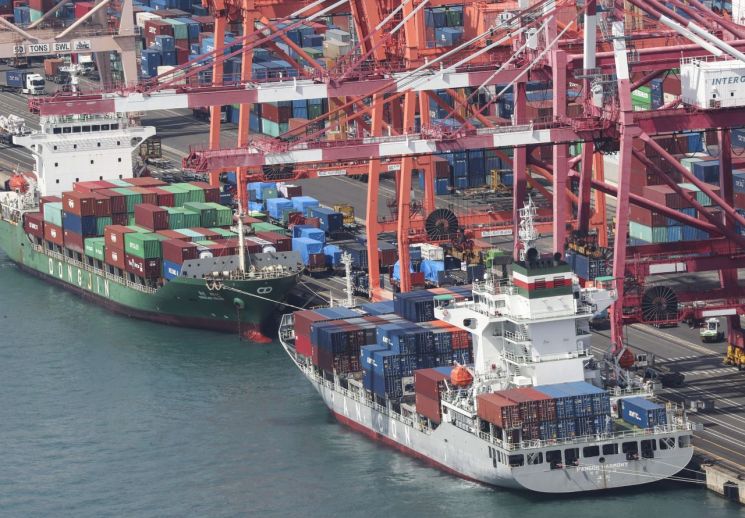
Amid this, the Korean economy grew thanks to exports. Exports increased by 4.1%, centered on semiconductors and chemical products, while imports rose by 0.7% due to increased crude oil imports. The contribution of net exports to the first quarter growth rate reached 1.4 percentage points. Compared to the contributions of private consumption, construction investment, and facility investment at -0.2, -0.4, and -0.4 percentage points respectively, exports played a significant role in driving growth.
However, the future remains uncertain. The prolonged Ukraine crisis and the slowdown in China's economy could negatively impact exports, which have supported the Korean economy so far. Hwang Sang-pil, Director of the Economic Statistics Bureau at the Bank of Korea, said, "If the remaining quarters grow at an average of 0.6 to 0.7% arithmetically, achieving 3% annual growth is possible. However, exports face variables such as rising raw material prices due to the prolonged Ukraine crisis, global supply disruptions, and negative impacts from China's lockdown measures."
Meanwhile, examining GDP by economic activity, manufacturing (3.4%) continued its growth trend. Agriculture, forestry, and fisheries (4.1%) grew due to livestock farming, and electricity, gas, and water supply businesses (3.8%) expanded with increased electricity business. Construction (-0.6%) declined due to sluggish building and civil engineering construction, and services (-0.1%) slightly decreased as increases in finance and insurance were offset by declines in transportation, culture, and other services.
The real gross domestic income (GDI) for the first quarter increased by 0.6%, slightly below the real GDP growth rate (0.7%) due to worsening terms of trade. Director Hwang explained, "The deterioration in terms of trade is because the prices of imported products such as crude oil and chemical products rose significantly compared to the export prices of coal, petroleum, and automobile products."
© The Asia Business Daily(www.asiae.co.kr). All rights reserved.

















