Differences Between Union and Management Over Wages
If No Agreement by Midnight on 26th, Strike to Begin from First Bus
Seoul City Buses to Strike for First Time in 10 Years... Previous Strike Ended in 40 Minutes with Dramatic Settlement
Citizens "Worried About Commuting and School," Local Governments Prepare Countermeasures for Strike
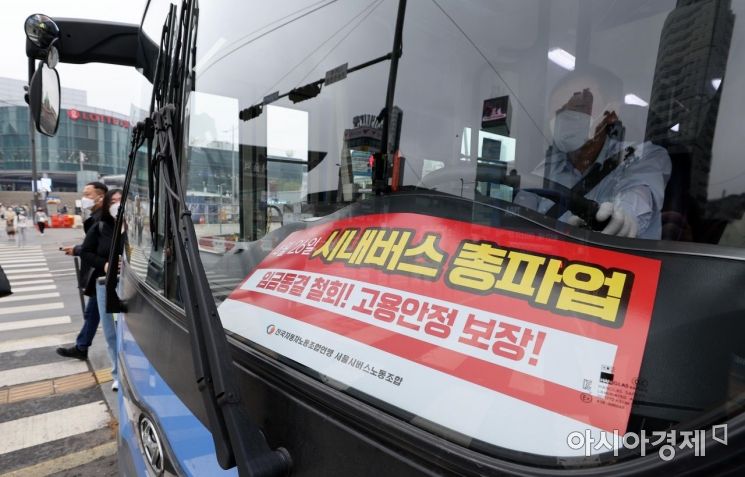 On the 25th, one day before the general strike announced by the Seoul City Bus Union, pickets related to the strike were placed on all city buses passing through the Seoul Station Bus Transfer Center.
[Asia Economy Reporter Kang Woo-seok] As the National Bus Labor Union has announced a general strike on the 26th, negotiations with the management will take place on the 25th. Citizens are concerned about a 'traffic chaos' caused by the bus strike.
The Seoul City Bus Union will hold a second mediation meeting with the management, the Seoul City Bus Transportation Business Association, at the Seoul Regional Labor Relations Commission from 3 p.m. on the 25th. The union plans to launch a general strike starting from the first bus at 4 a.m. on the 26th if no agreement is reached by midnight on the 26th during this meeting.
The city buses affiliated with the Seoul City Bus Union consist of 7,235 buses from 61 companies, accounting for 98% of all city buses, so traffic disruptions are expected if the strike begins.
Previously, the union had been negotiating wages with the management this year but failed to reach an agreement. The union demanded an 8.09% wage increase based on the 4th grade, but the management proposed a wage freeze citing the impact of COVID-19. Seoul city bus drivers' wages were increased by 2.8% in 2020 but were frozen in 2021 due to the COVID-19 impact. The union maintains its stance that it cannot accept a wage freeze for two consecutive years. The management also remains firm on the wage freeze position.
Ultimately, the union declared the breakdown of negotiations on the 8th and applied for labor dispute mediation. Subsequently, in the strike approval vote held on the 19th, the strike proposal was passed with an approval rate of 87.3%.
If this negotiation also fails, Seoul city buses will go on strike for the first time in 10 years since 2012. At that time, the strike was also due to wage issues but ended dramatically with an agreement after negotiations, concluding within 40 minutes.
On the same day, labor unions of 35 bus companies in Gyeonggi Province will also hold a second mediation meeting with the management at the Gyeonggi Regional Labor Relations Commission from 5 p.m. The Gyeonggi Province union also plans to proceed with the strike if no agreement is reached that day. In addition, bus strikes are being announced and labor-management negotiations are ongoing in various regions nationwide, including Busan, Gyeongnam, Gwangju, Jeonnam, and Jeju.
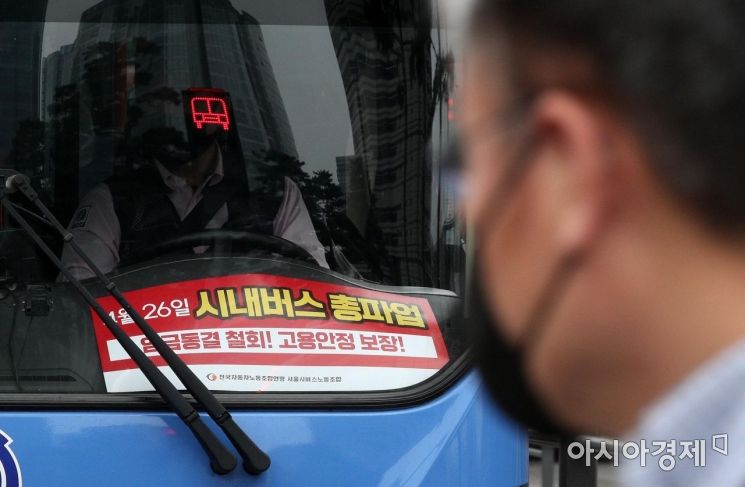 On the 25th, one day before the general strike announced by the Seoul City Bus Union, pickets related to the strike were placed on all city buses passing through the Seoul Station Bus Transfer Center.
Citizens are worried about the 'traffic chaos' caused by the bus strike. A, a student attending a university in the metropolitan area, said, "This week is exam week and there are also face-to-face classes. I usually commute by bus since I live in Seoul, but I am considering staying at a lodging near the school today (the 25th) in advance to prepare for the strike. It would be terrible if I couldn't take the exam due to transportation problems on the strike day."
An office worker B said, "Although I have a car, I usually use the bus for commuting because it is the least congested. The subway stations are far and require detours, so if the bus strike proceeds, I will have to use my car, but I am worried about traffic jams. Many people like me will probably drive their cars."
Meanwhile, local governments are preparing countermeasures against the bus strike. Seoul City is securing alternative transportation. The city plans to deploy official vehicles and charter buses to areas with heavy pedestrian traffic and expand subway and taxi operations to minimize inconvenience to citizens caused by the strike.
Gyeonggi Province also plans to deploy charter buses with the cooperation of cities and counties and maximize the deployment of buses from companies not participating in the strike on each route if the strike becomes a reality. Additionally, taxi operations during commuting hours will be expanded.
Busan City is considering delaying the start time of public institutions under its jurisdiction and adjusting school start times at the discretion of school principals. It also plans to respond to the strike by deploying charter bus routes, expanding urban rail and taxi operations, and lifting weekday driving restrictions for private cars.
© The Asia Business Daily(www.asiae.co.kr). All rights reserved.
![Clutching a Stolen Dior Bag, Saying "I Hate Being Poor but Real"... The Grotesque Con of a "Human Knockoff" [Slate]](https://cwcontent.asiae.co.kr/asiaresize/183/2026021902243444107_1771435474.jpg)

















