Caution Popup for Large Transfers
Attempted Transfers from Others' Mobile Phones
Suspicious Transactions Immediately Suspended
Blocking IP Access with Past Phishing Crime Records
Multiple Transfers in Short Period Also Detected
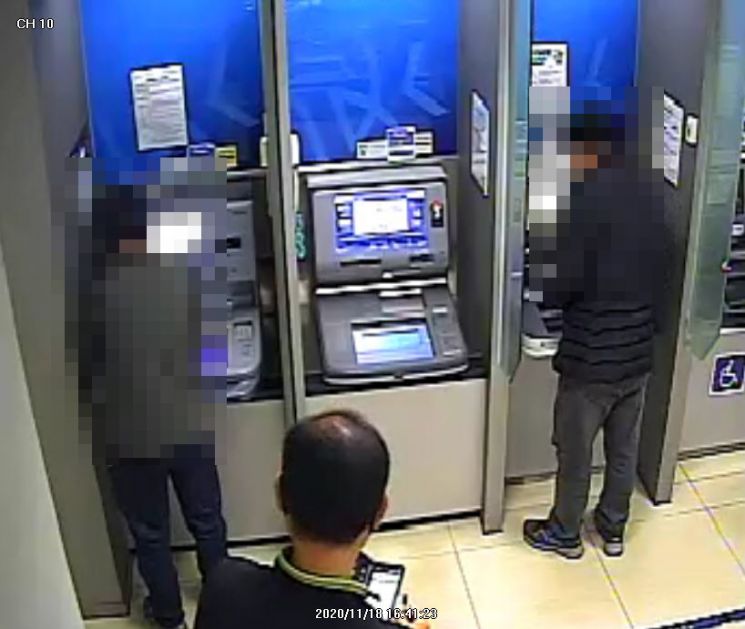
[Asia Economy Reporter Sim Nayoung] Artificial intelligence (AI)-based Fraud Detection Systems (FDS) developed by domestic commercial banks are proving effective in preventing financial crimes. After President-elect Yoon Seok-yeol pledged to "strictly enforce laws against phishing" and announced plans to strengthen the responsibilities of financial companies, banks are also stepping up their responses. The Presidential Transition Committee and the Financial Supervisory Service have identified making FDS implementation mandatory as a top priority.
FDS refers to an AI system that detects transaction patterns that are unusual compared to normal activity or those associated with frequent electronic financial fraud, alerts customers, and helps prevent crimes. When suspicious financial transactions occur, banks conduct additional identity verification through an automated response system (ARS) and customer service representatives. Below are actual cases where FDS helped prevent phishing crimes at Korean commercial banks this year.
Scene One. Lee Sun-mi (61), a self-employed business owner in Incheon, received a call in February saying that to receive the government's emergency low-interest COVID-19 loan, she had to repay her existing loan to a bank employee. She rushed to an ATM and, while frantically pressing buttons to transfer 20 million won, a "Phishing Scam Warning" popup appeared. The ATM’s camera, monitoring her phone call and large transfer attempt, detected suspicious behavior and displayed the warning. Lee, who was about to fall victim to the scammer’s trick, snapped out of it after seeing the message. She contacted the bank and explained the call, preventing the fraud.
Scene Two. Last month, a phishing scammer tried to log in multiple times from their own phone using a victim’s bank app ID and password obtained through messenger phishing, attempting several transfers. The bank’s financial crime response team immediately detected the anomaly. A bank official said, "Although a customer might log in from a new phone, the fact that multiple transfer attempts were made immediately after logging in from a different device raised suspicion of a crime." The bank called the customer but could not reach them, so they promptly froze the transactions, which turned out to be phishing attempts.

Scene Three. In January this year, the bank’s anomaly detection system caught someone attempting to log in to the bank app from an IP address previously linked to phishing crimes. The bank immediately called the customer for verification, but the line was busy. The bank blocked financial transactions from the device connected via the suspicious IP. The customer later said, "At the time, I was on the phone with a voice phishing scammer impersonating my son," and added, "If the bank hadn’t blocked it, I could have lost tens of millions of won," expressing relief.
Scene Four. Earlier this month, a phishing scammer who had just transferred funds from Bank A to Bank B tried to withdraw 1 million won multiple times in installments at an ATM but was suddenly stopped when the withdrawal function was disabled. The bank’s system flagged the suspicious behavior, and the monitoring team called the customer but could not reach them, so the bank froze the payments. The bold scammer then went directly to the branch to withdraw the remaining cash, but the monitoring team had already alerted the branch, enabling them to catch the scammer impersonating a prosecutor on site.
A Woori Bank official said, "FDS detects transactions such as transfers from a device used for the first time via smartphone or PC, or multiple transfers from the same account within a short period," adding, "It uses deep learning to analyze patterns in real time and precisely detect suspicious phishing transactions." Woori Bank led the way by integrating AI into FDS, followed by Kookmin Bank and Hana Bank, with Shinhan Bank planning to complete its system upgrade next month.
AI-based anomaly detection ATMs have also been introduced. A Shinhan Bank official explained, "If a customer makes a phone call during an ATM transaction or exhibits suspicious behaviors such as wearing sunglasses or a hat?patterns identified through analysis of extensive voice phishing data?the system detects these and issues warning messages," describing it as "a measure aimed at senior customers, who are primary targets of voice phishing."
Woori Bank also plans to launch AI anomaly detection ATMs in the first half of this year. According to the Financial Supervisory Service, voice phishing losses have decreased from 443.9 billion won in 2018, 672 billion won in 2019, 235.3 billion won in 2020, to 84.5 billion won in the first half of last year, but the methods have become more diverse and sophisticated.
© The Asia Business Daily(www.asiae.co.kr). All rights reserved.
![Clutching a Stolen Dior Bag, Saying "I Hate Being Poor but Real"... The Grotesque Con of a "Human Knockoff" [Slate]](https://cwcontent.asiae.co.kr/asiaresize/183/2026021902243444107_1771435474.jpg)
















